Nigeria’s federal government has categorically ruled out seeking a fresh bailout from the International Monetary Fund (IMF), choosing instead to stake its economic future on a package of bold domestic reforms, expanded local revenue generation, and private sector enterprise.
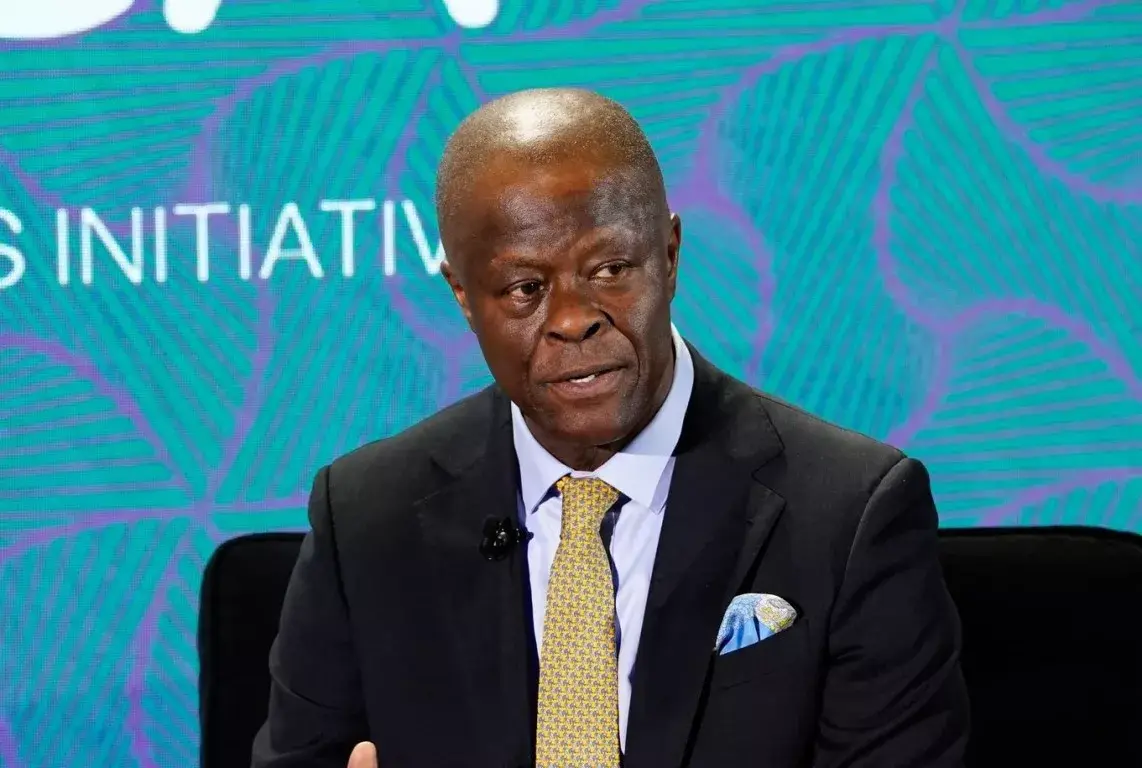
The declaration came from Nigeria’s minister of finance and coordinating minister of the economy, Mr. Wale Edun, who spoke Thursday on the sidelines of the IMF-World Bank Spring Meetings in Washington D.C., where African finance ministers gathered for a high-stakes press conference against the backdrop of a deepening continental debt crisis.
“Nigeria has no plans at the moment to approach the IMF or any other such body,” Edun said, his tone measured but unambiguous, the kind of statement that lands differently when delivered in the corridors of the very institution being declined.
The timing of Edun’s remarks was not incidental. Africa is in the grip of a widening debt vulnerability crisis, one driven not merely by excessive borrowing but by what many African leaders have long decried as a structurally unjust global financial system.
Elevated borrowing costs, compounded by what finance ministers across the continent describe as an inflated and unwarranted risk premium imposed on African sovereigns by global rating agencies, have forced governments into an increasingly painful corner.
The consequences are stark and measurable: a ballooning share of government revenues is now consumed by debt servicing, starving critical sectors—healthcare, education, and infrastructure—of the funding they desperately need.
This is the fire burning beneath the Washington meetings, and Nigeria, as Africa’s largest economy, finds itself both a symbol of the problem and, Edun insists, a model of its solution.
At the heart of Abuja’s strategy is a conviction that emergency borrowing is a trap—one that trades short-term relief for long-term dependency. Instead, President Bola Tinubu’s administration is doubling down on a reform agenda that has already delivered some of the most consequential economic policy shifts in Nigeria’s recent history.
Chief among these is the controversial but consequential removal of untargeted fuel subsidies—a fiscal hemorrhage that, at its peak, was consuming up to five percent of the country’s GDP annually. That decision, politically painful as it was, has freed up significant fiscal space that can now be redeployed toward productive investment.
Alongside this, the government’s shift to market-based pricing for both foreign exchange and petroleum products is designed to eliminate the opacity and inefficiency that had long distorted Nigeria’s economic signals, deterred foreign investors, and drained public coffers through arbitrage and corruption.
“These are not cosmetic adjustments,” a source familiar with the ministry’s thinking noted. “They are structural rewiring.”
Yet Edun was equally emphatic that Nigeria’s crisis—and Africa’s—cannot be resolved by domestic reforms alone. The global financial architecture, he argued, must be reformed if African nations are to access the development financing they need at costs that do not cripple them.
On that front, President Tinubu has joined a growing chorus of African leaders demanding a fundamental reassessment of how international credit rating agencies evaluate African economies — a process many leaders argue is riddled with bias and fails to account for the continent’s genuine economic potential and reform trajectories.
The objective is straightforward: lower the risk premium on African debt and make development financing genuinely affordable.
Nigeria is also championing the wider deployment of guarantees by multilateral development institutions—mechanisms that de-risk investment in African economies and can catalyze an inflow of private capital at significantly lower costs than traditional sovereign borrowing.
While the IMF has put forward a proposed $50 billion support facility aimed primarily at vulnerable nations — many of them on the African continent — Edun was careful not to dismiss the gesture entirely. His concern, however, was pointed: it is not merely the availability of funds that matters but the speed and scale at which those funds can be deployed when a crisis demands urgency.
In too many past instances, multilateral support has arrived slowly, hedged by conditionalities, and scaled far below what the moment required.
Equally pressing, the finance minister argued, is ensuring that whatever support flows—whether domestic or international—actually reaches those at the bottom of the economic ladder. The government, he indicated, is moving away from blanket subsidies that tend to disproportionately benefit the middle class and wealthy in favor of targeted interventions designed to shield low-income households from the worst effects of reform-era price adjustments.
“There is a need to deliberately focus on the most vulnerable households,” Edun said, while cautioning that a return to generalized subsidies would risk unraveling the hard-won gains of Nigeria’s ongoing economic restructuring—a warning that carries particular weight given the political battles the administration fought to remove fuel subsidies in the first place.
Looking ahead, digitalization has emerged as a cross-cutting pillar of Nigeria’s economic strategy. The government is accelerating efforts to automate public systems, tighten governance through technology, and reduce the leakages that have historically bled the Nigerian state of billions in internally generated revenue.
This digital push is not Nigeria’s alone. At Thursday’s briefing, the finance ministers of Lesotho and the Central African Republic echoed a shared continental framework built on four interconnected pillars: deepening economic reforms, lifting revenue-to-GDP ratios, advancing digitalization—including the integration of artificial intelligence into governance—and crowding in private sector investment to supplement what the public purse cannot provide.
“These are the pathways to reduce dependence on expensive debt,” the ministers said, in a unified message that suggested Africa’s finance chiefs are increasingly speaking from the same strategic hymn sheet.
Nigeria’s decision to keep the IMF at arm’s length is, in equal measure, a statement of economic sovereignty and a high-stakes gamble. The reforms Abuja is banking on are real and, by many measures, overdue—but their full benefits will take time to materialize, and the social costs of the transition period remain severe for millions of Nigerians.
The question that lingers in Washington’s meeting rooms—and on streets from Lagos to Kano—is whether the pace of reform can outrun the pace of pain.
For now, the federal government is betting it can. The IMF’s number remains unsaved.
WHAT YOU SHOULD KNOW
Nigeria has made its position clear: no IMF bailout, no emergency borrowing. Instead, Abuja is betting on structural reforms—scrapping fuel subsidies, floating the naira, targeting vulnerable households, and embracing digitalization—to engineer a homegrown economic recovery.
Nigeria and its continental peers are not simply asking for more aid; they are demanding a fairer global financial system—one where African economies are not penalized with inflated risk premiums that make development financing prohibitively expensive.
Africa is done waiting to be rescued. It is building its own ladder out — but the international community must stop pulling the rungs away.