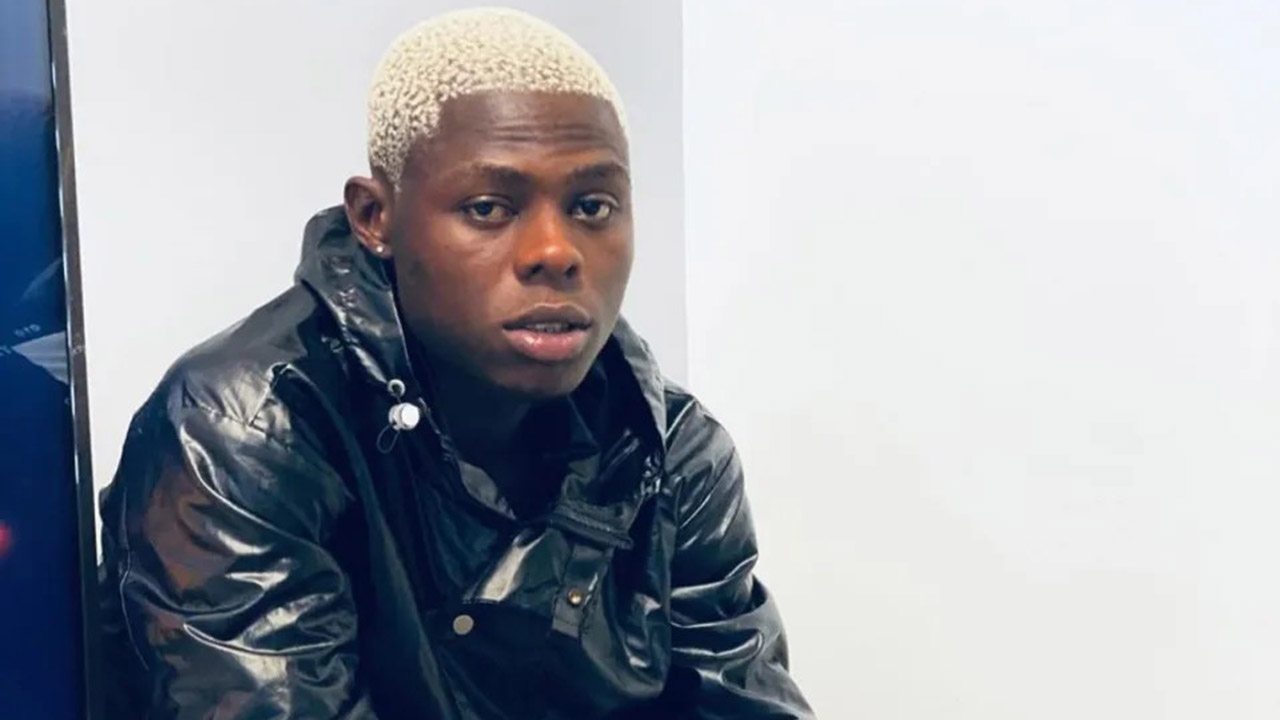
When Afrobeats star Ilerioluwa Oladimeji Aloba, known to millions as Mohbad, died on September 12, 2023, the outpouring of grief was immediate and immense.
At just 27 years old, the rising Afrobeats star left behind a fractured story — one that, nearly three years later, his family insists has never been fully told.
Now his father, Joseph Aloba, has launched a forceful push to reopen the investigation, writing to Inspector-General of Police Tunji Disu with a demand that cuts to the heart of the family’s frustration.
He said that the case should be lifted entirely from the Lagos State Police Command and placed under a centralized, independent authority capable of conducting what he describes as a “diligent and unbiased” probe.
The elder Aloba’s demands are extensive and specific. He is calling on investigators to invite Mohbad’s widow, Omowunmi, and the singer’s younger brother, Adura, to give formal accounts of the singer’s final hours—individuals who, he contends, hold critical pieces of a puzzle that remains stubbornly incomplete.
He has also raised pointed concerns about the handling of evidence and flatly rejected an earlier legal review that cleared several individuals previously regarded as prime suspects.
Central to the renewed push is a call for a comprehensive forensic analysis of Mohbad’s phone records—a step the family’s legal team believes could unlock new leads and perhaps reveal the communications that preceded the singer’s mysterious death. This is not a peripheral ask; it is, in the view of Mr. Aloba’s lawyers, potentially the most consequential investigative step yet to be taken.
The case is further complicated by a long-running dispute over paternity. A DNA test involving Mohbad’s young son, Liam, was conducted—but Mr. Aloba’s legal team has challenged the credibility of the facility that carried it out, calling for the results to be independently verified before they can be relied upon.
The question of Liam’s parentage has become entangled with broader issues of inheritance, legal standing, and family closure—none of which can be resolved while doubt lingers over the test’s integrity.
On the legal front, the case has taken a significant turn. A Federal High Court in Abuja has granted an application by the Break the Silence Foundation—a non-governmental organization that has been monitoring the case—to pursue an order of mandamus. If granted, such an order would compel police authorities to formally reinvestigate the circumstances of Mohbad’s death and summon those who were last seen in the singer’s company.
The court’s intervention comes despite the findings of a coroner’s inquest, delivered in July 2025, which attributed Mohbad’s death to medical negligence on the part of an auxiliary nurse. That conclusion, while significant, has done little to satisfy the Aloba family, who believe the picture painted by the inquest is incomplete at best—and misleading at worst.
Mr. Aloba has separately filed appeals contesting a decision by the Lagos State Director of Public Prosecutions, which saw several individuals discharged from the case—among them Naira Marley, the music executive at the center of the singer’s most public anguish, and Sam Larry, a figure long associated with the controversy surrounding Mohbad’s final years.
The discharge of these individuals has been one of the most contentious developments in a case already saturated with controversy.
That grief has been deferred not only by legal wrangling but also by the unresolved questions surrounding the autopsy itself. Mohbad’s body was exhumed following widespread public pressure, but officials subsequently confirmed that the cause of death could not be definitively determined due to the state of decomposition—a finding that infuriated supporters and left the public with more questions than answers.
In life, Mohbad had spoken openly about the pressures and alleged mistreatment he endured during his time under Marlian Music, the record label founded by Naira Marley.
His departure from the label was acrimonious, and allegations of bullying and abuse — made before and after his death — transformed his passing into something far larger than a single family’s tragedy. The #Justice4Mohbad movement swept across Nigeria and the Nigerian diaspora, driven by a conviction that the singer’s story deserved more than silence.
Three years on, the movement has not dissipated. It has calcified into a demand for accountability, for transparency, and for the kind of investigative rigor that Joseph Aloba insists has so far been conspicuously absent.
As the courts deliberate, as petitions pile up, and as a young boy grows older without a father or a definitive story of how that father died, the question that animated an entire nation’s anger remains unanswered: what really happened to Mohbad?
WHAT YOU SHOULD KNOW
Nearly three years after Mohbad’s death, justice remains elusive. His father is demanding a fresh, independent investigation — one that goes beyond what Lagos authorities have delivered — citing mishandled evidence, cleared suspects, disputed forensics, and an autopsy that yielded no definitive cause of death.
A Federal High Court has backed calls for reinvestigation; appeals are ongoing, and the singer’s body remains unburied. The core question that sparked a national movement still has no answer: what truly killed Mohbad, and who, if anyone, is responsible?