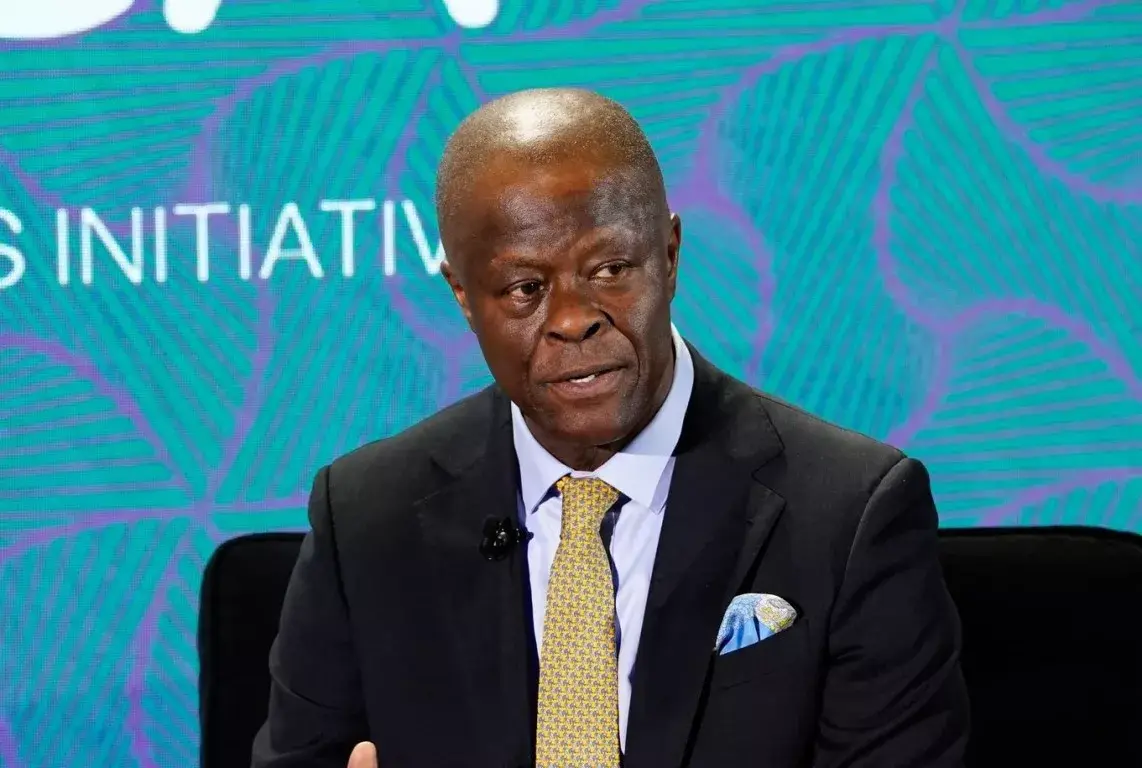
Nigeria’s Finance Minister Wale Edun has sharply urged the IMF and World Bank to slash borrowing costs for developing countries, warning that rising debt burdens and scarce affordable financing are squeezing vulnerable economies amid global uncertainty.
Edun, who also chairs the Intergovernmental Group of Twenty-Four (G-24), a coalition of developing countries that coordinates positions on monetary and development finance issues, appealed on Tuesday during a media briefing on the sidelines of the IMF’s April 2026 Global Financial Stability Report launch in Washington.
“We would like them to do more,” he said, specifically urging the multilateral institutions to roll out “additional liquidity risk management tools that bring down the cost of financing.”
His remarks come as many low and middle-income countries grapple with what Edun described as a “negative flow” of concessional financing — the low-interest, long-term loans traditionally meant to support development but now in short supply amid tighter global credit conditions.
Developing nations face soaring debt-service payments, limited fiscal space, and rising risk premiums that make commercial borrowing prohibitively expensive. For countries like Nigeria, which is navigating ambitious domestic reforms while contending with external shocks, the plea highlights a growing frustration: the international financial architecture that often leaves the poorest nations paying the highest premiums precisely when they need help most.
The timing of Edun’s intervention is telling. It coincides with the IMF’s latest assessment of the global economy, which paints a sobering picture. The fund has downgraded its 2026 global growth forecast to 3.1 percent, down from an expected 3.4 percent in 2025, largely because of the escalating conflict in the Middle East—particularly the fallout from hostilities involving Iran that have roiled oil markets, driven up commodity prices, and injected fresh inflationary pressures worldwide.
Without the war’s drag, the IMF noted it would have actually upgraded its outlook slightly. Instead, the reference forecast now assumes a relatively contained conflict with oil prices eventually normalizing; more severe scenarios could see growth slump even further, to as low as 2.5 percent.
The G-24 briefing, held at IMF headquarters, served as a platform for developing countries to press their case collectively. Edun, who took over as G-24 chair in November 2025, used the occasion not only to highlight the financing squeeze but also to stress the need for targeted, temporary support measures to shield the most vulnerable citizens from the knock-on effects of higher fuel and food costs—without derailing hard-won economic reforms back home.
For Nigeria, Africa’s largest oil producer, the global turbulence arrives at a delicate moment. Surging crude prices have provided a revenue windfall that has helped ease some immediate fiscal strains, yet they have also complicated the government’s reform agenda by fueling inflation and living-cost pressures.
Edun has ruled out any return to costly fuel subsidies, instead advocating for precisely calibrated relief programs. His message to multilateral lenders: help us manage liquidity and risk so we can keep reforms on track rather than forcing painful reversals.
Analysts say the minister’s call reflects a broader sentiment across the Global South. With interest rates still elevated in advanced economies and capital flows to emerging markets remaining volatile, many developing countries are caught in a pincer: higher debt repayments and scarcer cheap loans.
The G-24’s push for “fairer global financial conditions” and enhanced liquidity tools is an attempt to rebalance a system that critics argue has become increasingly punitive toward precisely those nations pursuing difficult but necessary structural changes.
Whether the IMF and World Bank will heed the appeal remains to be seen. The Spring Meetings continue this week, offering a forum for further debate. But Edun’s intervention — delivered with the weight of the G-24 chair behind it — signals that developing countries intend to make their voices heard loudly as the world’s financial guardians chart a course through an increasingly fractious geopolitical and economic landscape.
For millions in Nigeria and beyond, the stakes could hardly be higher: lower borrowing costs today could mean the difference between sustained reform and renewed crisis tomorrow.
WHAT YOU SHOULD KNOW
Nigeria’s Finance Minister Wale Edun has urged the IMF and World Bank to significantly reduce borrowing costs for developing countries, citing crushing debt pressures and limited access to concessional financing.
At a time when the IMF has downgraded global growth to 3.1% for 2026, largely due to the Middle East conflict, developing nations like Nigeria urgently need cheaper financing to protect economic reforms and shield citizens from rising living costs, rather than face a punishing cycle of high debt servicing and scarce affordable loans.
This call, made on behalf of the G-24, underscores that fairer global financial conditions are essential for vulnerable economies to navigate current turbulence without reversing hard-won progress.