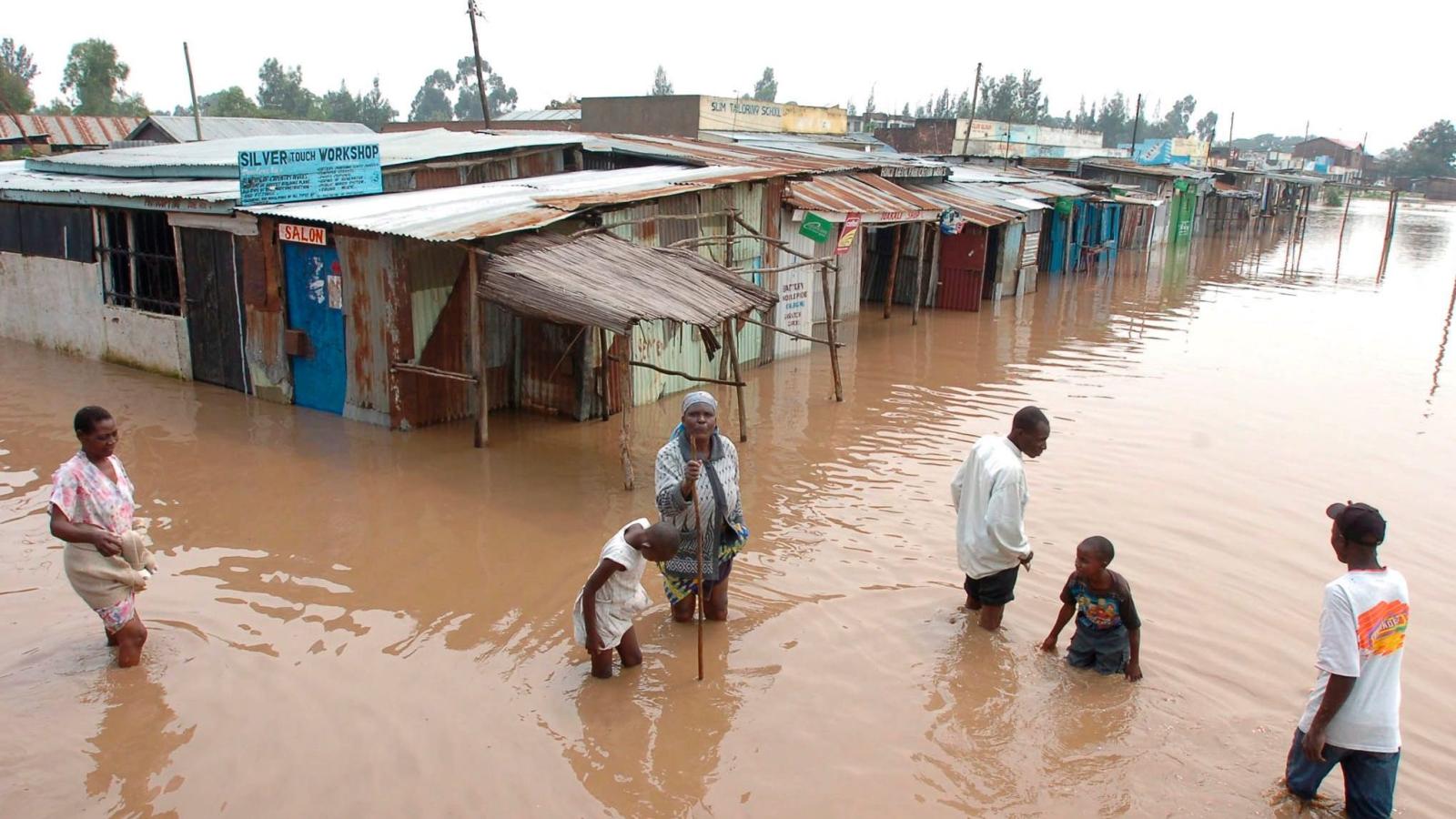
The Federal Government issued a stark warning to the nation on Wednesday, identifying 226 Local Government Areas (LGAs) across 33 states and the Federal Capital Territory as “high-risk” zones for significant flooding this year.
The announcement came during the unveiling of the 2026 Annual Flood Outlook (AFO), presented by the Minister of Water Resources and Sanitation, Prof. Joseph Utsev. Speaking from the State Banquet Hall at Aso Villa, Utsev painted a sobering picture of the hydrological challenges facing the country in the coming months.
According to the report compiled by the Nigeria Hydrological Services Agency (NIHSA), the impact of this year’s rainfall is expected to be widespread, affecting a staggering 14,118 communities.
The “High Flood Risk” category includes almost the entire federation, spanning states from the coastal south to the arid north.
The identified states include:
North: Adamawa, Bauchi, Borno, Gombe, Jigawa, Kaduna, Kano, Kebbi, Nasarawa, Niger, Plateau, Sokoto, Taraba, Yobe, and Zamfara.
South & Middle Belt: Abia, Anambra, Bayelsa, Benue, Cross River, Delta, Ebonyi, Edo, Enugu, Imo, Kogi, Kwara, Lagos, Ogun, Ondo, Osun, Oyo, Rivers, and the FCT.
The outlook further categorized the remaining regions:
Moderate Risk: 405 LGAs in 35 states are expected to experience manageable flooding. Notably, Ekiti State was the only state excluded from this high and moderate risk categorization.
Low Risk: Minimal flooding is projected for 923 communities across 77 LGAs in 24 states.
In a significant departure from previous years, Prof. Utsev revealed that the 2026 outlook has introduced community-based flood forecasting.
“Forecasts are now tailored to specific communities for quick intervention,” the minister noted.
This localized approach aims to move away from broad regional warnings to “hyper-local” alerts, allowing traditional rulers, local government chairmen, and emergency responders to act with precision before the waters rise.
Representing President Bola Tinubu at the event, the Minister of Environment, Balarabe Lawal, reaffirmed the administration’s commitment to overhauling the nation’s emergency response framework.
The president’s message focused on three strategic pillars:
- Capacity Building: Enhancing the strategic direction of ministries to ensure “more effective and timely responses.”
- Infrastructure & Planning: Moving toward sustainable development to mitigate the long-term impact of climate-induced disasters.
- Communication: Recognizing that prompt public awareness is the most effective tool for saving lives during a crisis.
The theme of this year’s presentation—”Smart Water Resources Management: Moving From Oil To A Water-Based Economy”—signals a shift in the government’s long-term strategy.
Stakeholders at the event argued that managing Nigeria’s vast water resources is no longer just about disaster prevention but about leveraging water for food security and economic diversification.
As the rainy season intensifies, the federal government has urged state governors and local authorities to begin the immediate clearing of drainage systems and the relocation of residents living in floodplains to higher ground.
WHAT YOU SHOULD KNOW
The Federal Government issued a stark warning to the nation on Wednesday, identifying 226 Local Government Areas (LGAs) across 33 states and the Federal Capital Territory as “high-risk” zones for flooding this year.
The government’s shift to community-based forecasting means residents must stay alert to specific, local alerts and prioritize immediate evacuation or mitigation, as the response strategy is now focused on precision at the village and neighborhood level rather than broad regional warnings.