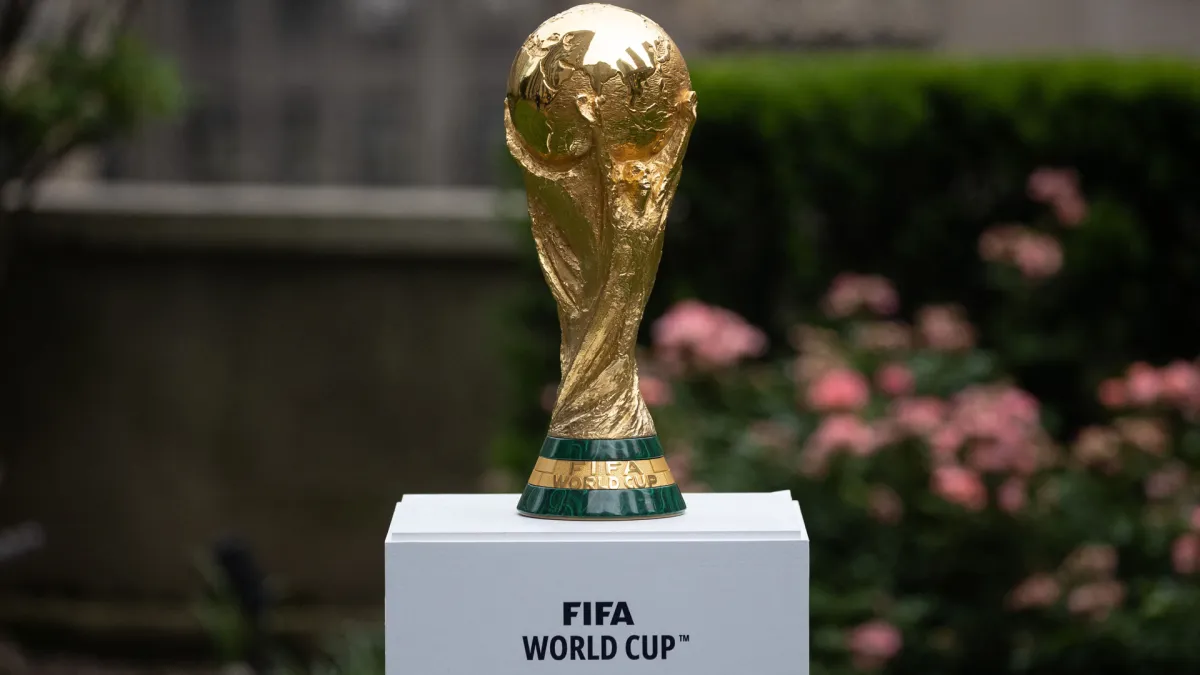
The 2026 FIFA World Cup, jointly hosted by the United States, Canada, and Mexico, is set to be the biggest edition in football history, featuring an expanded 48-team format.
Following the conclusion of the March international break, all qualification spots have now been decided, completing the lineup for the global tournament.
In Europe, Bosnia and Herzegovina pulled off one of the biggest surprises by eliminating Italy during the playoffs. Other European nations that secured qualification include Turkey, Sweden, and Czech Republic.
In the intercontinental playoffs, Democratic Republic of the Congo defeated Jamaica 1–0, while Iraq edged Bolivia 2–1 to claim the final qualification spots.
The 48 available slots were distributed across confederations, with Europe receiving 16, Africa 9, Asia 8, North and Central America plus the Caribbean 6 (including host nations), South America 6, and Oceania 1, alongside two additional playoff places.

Full Group Stage Draw
Group A: Mexico, South Africa, South Korea, Czech Republic
Group B: Canada, Bosnia and Herzegovina, Qatar, Switzerland
Group C: Brazil, Morocco, Haiti, Scotland
Group D: United States, Paraguay, Australia, Turkey
Group E: Germany, Curacao, Ivory Coast, Ecuador
Group F: Netherlands, Japan, Sweden, Tunisia
Group G: Belgium, Egypt, Iran, New Zealand
Group H: Spain, Cape Verde, Saudi Arabia, Uruguay
Group I: France, Senegal, Iraq, Norway
Group J: Argentina, Algeria, Austria, Jordan
Group K: Portugal, Democratic Republic of the Congo, Uzbekistan, Colombia
Group L: England, Croatia, Ghana, Panama
The tournament is scheduled to run from June 11 to July 19, 2026, with the opening match set to take place in Mexico City, where Mexico will face South Africa.
What you should know
The 2026 World Cup marks a historic expansion to 48 teams, increasing global representation and competition.
With three host nations and more qualification slots across continents, smaller footballing nations now have greater opportunities to compete on the world stage.
The tournament’s new format is expected to deliver more matches, bigger audiences, and heightened global excitement, while also reshaping the competitive balance traditionally dominated by football powerhouses.