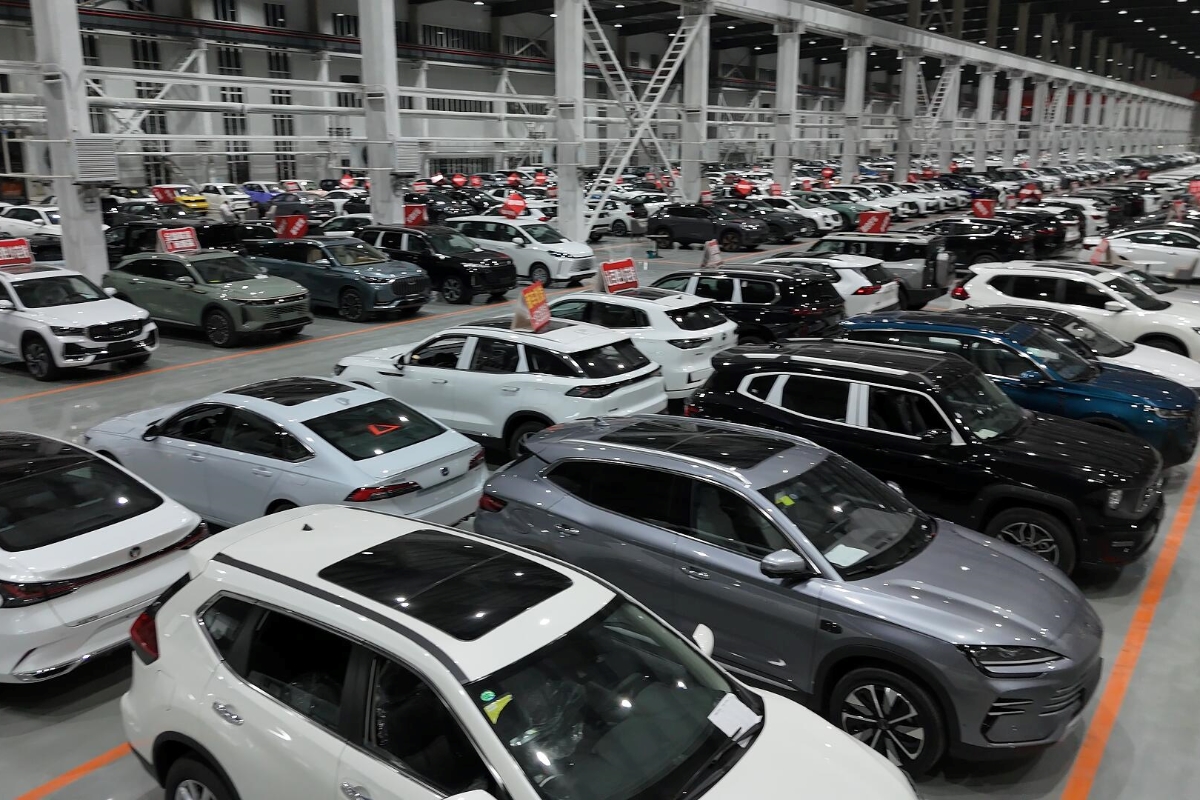
Nigeria’s Federal Government has rolled out strict new rules to stop the importation of substandard and unsafe ‘tokunbo’ vehicles
Announced on Tuesday, March 31, 2026, during a stakeholders’ sensitisation workshop in Abuja, the policy introduces the SON-NADDC Vehicle Conformity Assessment Programme (VehCAP), a collaborative initiative between the Standards Organisation of Nigeria (SON) and the National Automotive Design and Development Council (NADDC). At its core is a clear, uncompromising directive: “No certification, no entry.”
Minister of State for Industry, Senator John Owan Enoh, who unveiled the programme, stressed that all vehicles — new and used alike — must now secure pre-shipment certification before they can proceed through key import stages, including Form M approval, customs valuation, processing, clearance, and eventual market entry. Without this certificate, vehicles face outright refusal, seizure, or other sanctions under existing laws.
Under VehCAP, fairly used vehicles will undergo mandatory inspection and conformity assessment focused on safety and environmental standards. This includes checks for roadworthiness, emission compliance, structural integrity, and overall quality to prevent the dumping of end-of-life or defective vehicles into Nigeria.
The certification must be obtained in the country of export before shipment, shifting the burden and cost primarily to foreign exporters rather than Nigerian importers or consumers.
Director-General of NADDC, Otunba Joseph Osanipin, explained that the measure addresses a long-standing gap: Nigeria had become a preferred destination for exporters offloading unroadworthy cars. “Before any vehicle gets into Nigeria, we want to ensure that certification is mandatory,” he said, noting that the certificate will now be a required accompanying document for clearance.
Enforcement will involve a multi-agency approach. The Nigeria Customs Service will block clearance for non-compliant shipments. The Central Bank of Nigeria will tie foreign exchange approvals to certification. The Federal Road Safety Corps (FRSC) will integrate the requirement into vehicle registration and licensing, while state governments are expected to refuse registration of uncertified vehicles. Non-compliant imports could be detained or re-exported at the importer’s expense.
This latest move forms part of a wider push to clean up Nigeria’s automotive sector. It complements the End-of-Life Vehicle (ELV) Recycling Regulation introduced in March 2025, with full implementation of related measures slated for the second quarter of 2026. That framework includes plans for a compulsory vehicle recycling fee (projected to generate significant revenue) and a gradual phasing out of older, high-emission vehicles to promote local manufacturing and reduce environmental pollution.
Officials argue that the reforms will deliver several key benefits:
– Safer roads: By curbing the influx of accident-prone or mechanically compromised vehicles that contribute to the country’s high road fatality rates.
– Better consumer protection: Nigerian buyers, who often discover hidden defects in tokunbo cars months after purchase, will have greater assurance of quality.
– Environmental gains: Stricter emission and safety standards should reduce air pollution from aging, inefficient engines.
– Market regulation: A more orderly import regime could encourage local assembly and manufacturing, aligning with the long-awaited National Auto Industry Development Policy (NAIDP), which the government hopes to enact soon.
Industry stakeholders have welcomed the intent but cautioned on implementation. Many Nigerians rely on fairly used imports due to the high cost of new vehicles, and tighter rules could initially drive up prices or reduce supply. Importers may face higher upfront costs for certification (estimated in some reports at $250–$300 per vehicle), though officials insist exporters will absorb this.
Critics worry about potential bottlenecks at ports or opportunities for corruption if enforcement is uneven. However, the government maintains that digital processes and inter-agency coordination will ensure transparency.
For now, the message from Abuja is unequivocal: Nigeria will no longer serve as a dumping ground for the world’s automotive rejects. As one official put it, “Nigeria deserves better, and this government is determined to deliver better.”
The policy takes immediate effect upon commencement, marking what could be a turning point in the nation’s decades-long dependence on imported used vehicles. Importers and dealers are advised to familiarise themselves with the new requirements to avoid costly disruptions.
WHAT YOU SHOULD KNOW
Nigeria’s Federal Government has introduced strict new standards for importing fairly used vehicles under the SON-NADDC Vehicle Conformity Assessment Programme (VehCAP).
From now on, no certification, no entry. All fairly used vehicles must undergo mandatory pre-shipment inspection for safety and environmental compliance before they can be imported, cleared, or registered in Nigeria.