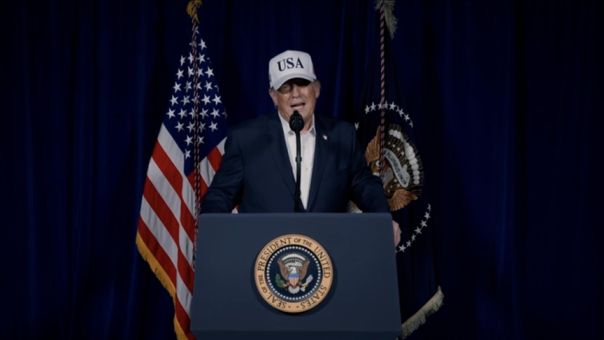
United States President Donald Trump on Thursday declared that he believes he should take part in determining who becomes the next supreme leader of Iran following the death of the country’s long-time leader, Ali Khamenei.
In remarks made during an interview with Axios, Trump rejected the possibility that Khamenei’s son could succeed his father, describing him as unfit for the position.
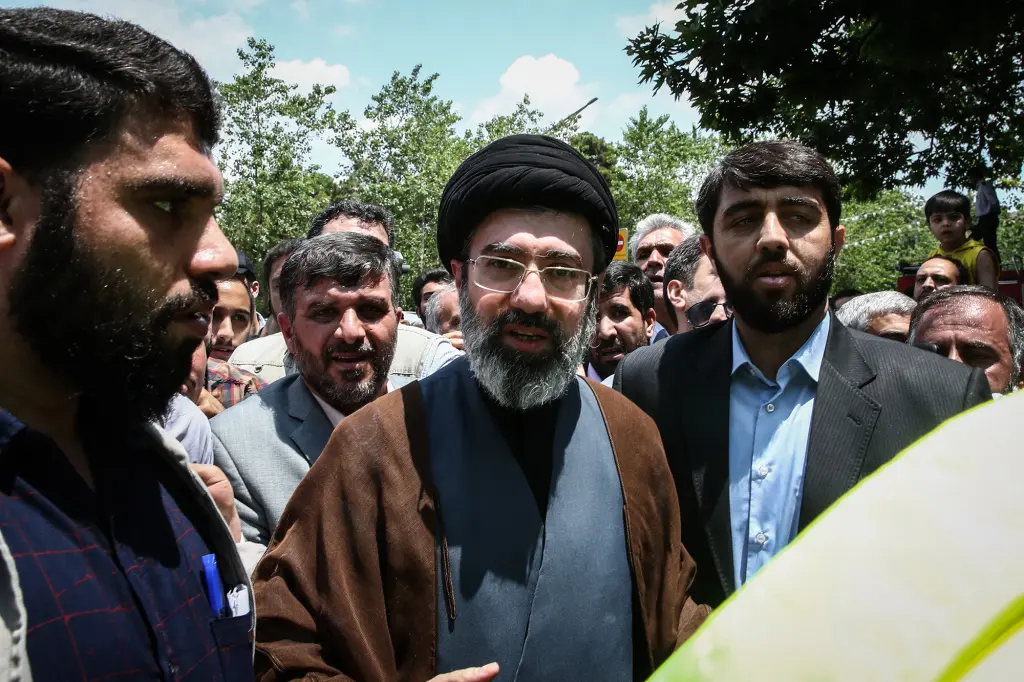
“Khamenei’s son is a lightweight. I have to be involved in the appointment, like with Delcy,” Trump said while speaking to the news outlet.
The US president referenced developments in Venezuela, drawing comparisons to the political transition that followed the removal of former Venezuelan president Nicolás Maduro. Trump cited the cooperation of interim leader Delcy Rodríguez with Washington after Maduro’s departure as an example of how leadership changes could reshape relations with the United States.
Trump also warned that without a leadership outcome favorable to Washington, the United States could face renewed conflict with Iran within the next five years.
“Khamenei’s son is unacceptable to me. We want someone that will bring harmony and peace to Iran,” he said in the interview.
Despite Trump’s comments, the process of selecting a supreme leader in Iran does not involve foreign governments. The decision is traditionally made by the country’s Assembly of Experts, a body made up of senior Shiite clerics who generally maintain strong opposition to the United States and its influence in Iranian affairs.

Trump’s remarks nonetheless suggest a willingness to work with a figure emerging from within the existing political structure of the Islamic Republic rather than pushing for a full collapse of the government. Relations between Washington and Tehran have been hostile for decades, particularly since the Iranian Revolution in 1979 that removed the pro-Western monarch Mohammad Reza Pahlavi and established the Islamic Republic under revolutionary leader Ruhollah Khomeini.
Meanwhile, the late shah’s son, Reza Pahlavi, has proposed that he return to Iran as a temporary leader who would oversee the drafting of a new constitution aimed at transforming the country into a secular democracy. Earlier on Thursday, Pahlavi argued that any new supreme leader chosen within the current Islamic system would lack legitimacy.
Ali Khamenei, who had ruled Iran since 1989 and maintained a hardline approach that included domestic repression and tense relations with neighboring states, was reportedly killed during an Israeli strike amid escalating military operations involving both Israel and the United States.
Among the individuals widely viewed as potential successors is Mojtaba Khamenei, the late leader’s son. If chosen, he would become only the third supreme leader in the country’s modern history, following his father and the founding revolutionary leader Ruhollah Khomeini.
In Venezuela, Trump earlier authorized a January 3 military operation in which US forces captured Nicolás Maduro, a long-standing adversary of Washington.
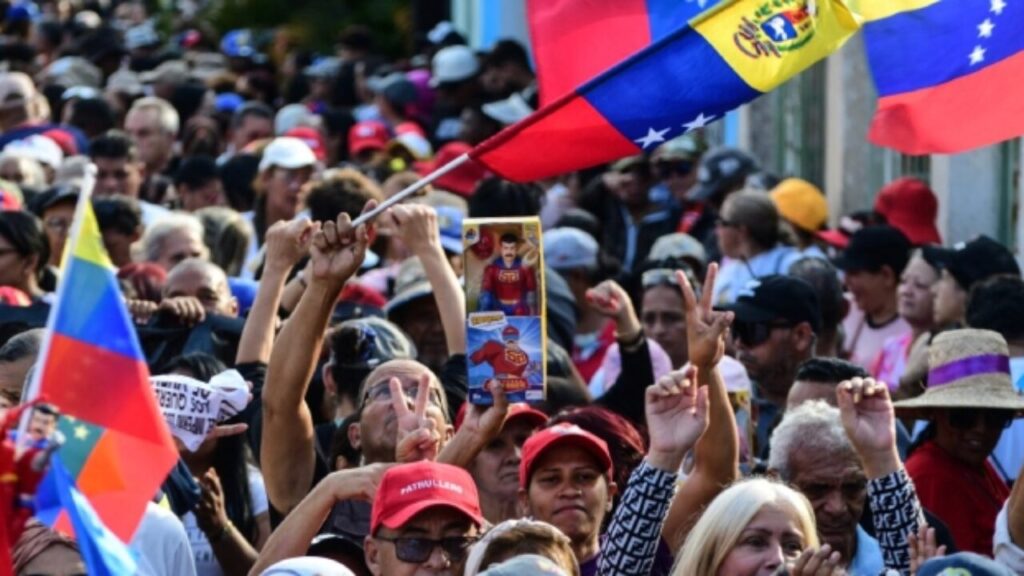
Rather than backing the opposition groups previously supported by the United States, Trump later expressed satisfaction with the role played by Delcy Rodríguez, who had served as Maduro’s vice president before assuming the country’s leadership and cooperating with Washington on several demands, particularly those involving energy resources and oil production.
Her administration has continued to work under pressure from the United States, with Trump warning that failure to comply with American expectations could result in further military action, especially regarding access to natural resources and energy supplies.
What you should know
The Supreme Leader is the most powerful political and religious authority in Iran, controlling key state institutions including the military, judiciary and state broadcasting system.
The position is selected by Iran’s Assembly of Experts rather than through public elections. Since the 1979 Islamic Revolution, only two men have held the role: Ruhollah Khomeini and Ali Khamenei.
Trump’s suggestion that the United States should influence the choice of Iran’s next leader reflects escalating geopolitical tensions following Khamenei’s death and highlights Washington’s interest in shaping the future political direction of the Islamic Republic.