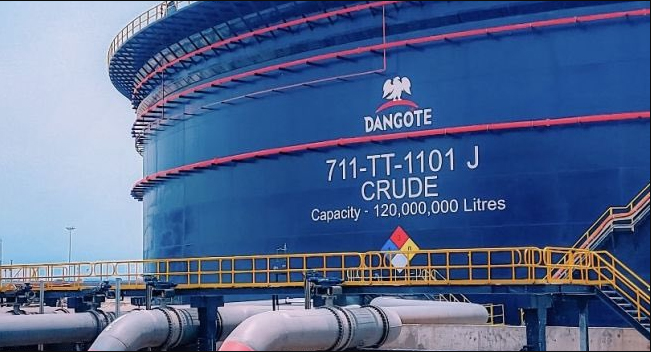
Dangote Petroleum Refinery & Petrochemicals has reassured Nigerians of its commitment to ensuring a steady supply of petrol across the country despite recent volatility in the international oil market triggered by geopolitical tensions in the Middle East.
The assurance follows recent increases in petrol pump prices by fuel marketers after a military conflict involving the United States, Iran and Israel disrupted global energy markets and heightened concerns over fuel supply.
In a statement issued on Thursday, the refinery explained that although it implemented a measured increase of N100 per litre in the ex-depot price of Premium Motor Spirit (PMS), it had absorbed about 20 percent of the surge in crude oil costs in a bid to cushion the impact on the domestic market.
According to the company, disruptions in global refining operations have intensified pressure on petroleum product supply worldwide. The refinery noted that the ongoing conflict in the Middle East has forced some refineries to shut down while others have reduced production levels, leading to tighter supplies of gasoline and other refined products.
The situation has been further complicated by a policy decision from China to halt exports of gasoline and diesel, a move that has significantly reduced global availability of refined petroleum products.
Despite these global challenges, the refinery said it remains focused on prioritising the Nigerian market.
“The Dangote Refinery will ensure that Nigeria is insulated from these supply shocks by prioritising supply to the domestic market. This is one of the many benefits of domestic refining,” the company stated.
It further explained that the geopolitical tensions have driven global crude oil and freight prices sharply higher, with benchmark Brent Crude Oil prices rising by about 26 percent within a short period to above $84 per barrel.
In response to these market conditions, the refinery adjusted its ex-depot petrol price by N100 per litre, representing roughly a 12 percent increase. However, the company said it deliberately absorbed about 20 percent of the cost escalation in order to moderate the effect on Nigerian consumers.
The company stressed that the price adjustment was necessary to reflect global market realities and to ensure the sustainability of its refining operations while maintaining consistent petrol supply to the domestic market.
Providing further insight into its cost structure, the refinery noted that Nigerian crude oil currently trades between $3 and $6 above the Brent benchmark price. When freight costs of around $3.50 per barrel are added, crude oil effectively lands at the refinery’s facility at between $88 and $91 per barrel.
This represents a significant increase compared to earlier costs when crude landed at around $68 per barrel at a time when the refinery’s ex-depot petrol price stood at N774 per litre.
The company also highlighted supply challenges affecting its crude sourcing arrangements. According to the refinery, it receives only about five crude cargoes monthly from the Nigerian National Petroleum Company Limited, which are paid for in naira. However, it requires approximately 13 cargoes per month to meet the demand for domestic petrol supply.
Due to the shortfall, the refinery said it is often compelled to procure additional crude oil from international traders using foreign exchange at open market rates, a situation it noted is inconsistent with the provisions of the Petroleum Industry Act which encourages domestic crude supply to local refineries.
The refinery warned that selling petrol below cost in the current deregulated market environment would undermine its ability to secure crude supplies, sustain production levels and maintain uninterrupted fuel availability across the country.
Meanwhile, the company said it is accelerating measures aimed at improving nationwide fuel distribution and reducing logistics costs.
As part of this effort, the refinery disclosed plans to deploy Compressed Natural Gas (CNG)-powered trucks to strengthen fuel distribution across Nigeria. The initiative, expected to commence this month, is designed to lower transportation costs and improve delivery efficiency throughout the downstream petroleum sector.
According to the company, the expansion of domestic refining capacity will play a crucial role in shielding Nigeria from international supply disruptions, easing pressure on foreign exchange demand and preventing severe fuel shortages during periods of global instability.
Dangote Refinery maintained that large-scale local refining remains a strategic solution to ensuring energy security and price stability in Nigeria’s petroleum market.
WHAT YOU SHOULD KNOW
Dangote Petroleum Refinery & Petrochemicals says it remains committed to maintaining steady petrol supply in Nigeria despite global oil market disruptions caused by the Middle East conflict.
While petrol prices were slightly adjusted to reflect rising crude costs, the refinery noted it absorbed part of the increase and will continue prioritising the domestic market to help shield Nigerians from severe fuel shortages.