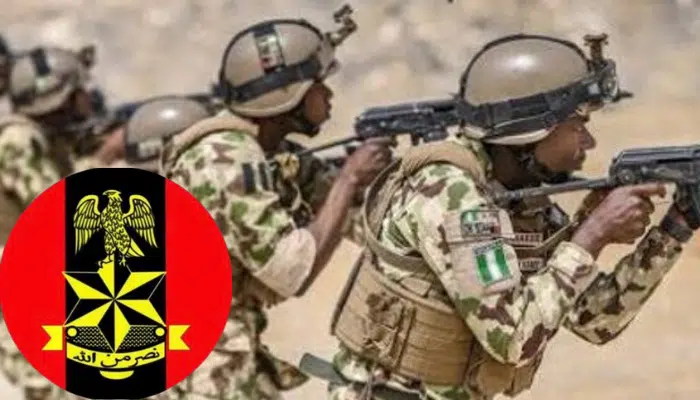
The United States (US) has withdrawn most of the troops it deployed to Nigeria for a joint counterterrorism operation in the Lake Chad Basin.
The Commander of US Air Forces in Europe-Air Forces Africa, General Dagvin R.M. Anderson, announced this during a press briefing on the outcome of the African Chiefs of Defence Conference 2026.
The US deployed about 200 military personnel to Nigeria in February to support intelligence, surveillance and counterterrorism operations in the Lake Chad Basin.
According to Anderson, the operation has now ended, and most of the American troops involved have returned to Washington, D.C. He, however, said the US will continue to work with Nigeria by sharing intelligence to strengthen security efforts.
“And so that operation in the Lake Chad Basin of Nigeria not only helped the countries in that immediate region, but it also helps countries globally as that disrupts the ISIS network.
“And so, and then we have withdrawn much of our forces that were just there for that operation, but are continuing the partnership that Nigeria has asked for to help continue with the intelligence sharing and the understanding that’s necessary to be able to prosecute these difficult tasks,” he said.
US Praises Nigeria’s Military
General Anderson described Nigeria as a strong partner with a capable military, a large economy and an educated population.
He said intelligence cooperation between both countries has produced important results in the fight against ISIS and other terrorist groups.
“I think the partnership that we’ve shown recently with Nigeria, where Nigeria’s a very capable and large country — it’s got a strong economy; it’s got a large, educated population; it’s got a very capable military,” Anderson said.
According to him, the US shared its counterterrorism experience with Nigeria, helping to improve intelligence gathering and operations that led to the successful targeting of a senior ISIS leader.
“But there are things that we have learned in the counterterrorist fight over several years that we were able to assist and integrate with them to help them with their intelligence and help with the intelligence sharing that eventually led to a cooperative effort to where we were able to bring some unique capabilities that the U.S. brings and be able to prosecute together the number two leader within the ISIS or Daesh organization who is responsible for much of their global operations, their global media, and their recruiting,” he added.
ISIS Commander Killed
The joint operation between Nigeria and the United States reportedly led to the killing of Abu-Bilal Al-Minuki, identified as the second-in-command of ISIS, at his hideout in Borno State.
Before then, the US had carried out airstrikes on two terrorist hideouts in the Bauni Forest in Tangaza Local Government Area of Sokoto State on December 25, 2025.
The deployment of US troops followed increased security cooperation between Washington and Abuja in the fight against ISIS and other terrorist groups operating in the region.
Anderson said the operation demonstrates how the US intends to support African countries by providing specialised capabilities that will help local security forces become more effective.
“So I think as we go forward, that is an example of how we’re looking at engaging with partners to help them be more effective by only bringing unique U.S. capabilities that allow the partner to be effective in these fights,” he said.
He also called for stronger intelligence sharing among African countries to tackle terrorism, drug trafficking and other cross-border crimes.
According to Anderson, effective cooperation recently helped authorities intercept a record 31-ton shipment of cocaine that originated from South America and passed through the West African coast.
“I was able to coordinate through our interagency in the United States, through AFRICOM, and then notify some of the partners. And eventually it was a Spanish ship that interdicted the ship that had 31 tons of cocaine on it, and it turns out is the largest interdiction of drugs at sea that we’ve ever seen,” Anderson said.
He added that continued cooperation among African countries, international partners and the private sector will remain important in addressing security challenges, promoting economic stability and encouraging investment across the continent.