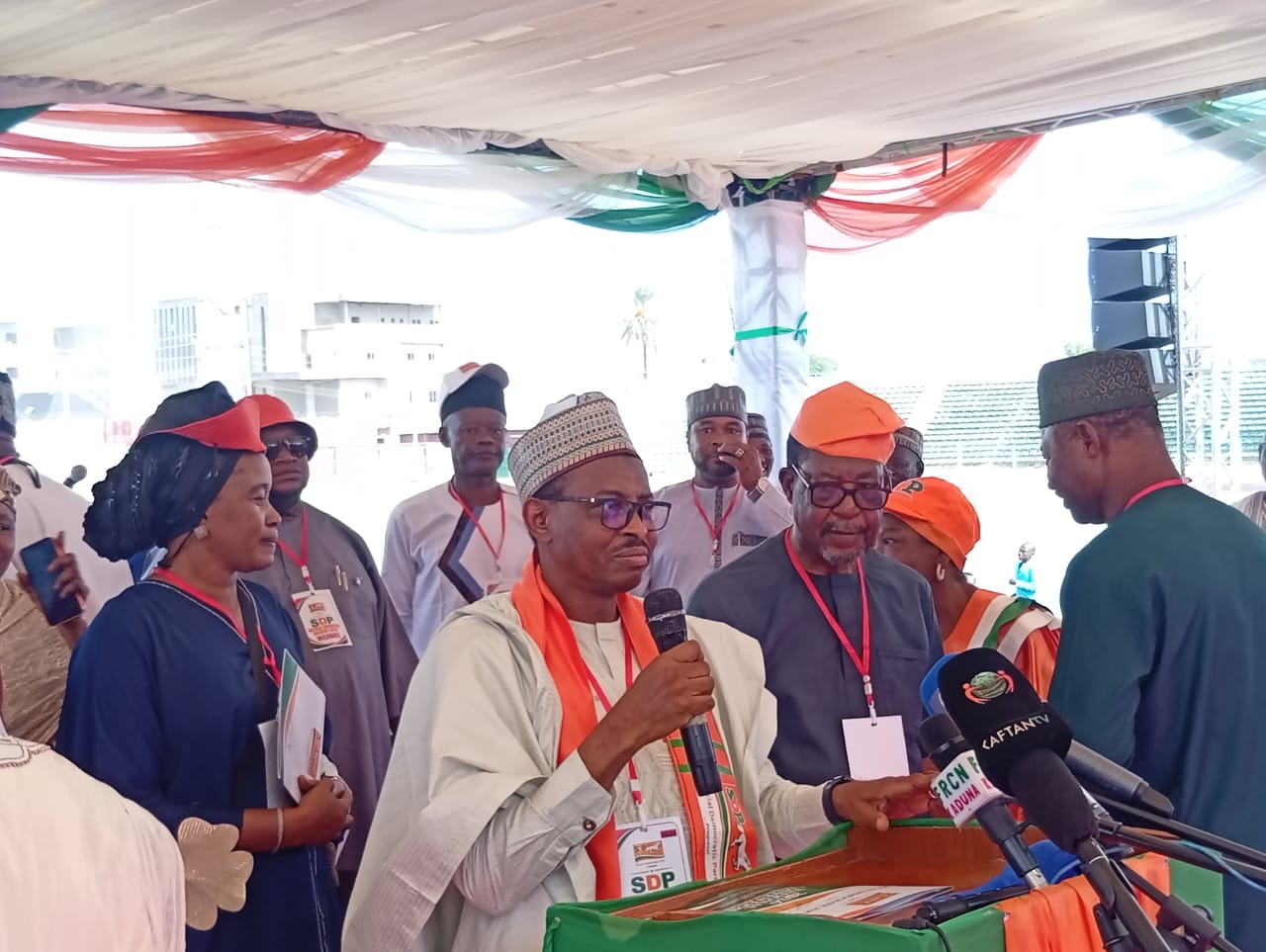
The Social Democratic Party (SDP) has elected Professor Sadiq Gombe as its national chairman at its 2026 National Convention in Bauchi State on Saturday, signaling the party’s renewed ambitions ahead of the 2027 general elections.
Gombe’s election, conducted before a gathering of delegates and party stakeholders drawn from all corners of the country, was accompanied by the inauguration of a full slate of National Working Committee (NWC) members, marking what party loyalists described as a pivotal moment in the SDP’s bid to reclaim relevance on Nigeria’s increasingly competitive political landscape.
Taking the oath of office before an expectant crowd of party faithful, the newly elected chairman wasted no time in striking a tone of unity and purpose. Visibly moved by the confidence placed in him, Gombe expressed deep gratitude to party members and laid out a vision rooted in transparency and constitutional fidelity.
“We assure you of our commitment to the ideals, principles, and well-being of the party and Nigeria,” he declared, words that drew applause from the floor and set the tenor for what promises to be an assertive new chapter for the party.
Beyond rhetoric, Gombe’s message carried unmistakable strategic intent. He positioned the SDP as a credible alternative political platform for Nigerians disillusioned with the ruling establishment, a bold pitch in a country where third-party movements have historically struggled to break through the dominance of the two major parties.
Earlier in the proceedings, Usman Bugaje, Chairman of the National Convention Committee, framed the gathering as more than a mere administrative exercise.
In pointed remarks that drew murmurs of agreement from delegates, Bugaje painted a sobering picture of the nation’s condition, one riddled with insecurity, spiraling unemployment, and grinding economic hardship.
He argued that the convention was a declaration of the party’s resolve to build a stronger, more purposeful political platform, one laser-focused on the bread-and-butter issues that millions of Nigerians face daily: security, economic development, and poverty reduction.
His remarks were widely interpreted as a direct rebuke of the current federal administration, lending the convention the air of an opposition movement finding its footing.
The convention also produced a full complement of NWC officers to serve alongside the new chairman. Among those elected were:
- Deputy National Chairman (South): Senator Ugochukwu Uba, a familiar face in Senate corridors whose inclusion lends the new leadership considerable legislative experience.
- National Secretary: Olu Agunloye
- National Treasurer: Hajiya Mariam Maggie Batubo
- National Publicity Secretary: Araba Rufus Aiyenigba
The composition of the committee, blending seasoned political hands with fresh voices, suggests a deliberate attempt by the party to project both experience and renewal, a balance that will be closely scrutinized as the 2027 campaign season draws nearer.
Perhaps the most consequential takeaway from Saturday’s convention was the SDP’s unmistakable declaration of intent for the 2027 general elections.
With Nigeria’s major opposition forces still jostling for cohesion, the SDP under Gombe appears to be wagering that a clearly articulated alternative, grounded in democratic governance and responsive to everyday Nigerian struggles, could carve out a meaningful space in an increasingly restless electorate.
Whether the party can translate the energy of its Bauchi convention into a formidable electoral machine remains to be seen. But one thing is clear: the SDP has drawn its battle lines, and Professor Sadiq Gombe is the man they have chosen to lead the charge.
WHAT YOU SHOULD KNOW
The SDP’s 2026 National Convention in Bauchi marked a defining moment for the party, with Professor Sadiq Gombe’s election as National Chairman signaling a clear and deliberate pivot toward the 2027 general elections.
With a new leadership structure in place and a sharp focus on security, economic development, and poverty reduction, the party is staking its claim as a viable alternative to Nigeria’s dominant political forces.