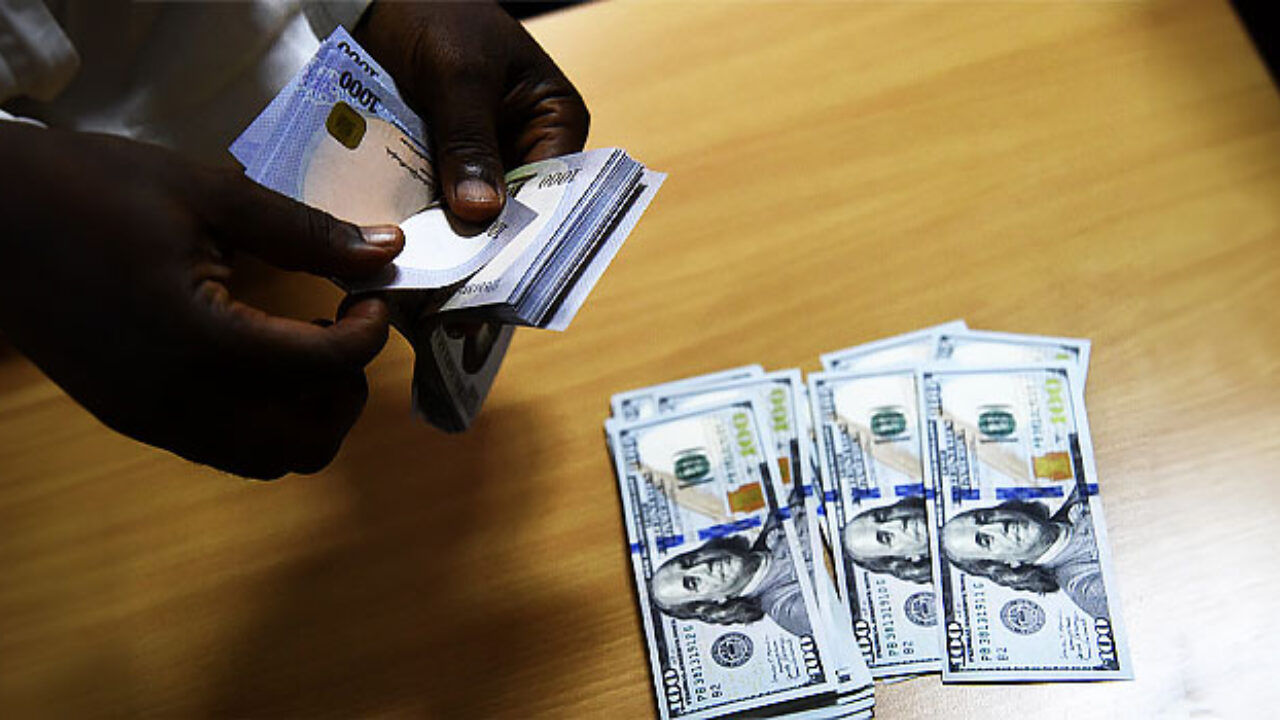
The naira held steady against the dollar on Thursday, trading within a narrow band across both the official and parallel markets, as monetary reforms and improved liquidity conditions show early, cautious signs of progress.
At the Nigerian Foreign Exchange Market (NFEM), the official trading window of Africa’s largest economy, the naira was quoted at approximately ₦1,373 per dollar, with intraday trades ranging between ₦1,372 and ₦1,375, according to data published by the Central Bank of Nigeria (CBN).
The official rate closed the day at around ₦1,373.25 per dollar, consistent with the ₦1,370–₦1,375 corridor that has defined trading in recent sessions.
On the streets and at bureau de change outlets that constitute Nigeria’s parallel market, colloquially referred to as the black market, the greenback was changing hands at between ₦1,375 and ₦1,39 for buyers and between ₦1,385 and ₦1,405 for sellers, with quotations varying by location, transaction size, and individual dealer discretion.
Perhaps the most closely watched metric among forex analysts and business operators is not the rate itself but the spread between the official and parallel markets, a figure that has historically served as a barometer of confidence, or lack thereof, in Nigeria’s foreign exchange management framework.
On Thursday, that spread remained relatively compressed, with the differential between the NFEM rate and the top of the parallel market sell band at roughly ₦30-₦32 per dollar.
While not negligible, the figure represents a marked improvement from the triple-digit premiums that plagued the market in previous years, when dollar scarcity and policy uncertainty drove desperate buyers to the curb market at steep markups.
Currency monitoring platforms confirmed the tighter spread, attributing it to what they described as improved liquidity conditions compared with the wider gaps recorded in earlier months of the year.
Analysts who track Nigeria’s macroeconomic landscape say the relative calm in the forex market reflects the cumulative effect of a series of deliberate policy choices, even as significant challenges remain.
“The stability we are seeing is not accidental,” one Lagos-based financial analyst noted. “It is the product of sustained reforms, improved transparency in price discovery, a more unified exchange rate framework, and the CBN‘s periodic market interventions to bridge supply gaps.”
The CBN has, over the past year, worked to consolidate the previously fragmented exchange rate windows into a more coherent market-determined system under the NFEM architecture to attract foreign portfolio investors and restore confidence among multinational corporations that had long complained of difficulties repatriating funds.
Importers, manufacturers, and other commercial end-users continue to exert significant demand pressure on available dollar supply, particularly as Nigeria’s import dependency for fuel, raw materials, machinery, and consumer goods remains structurally elevated.
Seasonal factors, including pre-quarter-end corporate dollar demand, also have the potential to disrupt the current equilibrium.
Small and medium-sized businesses, which typically lack access to the official NFEM window and are forced to source foreign exchange through bureaux de change or the parallel market, continue to absorb the higher costs associated with the premium above the official rate, which ultimately filters through to consumer prices.
Thursday’s trading figures reflect a Nigerian economy navigating a delicate forex transition, one in which hard-won stability is real but remains contingent on sustained policy discipline, foreign exchange inflows through oil revenues and diaspora remittances, and the confidence of international investors.
For ordinary Nigerians and the businesses that drive the economy, the headline numbers offer a measure of relief after years of volatility and uncertainty. But as most seasoned forex watchers will attest, in Nigeria’s foreign exchange market, stability is always celebrated and always watched closely.
WHAT YOU SHOULD KNOW
The naira traded steadily on Thursday, June 4, 2026, at around ₦1,373/$ in the official market and ₦1,385–₦1,405/$ in the parallel market.
The gap between both markets has narrowed significantly, a direct result of the CBN’s ongoing forex reforms and improved market transparency.
However, this stability is fragile. Persistent import demand and structural dollar dependency mean the naira remains vulnerable. The progress is real, but it is policy-dependent, and in Nigeria’s forex history, what reforms build complacency can quickly erode.