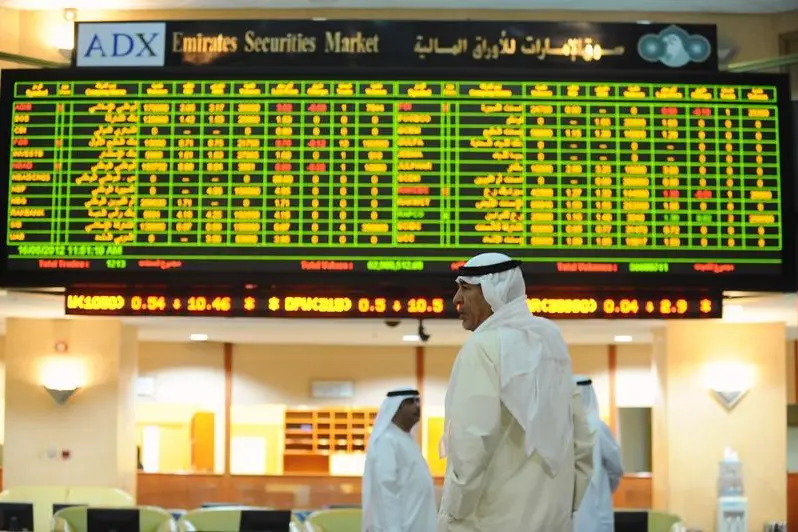
The Gulf stocks plunged into turmoil on Monday as the escalating conflict between Iran, Israel, and the United States sent shockwaves through the region’s economy, prompting trading suspensions and sharp declines in key indices.
The chaos stems from Israel’s fresh airstrikes on Tehran over the weekend, which followed the reported killing of Iran’s Supreme Leader Ayatollah Ali Khamenei in a coordinated U.S.-Israeli operation, igniting Iranian retaliatory missile and drone barrages that disrupted vital shipping lanes and heightened fears of a broader war.
The violence has already claimed lives on both sides, with explosions reported in major Gulf cities, including Dubai and Doha, forcing airports to shut down and airlines to suspend flights. Witnesses described blasts lighting up the skies, underscoring the direct threat to civilian infrastructure in the oil-rich region.
Iranian forces have targeted U.S. military bases in Bahrain and other Gulf states while also launching attacks on shipping in the Strait of Hormuz, a critical chokepoint for global energy supplies.
This has led to an immediate surge in oil prices, with Brent crude jumping as much as 13% to around $82 a barrel in early Asian trading before settling near $80, its highest in over a year. Analysts warn that prolonged disruptions could push prices toward $100 a barrel, evoking memories of 1970s-style energy shocks.
In Qatar, where markets operate from Sunday to Thursday and were closed for a bank holiday the previous day, the benchmark. The QSI index tumbled 3.7% in early trading, with every constituent stock in the red.
Qatar National Bank, the Gulf’s largest lender by assets, shed 3.7%, while Qatar Islamic Bank plummeted 5.2%—its steepest drop since August 2023. HSBC analysts downgraded the Sharia-compliant bank’s target price to 28.4 riyals from 29.4 riyals, citing heightened geopolitical risks.
Maritime and energy firms were hit hardest: Qatar Navigation fell 6.2%, and LNG shipper Qatar Gas Transport retreated 4.1%, reflecting fears over disrupted exports through the Hormuz Strait, which handles about 20% of the world’s oil and significant LNG volumes.
Neighboring markets fared no better. The United Arab Emirates‘ Capital Markets Authority announced a two-day suspension of trading on the Abu Dhabi Securities Exchange and Dubai Financial Market for March 2 and 3, invoking its regulatory oversight amid the “exceptional circumstances” of ongoing Iranian attacks.
The move aims to prevent a potential meltdown, but it signals deep anxiety in a nation positioning itself as a stable financial hub. “These attacks are causing panic among residents and pose a huge threat to the UAE’s economy,” noted Bloomberg Intelligence analysts Edmond Christou and Salome Skhirtladze, warning of demand shocks in property and tourism sectors, including risks to 350,000 new housing units and 120 million annual visitors to Dubai Mall.
Kuwait’s BKP index, resuming after a Sunday suspension for similar reasons, sank 3.3%, with major Islamic lender Kuwait Finance House losing 2.6%. In contrast, Saudi Arabia’s. The TASI benchmark clawed back 1% after a more than 2% drop in the prior session, buoyed by a 1.5% gain in oil giant Saudi Aramco, which had surged 3.4% intraday on Sunday—its biggest in over four months—amid expectations of higher crude revenues. Oman’s MSX30 index rose 1%, while Bahrain’s.BAX eased 0.1%, showing a mixed but tense picture across the Gulf Cooperation Council (GCC) states.
The broader market sell-off extended globally, with Asian shares falling 1.6%, U.S. equity futures dropping over 1.3%, and European contracts slumping 2.3%. Safe-haven assets rallied: gold surged 1.5-2.5% to around $5,350-$5,380 per ounce, and the U.S. dollar strengthened. “Iran’s continuing missile and drone strikes on GCC countries have pushed markets into uncharted territory,” stated Iridium Advisors in a client note, emphasizing the risk of prolonged instability.
The conflict’s roots trace back to heightened tensions, with U.S. officials reportedly viewing strikes as a “last diplomatic chance” before regime change efforts targeting Khamenei. Iran’s Islamic Revolutionary Guard Corps (IRGC) had declared readiness for attacks on Israel weeks earlier, setting the stage for this rapid escalation.
Social media reactions highlight the peril: one analyst noted the assassination has sparked a “holy war” across the Middle East, pulling in protests from Jordan to Pakistan and risking wider involvement. The GCC has condemned Iran’s actions as a direct threat to global energy security, with disruptions in the Strait of Hormuz already halting tanker traffic.
As trading resumes in some markets later this week, investors are bracing for further volatility. OPEC+’s plans to boost output by 206,000 barrels per day have been overshadowed by the Hormuz crisis, where the duration of disruptions will dictate oil’s trajectory. Economists fear cascading effects on inflation, supply chains, and growth, particularly in energy-dependent economies.
With U.S. President Donald Trump vowing to continue operations until objectives are met, the region teeters on the edge of deeper uncertainty. Diplomacy, as one observer urged, is “desperately needed before a wider war erupts.”
WHAT YOU SHOULD KNOW
The key factor driving today’s market turmoil across the Gulf is Iran’s retaliatory missile and drone strikes—including attacks on shipping in the Strait of Hormuz—triggered by Israel’s killing of Supreme Leader Ali Khamenei and renewed strikes on Tehran.
This direct escalation has caused:
Sharp stock sell-offs (Qatar -3.7%, Kuwait -3.3%)
Trading halts in the UAE
Oil prices are surging up to 13%
The disruption of the world’s most critical oil chokepoint now poses the single greatest immediate risk to regional and global economic stability.