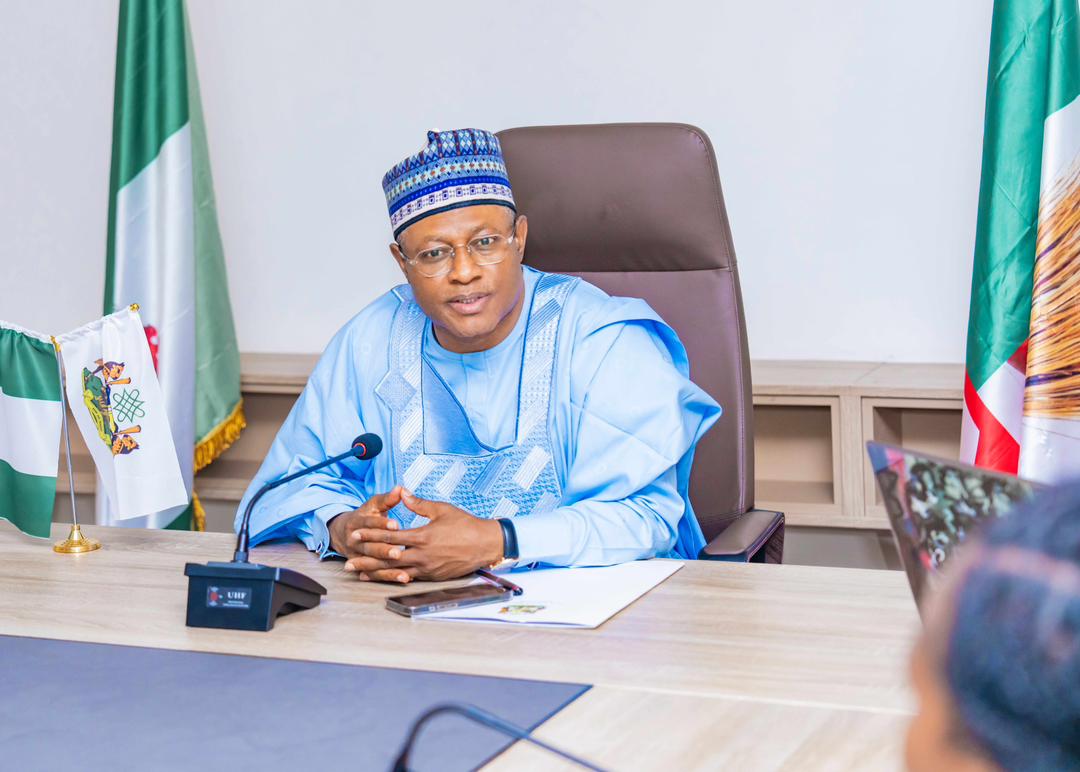
Kaduna State Governor Senator Uba Sani has approved the appointment of 17 new officials to key positions across government, signaling a renewed push to deepen accountability, accelerate development, and broaden citizen engagement across the state.
The appointments, announced on Friday by Chief Press Secretary Ibraheem Musa, span a wide range of critical governance portfolios, from infrastructure and urban planning to peace-building, primary healthcare, and debt management, reflecting what analysts may interpret as a deliberate effort by the governor to plug perceived gaps in his administration’s delivery machinery ahead of what promises to be a consequential period for the state.
At the heart of the reshuffle is a clear emphasis on technocratic competence and political groundwork. Balarabe Muhammad Bello steps into the role of Counsellor, Infrastructure, a position that places him at the nerve center of Kaduna’s physical development ambitions, as the state continues to grapple with pressing demands for roads, bridges, and public utilities across its three senatorial zones.
Perhaps one of the most politically telling appointments is that of Hon. Muhammad Abubakar Mamadi as Special Adviser on Political Matters, a role that signals the governor’s intention to fortify his political base and manage the complex stakeholder dynamics that often define governance in a state as diverse as Kaduna.
Equally significant is the appointment of Danlami Adamu as Special Adviser on Peace and Conflict Resolution. Kaduna State has historically been a flashpoint for ethno-religious tensions, and the creation of a dedicated advisory role in this space suggests the governor is treating peacebuilding not merely as a security afterthought but as a strategic governance priority.
The appointment of Hamza Ibrahim as Special Adviser on Primary Healthcare Matters comes at a time when rural communities across Kaduna State continue to bear the brunt of inadequate health infrastructure.
His mandate will likely involve coordinating grassroots health delivery and bridging the persistent gap between policy pronouncements and primary care outcomes on the ground.
On the agricultural front, Bashir Idris Aliyu assumes the role of Special Adviser on Agricultural Development, a portfolio of immense strategic importance in a state where a significant proportion of the population depends on farming for their livelihoods. His appointment may also tie into broader federal food security conversations under the current national administration.
For education, Tanko Bajo Kokwain has been named Board Chairman of the Kaduna State Schools Quality Assurance Authority, a body whose mandate is central to Governor Uba Sani’s vision of raising educational standards across the state’s public schools—an area that has seen sustained investment and reform attention under the current administration.
The appointment of Muutasim Billah Yusuf as Special Adviser on Debt Management is perhaps the most telling signal of the administration’s fiscal concerns. As states across Nigeria continue to navigate tight revenue envelopes and mounting debt obligations, the establishment of a dedicated advisory function in this space reflects a sober acknowledgment that sustainable development cannot be divorced from sound public finance management.
Yusuf Salihu, tapped as special adviser on urban planning and development, inherits a brief that will demand careful navigation of Kaduna’s rapid urbanization, balancing infrastructure expansion with environmental sustainability and equitable access to land and services.
Rounding out the appointments is a cluster of senior special assistants tasked with community engagement, stakeholder relations, contact and mobilization, and industrial training roles that speak to the administration’s recognition that governance must be felt at the grassroots level to be meaningful.
Samson Monday Dikko, Amanda Tanko Usman, Alhassan Mando, Zubairu Usman Abdullahi, and Edward John Auta join the government machinery in these frontline engagement roles, acknowledging that policy, however well-designed, ultimately lives or dies on the strength of citizen buy-in and ground-level implementation.
Hon. Esther Ashievelli Dawaki takes the helm at the Kaduna State Community and Social Development Agency as general manager, while Shehu Usman Dantudu assumes chairmanship of the Kaduna Market Development and Management Company, both positions with direct implications for livelihoods and social welfare across the state.
In a statement accompanying the announcement, Governor Uba Sani congratulated the new appointees while issuing a clear directive that transparency and integrity must define their conduct in office.
“The governor congratulates the new appointees and urges them to uphold the highest standards of transparency and integrity in the discharge of their duties,” the statement read, adding that the administration “remains unwavering in its commitment to transforming Kaduna State into a model state, driven by policy, innovation, and unwavering focus on the common good.”
The new appointees are expected to be inaugurated and assume their respective responsibilities in the coming days. Political observers will be watching closely to see whether this latest wave of appointments translates into measurable improvements in governance delivery or whether, as has been the case with previous reshuffles across Nigerian states, the promise of change remains largely on paper.
WHAT YOU SHOULD KNOW
Kaduna State Governor Senator Uba Sani has appointed 17 new officials across critical government portfolios, including infrastructure, healthcare, peace-building, debt management, and community engagement, in a clear signal that his administration is shifting gears and doubling down on results-driven governance.
The diversity of roles filled reflects a governor who is not merely reshuffling for political optics but strategically plugging gaps in policy delivery. However, appointments alone do not transform states; execution does.
The real test for these new officials, and ultimately for Governor Uba Sani himself, lies not in their titles but in the tangible impact they deliver to ordinary Kaduna residents.