Nearly thirty years after Tupac Shakur was gunned down on the Las Vegas Strip, a jury delivered the verdict that fans, investigators, and conspiracy theorists had waited decades to hear: guilty.
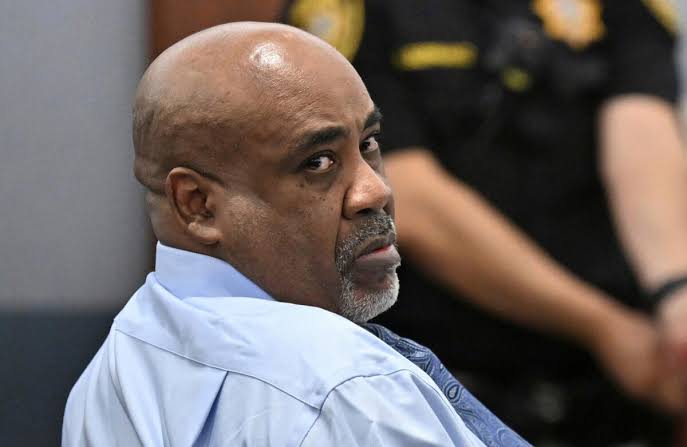
Duane “Keffe D” Davis, 63, a former leader of the South Side Compton Crips, was convicted on Monday of first-degree murder with use of a deadly weapon in the September 7, 1996, killing of the 25-year-old rap icon.
The jury deliberated only a few hours after nearly two weeks of testimony, unanimously finding Davis guilty of a killing that has gripped rap fans, true-crime followers, and conspiracy theorists for nearly three decades.
Jurors returned to the courtroom shortly after 4:30 p.m. and delivered their decision on a charge that had originally carried a gang-related modifier alongside the deadly-weapon enhancement, though prosecutors ultimately dropped the gang enhancement before the case went to the jury.
Judge Carli Kierny had been told the enhancement was being abandoned due to witness logistics.
Davis addressed the judge directly after the verdict. He said he intended to appeal the decision and told the court he wanted his belongings returned to him. Kierny ordered him held without bond ahead of sentencing, scheduled for October 13 a hearing at which Davis could face life in prison without the possibility of parole.
The emotional weight of the moment was visible throughout the room. Jurors were polled individually, each affirming the guilty finding, while Tupac’s sister, Sekyiwa “Set” Shakur, wept and reached for someone seated behind her, and Davis’s own son covered his face. Family members embraced as they left the courtroom, with one person raising a fist in the air.
Prosecutors never alleged that Davis pulled the trigger himself. Instead, they built their case around the theory that Davis was the “shot-caller” who handed the murder weapon to the actual gunman believed to be either his nephew, Orlando “Baby Lane” Anderson, or another man riding in the back seat of the white Cadillac.
Their motive theory centered on retaliation: earlier that night, members of Shakur’s entourage had beaten Davis’s nephew inside a Las Vegas casino, and prosecutors argued gang codes of conduct demanded a violent response.
The case leaned heavily on Davis’s own repeated public accounts of the crime rather than physical evidence. Prosecutors pointed jurors to Davis’s police interviews including a 2008 sit-down with investigators in which he said he handed his nephew the gun and that his nephew fired the fatal shots along with passages from his memoir.
Over the course of the trial, jurors heard from two dozen prosecution witnesses, many of them former investigators and law enforcement officials who had spent years trying to crack the cold case, compared with just three witnesses called by the defense. Davis did not take the stand in his own defense.
Defense attorney Michael Sanft’s strategy hinged on discrediting his client’s own words. He told jurors that Davis’s admissions were nothing more than tall tales, arguing his client was “full of crap” and that inconsistency was precisely why prosecutors had never charged him for decades.
Sanft repeatedly emphasized the absence of physical evidence tying Davis to the actual crime scene, framing the memoir and interviews as embellishments chased for money and notoriety rather than genuine confessions.
The defense’s core argument echoed what Sanft had told jurors throughout the trial, that a book written to sell copies should not be mistaken for sworn testimony, and that the state was asking jurors to treat marketing copy as a murder confession.
The investigation into Shakur’s death stalled for years for lack of hard evidence, until Davis’s own choices reopened it. His 2019 memoir, “Compton Street Legend,” described him sitting in the front seat of the Cadillac and passing a pistol to those in the back though notably, he stopped short of naming who fired the fatal shots.
The publication, paired with years of media interviews in which Davis boasted of his role in the killing, ultimately gave Nevada prosecutors the foundation to bring charges charges no one else has ever faced in connection with Shakur’s death.
Davis is also the last living occupant of the Cadillac that night. The driver of the BMW carrying Shakur, Death Row Records co-founder Marion “Suge” Knight, survived the shooting with gunshot wounds.
In two weeks, on September 13, Shakur’s family will mark the anniversary of his death — for the first time in thirty years doing so with someone finally held accountable.
Shakur, who died at 25, remains one of the most influential figures in the history of hip-hop, continuing to draw new generations of listeners three decades after his death.
For a killing that spawned endless theories linking it to the East Coast–West Coast rap rivalry of the 1990s, and that touched two of the genre’s most storied labels Shakur’s Death Row Records and the broader gang landscape of 1990s Los Angeles Monday’s verdict closes, at least legally, one of American pop culture’s most enduring mysteries. Whether Davis’s promised appeal reopens it remains to be seen.
WHAT YOU SHOULD KNOW
After nearly 30 years, justice finally caught up with Tupac Shakur’s murder not through new physical evidence, but through Duane “Keffe D” Davis’s own words. His decision to boast about the killing in interviews and a 2019 memoir, seeking fame and book sales, ultimately became the evidence that convicted him of first-degree murder.
Davis wasn’t undone by police work or forensics, but by his own confessions in pursuit of notoriety. He now faces up to life in prison, with sentencing set for October 13.