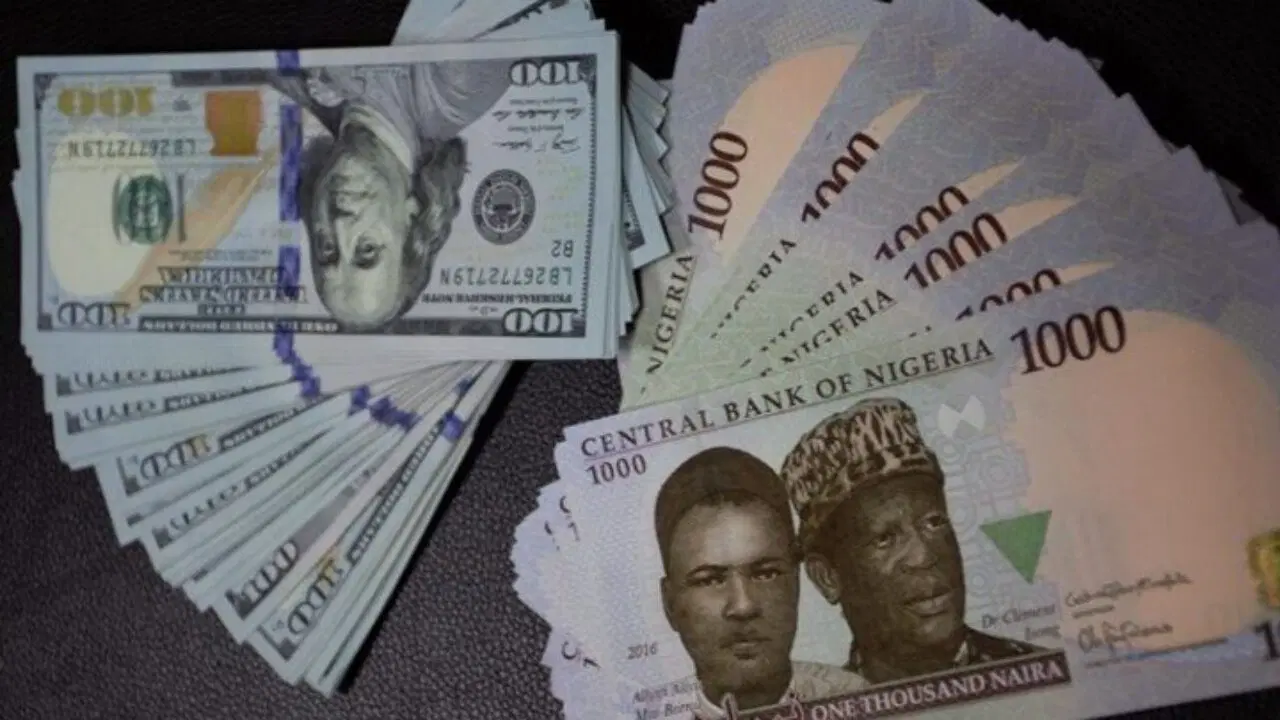
The naira opened the new month on two tracks: a stronger official rate and a costlier street rate. The gap has narrowed from past extremes, but Nigerians buying dollars outside the banking system still pay a steep premium.
At the Nigerian Foreign Exchange Market (NFEM), the interbank window where the Central Bank of Nigeria (CBN) recognizes the dollar as the country’s official rate, the dollar closed the last trading session of August at approximately ₦1,332.44, according to the latest data available for August 31.
The CBN calculates this figure as a volume-weighted average of transactions conducted during the session, making it the benchmark most closely watched by policymakers, importers, and analysts tracking the naira’s institutional performance.
Away from the interbank window, however, the picture looks markedly different. Checks across parallel-market trackers on Tuesday showed the naira opening September 2026 at about ₦1,332 officially, while the dollar traded as high as ₦1,405 in the parallel market.
NgnRates, one of the more closely watched street-rate aggregators, listed the black-market buying rate at ₦1,390 and the selling rate at ₦1,405, while other monitors placed transactions anywhere between ₦1,400 and ₦1,415. A separate tracker put Tuesday’s black-market average even higher, at roughly ₦1,410, with dealers reportedly buying dollars at around ₦1,400.
Taken together, the spread between the official and parallel rates now sits at roughly ₦60 to ₦80 per dollar, a gap that, while still significant, reflects a market that analysts say has become somewhat more orderly than in years past, when premiums of several hundred naira were not uncommon.
The relative firmness of the official rate has been underpinned by improving dollar liquidity. Reporting from AbokiFX earlier in the week noted that the naira had strengthened to ₦1,338.59 per dollar in the NFEM, a move attributed to stronger external buffers and improved supply conditions, even as parallel-market rates hovered near ₦1,400.
Trading activity at the official window also picked up notably in the most recent reported session. Data cited by AbokiFX showed total turnover rising 16.43 percent, climbing to $1.06 billion from $913.76 million in the prior session even though the overall number of individual deals declined.
Market watchers say the combination of higher value but fewer transactions points to larger institutional players and corporates driving volume, rather than a broad-based increase in retail activity.
The persistent divergence between the two markets continues to reflect structural realities that have long shaped Nigeria’s currency landscape: not everyone who needs dollars for school fees abroad, medical travel, personal imports, or simply hedging against naira depreciation can access them through banks or licensed Bureaux de Change at the official rate.
The unmet demand routinely spills into the parallel market, where rates are set more by immediate supply and demand than by the CBN’s periodic interventions.
Notably, AbokiFX’s own Lagos parallel-market data was not fully updated for August 31 at the time of reporting, with the platform displaying blank figures for the latest session and directing users to a subscription service for current quotes a reminder that parallel-market pricing, by its informal nature, is harder to track with the same consistency as the regulated interbank window.
For anyone changing money on Tuesday, the rate actually paid will vary by bank, BDC operator, location, transaction size, and the time of day a caveat that market watchers repeat often but which bears real financial consequences for individuals and small businesses.
The indicative picture as of September 1: roughly ₦1,332 to ₦1,338 to the dollar at the official NFEM window, against somewhere between ₦1,390 and ₦1,415 in the parallel market.
Analysts caution that both figures are fluid and can shift meaningfully within a single trading day as liquidity conditions, CBN interventions, and speculative demand evolve.
WHAT YOU SHOULD KNOW
The naira is stable, but the gap still costs you. As of September 1, 2026, the official rate sits around ₦1,332–1,338/$, while the street rate runs ₦1,390–1,415/$, a ₦60–80 premium for anyone sourcing dollars outside the banking system.
Improved liquidity and rising NFEM turnover show the official market gaining strength, but until that liquidity reaches the retail level, most Nigerians buying or selling dollars day-to-day will keep paying parallel-market prices, not the official rate quoted in headlines.