Iran’s Foreign Ministry lashed out at the European Union (EU) on Monday, accusing Brussels of forfeiting any claim to an independent foreign policy after the bloc threw its weight behind an intensifying American economic campaign against Tehran.
The flashpoint was a statement issued by the EU during the G20 Finance Ministers and Central Bank Governors meeting, held this week in Asheville, in the United States.
The EU said it “welcomes efforts aimed at ensuring that Iran ceases its destabilizing activities and engages in peace negotiations in good faith, also through additional economic pressure, including through the U.S.-led Operation Economic Outcast.”
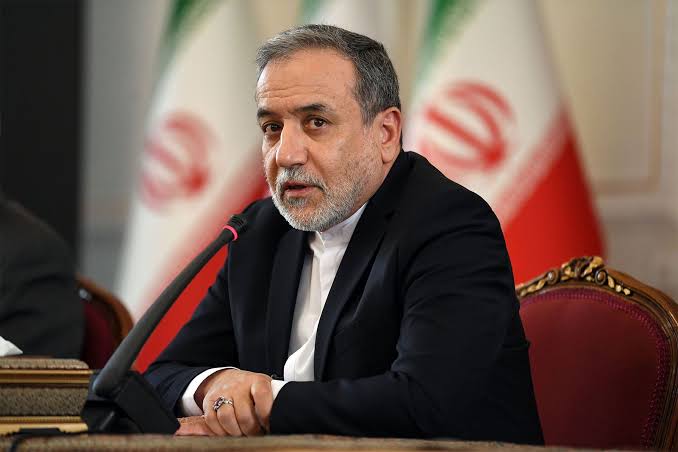
Iranian Foreign Ministry spokesman Esmaeil Baghaei did not let the remark pass. Posting on X, he delivered a pointed rebuke of European foreign policy credibility: “Europe can no longer speak of ‘strategic autonomy’ while merely executing Washington’s orders.”
The line strikes at a concept, “strategic autonomy,” that European officials have championed for years as shorthand for the EU’s ambition to chart a foreign and security policy independent of Washington, particularly on matters touching Iran, trade, and defense.
The American operation at the center of the dispute, Operation Economic Outcast, was unveiled by U.S. Treasury Secretary Scott Bessent, who framed it not as containment but as an endgame.
“America is no longer managing the Iranian threat,” Bessent said in a brief news conference, adding that the goal was to end the Iranian threat entirely rather than continue managing it.
According to the Treasury, the operation is designed to choke off Iran’s financial links across the globe, with the effort concentrated on five sectors of the Iranian economy: digital assets, technology, gold, aviation, and shipping.
Treasury’s Office of Foreign Assets Control simultaneously sanctioned more than 60 entities, individuals, and vessels accused of helping Iran acquire illicit nuclear and missile technology, run cyber operations, and generate oil revenue.
Some regional outlets have described the initiative in starker terms. Middle East Monitor characterized it as the largest economic offensive ever mounted against Iran’s financial networks worldwide, intended to sever every possible revenue stream sustaining the country and billed by Washington as more aggressive than any prior American campaign against an adversary state.
Baghaei’s warning went beyond criticism of Brussels. Speaking to the broader sanctions push, he cautioned that Tehran would respond forcefully to expanded U.S. measures, including any actions targeting states Iran views as cooperating with Washington, declaring that “any escalation of this situation will undoubtedly bring about consequences” and that Iran’s “hands are not tied.”
The economic squeeze is not unfolding in a vacuum. It comes roughly six months after the United States and Israel jointly struck Iran, a conflict that effectively closed the Strait of Hormuz, the chokepoint through which close to a fifth of global oil supply had flowed before the war.
Tehran has signaled that reopening the strait is contingent on conditions tied to the United States, a linkage that keeps the waterway and the EU’s stated concern for “freedom of navigation” through it squarely at the center of ongoing diplomacy.
In the aftermath of the war, the Soufan Center noted that Europe’s own conception of strategic autonomy had shifted to mean something more specific: prioritizing European stability over the U.S.-Israeli push for regime change in Iran, driven largely by concerns over energy prices and the risk of a renewed migration crisis reminiscent of 2015 that could benefit far-right parties across the continent.
Seen against that analysis, this week’s EU statement explicitly endorsing an American-led pressure campaign marks a visible tilt back toward alignment with Washington, lending some rhetorical ammunition to Baghaei’s accusation.
Notably, the harshest doubts about Operation Economic Outcast’s ultimate payoff have come not from Tehran or Brussels but from American foreign-policy circles.
Atlantic Council fellow Nate Swanson was blunt in his assessment, writing that so far the campaign had “not amounted to much” beyond a new slogan, routine designations, and a threat of future sanctions, the kind of announcement that would have been unremarkable under the first Trump administration.
Fellow analyst Lesley Chavkin observed that years of sanctions have already battered Iran’s economy so thoroughly that most high-value domestic targets are already under sanction, leaving Washington’s remaining leverage concentrated on third countries that continue trading with Iran targets that come with steep diplomatic costs to sanction.
For its part, the EU statement stopped short of a blank check. Brussels called for continued diplomacy with Iran to safeguard regional stability and freedom of navigation through the Strait of Hormuz, while stating it remained ready to take further measures and keep up pressure on Tehran alongside the United States and other partners.
The dual framing pressure paired with an insistence that dialogue remains essential is consistent with the EU’s long-standing, if increasingly strained, attempt to walk a line between its transatlantic alliance commitments and its own stated ambitions for foreign-policy independence, a tension European think tanks have been flagging for years as the bloc’s “strategic autonomy” project has repeatedly collided with the practical gravity of U.S. policy.
With Baghaei’s statement, Tehran has signaled it intends to treat European backing for U.S. sanctions as a diplomatic opening to draw a wedge between Washington and Brussels rather than simply absorbing the pressure quietly.
Whether that rhetorical strategy translates into any softening of the EU’s position or whether Brussels doubles down alongside Washington as Operation Economic Outcast expands is likely to shape the tenor of Iran-Europe relations through the remainder of the year, even as the underlying dispute over Iran’s nuclear and regional activities remains unresolved.
WHAT YOU SHOULD KNOW
Iran’s rebuke of the EU isn’t just diplomatic theater; it exposes a real contradiction.
The EU wants to be seen as an independent power broker in the Iran crisis, yet its explicit endorsement of Washington’s Operation Economic Outcast shows it ultimately falling in line with U.S. pressure tactics rather than charting its own course.
The contradiction matters because even American analysts are skeptical the campaign will achieve much beyond symbolism, given Iran’s economy is already heavily sanctioned.
So the story isn’t really about whether sanctions will work; it’s about Europe’s credibility gap between its “strategic autonomy” rhetoric and its actual foreign policy behavior, a gap Tehran is now actively exploiting.