Nigerian domestic football took a seismic leap forward on Tuesday as the country’s football authorities announced the most ambitious prize money package in the history of the Nigeria Premier Football League (NPFL), signaling a bold new chapter for the beautiful game in Africa’s most populous nation.
The winners of the 2026/27 NPFL season will receive a minimum prize money of ₦1 billion, the biggest financial reward ever offered in Nigerian domestic football, following a series of far-reaching reforms unveiled by the National Sports Commission and the Nigeria Football Federation.
The announcement was made by NSC Chairman Shehu Dikko after a high-level strategic meeting between the commission’s leadership and the NFF at the NSC headquarters in Abuja. It was a meeting that those present described as historic, and the numbers emerging from it justify that word entirely.
To appreciate the magnitude of this announcement, one needs only look back at recent history. Enugu Rangers, the Flying Antelopes of the East, claimed the NPFL title last season and walked away with ₦150 million for their efforts, a figure that now looks almost quaint by comparison.
Before them, Remo Stars earned a modest ₦100 million for their title-winning campaign. The jump to ₦1 billion, therefore, represents not an incremental improvement, but a tenfold revolution in how Nigerian football values its champions.
Under the new rewards system, runners-up will earn ₦800 million, and the third-place team will take home ₦700 million. Clubs in other positions will also receive financial rewards according to their final league standing, ensuring that the financial tide lifts all boats, not just those at the summit.
Dikko described the decision as part of a broader plan to transform Nigerian football through improved player welfare, stricter professional standards, and increased commercial value for the domestic league. The NSC chairman left no room for ambiguity about the direction of travel.
“Professional football must be run professionally. If strict enforcement means fewer clubs qualify initially, then so be it. What is important is raising standards across the board,” Dikko said.
The prize money announcement was explicitly tied to a toughening of club licensing requirements. The NSC, NFF, and NPFL agreed to strictly enforce club licensing regulations, insisting that clubs must meet the highest professional standards. The days of clubs scraping through on technicalities appear to be over.
Beyond the headline prize figures, perhaps the reform with the most immediate human impact is the introduction of a mandatory minimum salary for players.
Stakeholders agreed to introduce a minimum wage of ₦2 million for NPFL players, a move aimed at improving player welfare, promoting professionalism, and strengthening the domestic football ecosystem.
For years, stories have circulated of players going months without pay, of local talent drained abroad not for glamour but for simple financial survival. This intervention, if properly enforced, could change that calculus and persuade talented Nigerian footballers to remain in the domestic league.
NSC Director-General Bukola Olopade praised the growing collaboration among football stakeholders, saying: “Together, we are transforming the way sports are administered in this country, and today’s meeting demonstrates our collective determination to build a stronger future for Nigerian football.”
The initiative is projected to boost competitiveness, encourage private sector involvement, help keep talented players in the country, and elevate the overall quality of the competition. These are goals that Nigerian football watchers have long demanded, and the financial muscle now being thrown behind them suggests this is more than rhetoric.
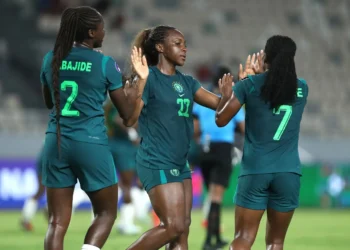
Tuesday’s meeting also addressed matters beyond the domestic league. Officials reviewed preparations for the Super Falcons ahead of the 2026 Women’s Africa Cup of Nations in Morocco, with measures agreed to improve funding, player welfare, and remuneration for the ten-time African champions.
As the 2026/27 NPFL season approaches, Nigerian football clubs will begin their pre-season preparations knowing that the prize at the end of the road has never been greater. One billion naira for a league title.
The ambition is clear. Whether the infrastructure, the governance, and the enforcement mechanisms can match it will be the defining story of Nigerian football in the months ahead.
WHAT YOU SHOULD KNOW
Nigerian football has entered a transformative era. The National Sports Commission’s decision to award ₦1 billion to NPFL champions,, a tenfold jump from the ₦100 million Remo Stars once earned, is the clearest signal yet that authorities are serious about professionalizing the domestic game.
Paired with a mandatory ₦2 million monthly minimum wage for players and stricter club licensing enforcement, this is not just a prize money upgrade; it is a structural overhaul.