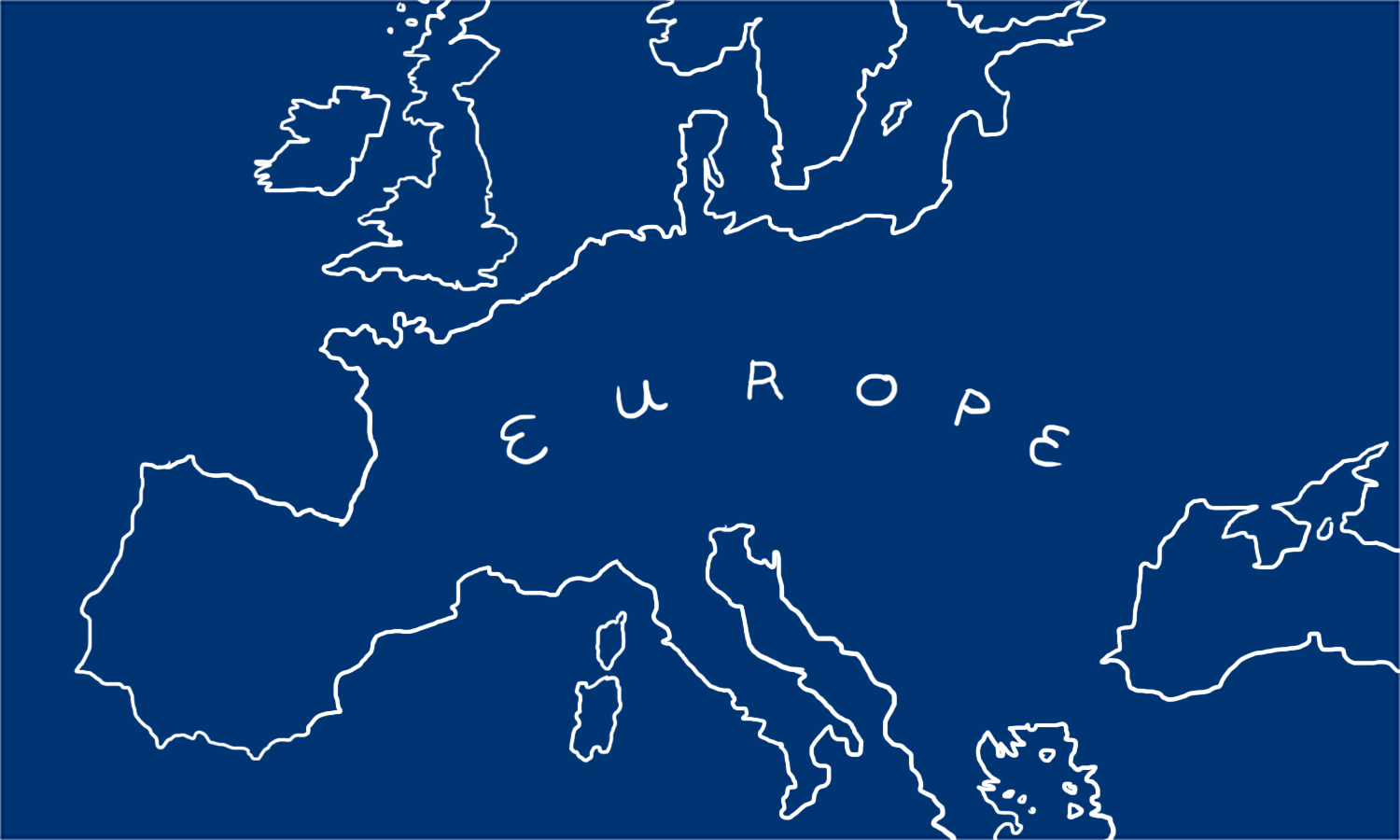
A ferocious heatwave has tightened its grip on Europe, shattering temperature records, knocking out power for hundreds of thousands, and laying bare just how poorly the continent is equipped for the climate reality now bearing down on it.
France has taken the hardest hit. The country’s national temperature indicator, a composite average drawn from 30 weather stations measuring both daytime and nighttime readings, climbed to 29.8°C on Tuesday, its highest level since measurements began in 1947.
By Wednesday, authorities had placed four additional departments under the nation’s top heat alert category, bringing more than 90 percent of the French population into the danger zone. Temperatures of between 39°C and 41°C were forecast to stretch from Brittany in the northwest to the Paris region and across the southwest.
The heat has already claimed its first major infrastructure casualty: a transformer failure in the northwestern Finistère department knocked out power for as many as 106,000 households overnight, with repair crews working through the night and full restoration not expected until at least Wednesday evening.
The scramble for relief has been remarkable in its scale. On Monday alone, retail giant Carrefour sold 30,000 fans and air conditioning units by 6:30 in the evening, a thousand times its normal daily volume, according to its chief executive.
Amazon reported that air conditioning sales nearly doubled compared to the same week in 2025, while electricians across the southwest described being swamped with emergency installation requests from homeowners unwilling to wait for bureaucratic approval.
For visitors, Paris has become an ordeal. “We’re suffocating in the streets, we’re suffocating in the subway, and we’re even suffocating in our rental,” said John Beeler, a 45-year-old American engineer, who said he and his wife had resolved to move to an air-conditioned hotel.
The crisis has spread well beyond France’s borders. Italy declared red heatwave alerts in 16 cities, including Rome and Milan. Poland warned that temperatures could shatter a record that has stood since 1921. Croatia placed its Adriatic coast under red alert for the weekend, while Hungary escalated to its maximum warning level.
In the Netherlands, Amsterdam opened outdoor pools free of charge to city pass holders, and the national rail operator announced reduced train services. Belgium’s iconic Atomium monument in Brussels said it would close early for the remainder of the week.
Britain, too, has been forced into an uncomfortable reckoning with its aging building stock. School administrators acknowledged that classrooms across the country were simply not built for this kind of heat, while a London-based engineer launched a public petition challenging legal restrictions on residential air conditioning, arguing that climate policy that denies people basic cooling is no policy at all.
Scientists have been unequivocal about what is driving events. A study published this week concluded that without human-induced climate change, current temperatures would have been 2°C to 4°C lower. The atmospheric patterns trapping hot air in place, researchers warn, are becoming more frequent and more severe.
Some relief is expected in Spain from Wednesday, but for most of western and central Europe, the heat shows little sign of breaking anytime soon.
WHAT YOU SHOULD KNOW
Europe’s record-breaking heatwave is not a freak event, it is a preview of the continent’s future. Driven significantly by human-induced climate change, temperatures that would have been 2°C to 4°C lower in a pre-industrial world are now buckling power grids, overwhelming unprepared infrastructure, and forcing millions of people to confront a simple truth: Europe was built for a climate that no longer exists.
Until governments move beyond warnings and alerts to seriously retrofit buildings, modernize energy systems, and reconcile climate policy with the practical needs of ordinary citizens, the scenes playing out across France, Italy, Poland, and Britain will not be the exception they will be the norm.