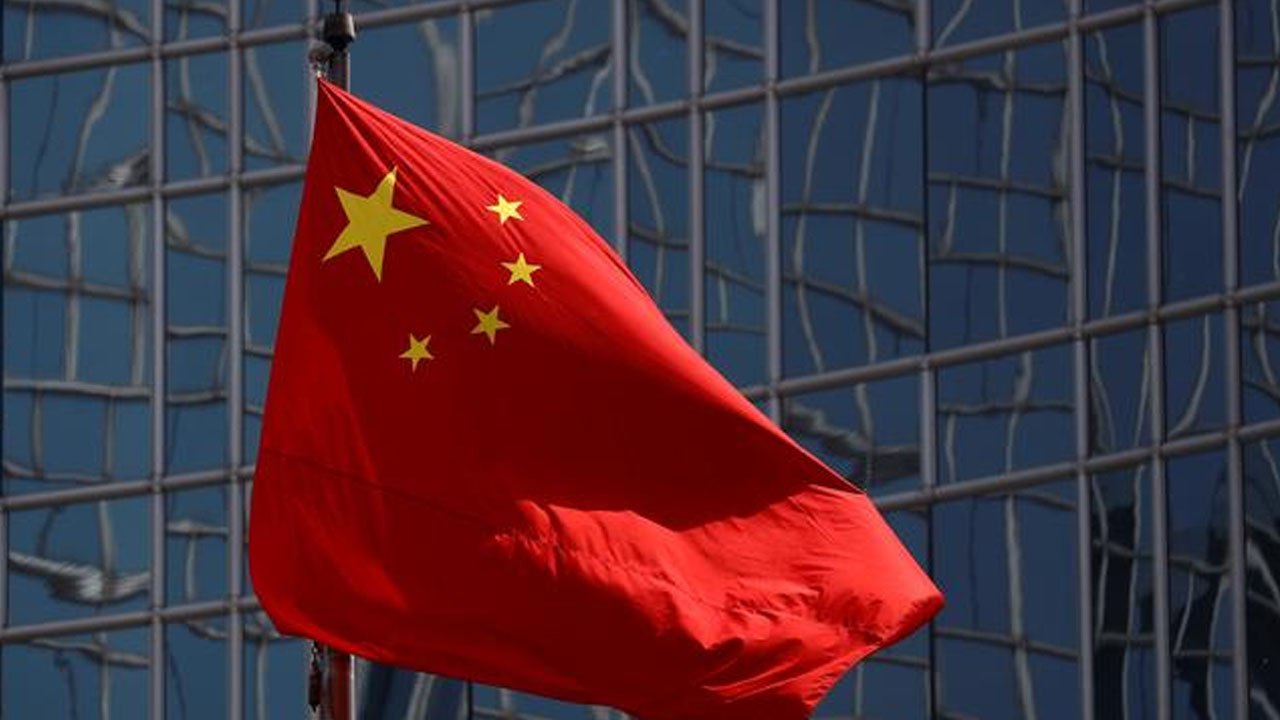
China has fired back at Washington, imposing export controls on 10 American companies and banning procurement from dozens more, in direct retaliation for the U.S. blacklisting of Chinese firms accused of supporting its military.
The Chinese Commerce Ministry confirmed the measures on Monday, stating explicitly that they came “in response to the US government’s egregious act of adding to its so-called ‘Chinese military enterprise list,'” language that signals not just frustration, but a calculated, tit-for-tat escalation that experts say could have significant consequences for global defense supply chains and the already fragile rare earths market.
The announcement arrives barely four weeks after U.S. President Donald Trump touched down in Beijing in what was widely billed as a fence-mending summit with Chinese President Xi Jinping.
Both leaders projected confidence, and the two governments pledged to work toward reducing tariffs, a signal that, after years of bruising trade wars, cooler heads might prevail.
That diplomatic warmth appears to have had a shorter shelf life than many analysts hoped.
Washington’s Commerce Department this month quietly released an updated blacklist of 80 companies and their subsidiaries, alleging they were actively supporting China’s military modernization drive.
The list made headlines instantly: tech behemoths Alibaba and Baidu, alongside electric vehicle titan BYD, found themselves newly designated a broadside that Beijing was never going to absorb quietly.
China’s foreign ministry promptly issued warnings of retaliation. Those warnings, it turns out, were not idle.
The 10 entities now subject to Chinese export controls are not household names to most Americans, but within defense and industrial circles, they represent critical nodes in U.S. military capability.
Aveox, a specialist aerospace defense contractor holding active contracts with the U.S. military, and Oshkosh Defense, the Wisconsin-based manufacturer behind iconic military vehicle fleets including the Army’s Joint Light Tactical Vehicle, are among the most significant designations.
Perhaps more strategically telling is Beijing’s targeting of the rare earths sector. Both MP Materials, the company behind the only active rare earth mining and processing operation on American soil, at Mountain Pass, California, and USA Rare Earth now appear on the controlled list.
China controls an estimated 60 percent of global rare earth mining and an even larger share of processing capacity. These elements, used in everything from fighter jet electronics to EV batteries to missile guidance systems, have long been identified as Beijing’s most powerful economic lever in any confrontation with Washington.
By targeting the very companies the U.S. has been nurturing in a bid to reduce dependence on Chinese supply chains, Beijing is sending a pointed message: America’s rare earth independence project is in its crosshairs.
Under the new controls, exporters are prohibited from supplying dual-use items or goods with both civilian and military applications to any of the listed entities.
Crucially, the ban also extends beyond America’s borders. Any organization or individual, in any country or region, found to be transferring or providing China-origin dual-use goods to these entities would also be in violation, a provision that dramatically widens the potential geopolitical fallout.
“Any relevant export activities currently underway must cease immediately,” the ministry stated, leaving zero ambiguity about the timeline for compliance.
The export controls were only half of Monday’s double-barrel response. China’s Finance Ministry simultaneously announced a ban on public procurement agencies from purchasing products manufactured by 46 U.S. companies, a list that reads like a who’s who of the American defense industry.
Lockheed Martin, maker of the F-35 stealth fighter and a cornerstone of American air power, is listed. So is Raytheon, the missile systems giant, and Boeing’s defense division, responsible for military aircraft, including the F-15EX and the KC-46 tanker.
General Dynamics and the fast-growing defense technology company Anduril Industries, a darling of Silicon Valley’s push into military contracting, are also named, along with multiple aerospace firms.
The Finance Ministry noted that companies with U.S. investments operating within China would be excluded from the procurement ban, a carve-out that analysts suggest may be designed to avoid triggering a full rupture in commercial ties. The measures took effect immediately from Monday.
Notably, China’s Commerce Ministry had already sanctioned several of these companies in 2024 and 2025 over U.S. arms sales to Taiwan, meaning Monday’s actions represent both an expansion and a deepening of an existing pressure campaign.
The self-governing island democracy has relied on American arms and political backing as its primary deterrent against an increasingly assertive Beijing, which claims Taiwan as sovereign Chinese territory and has explicitly not ruled out the use of military force to achieve unification.
U.S. Secretary of State Marco Rubio confirmed this month that a proposed $14 billion arms package to Taipei was “under review,” a package that, if approved, would represent one of the largest single arms transfers in recent memory and would almost certainly provoke a fresh round of Chinese countermeasures.
China’s decision to include firms previously sanctioned over Taiwan arms sales in its latest action underscores how deeply the island’s status remains embedded in every dimension of Beijing’s calculations toward Washington.
For the Trump administration, Monday’s announcement creates an awkward diplomatic moment. Since returning from Beijing, the president has been publicly at pains to portray U.S.-China relations as on the mend.
At last week’s G7 summit in France, Trump publicly thanked Xi for keeping China “neutral” during the U.S.-Iran conflict and its initial ceasefire, an unusual gesture of gratitude directed at a strategic rival.
The picture Beijing is now painting, however, suggests that whatever goodwill was cultivated in May has not translated into restraint on either side and that the structural competition between the world’s two largest economies continues to grind forward regardless of summit photographs and diplomatic pleasantries.
As both governments simultaneously negotiate and retaliate, trading the language of partnership while expanding their lists of adversaries, what becomes increasingly clear is that the U.S.-China relationship has entered a new, more volatile phase, one defined less by outright conflict than by managed hostility.
WHAT YOU SHOULD KNOW
Despite diplomatic overtures and summit-level meetings, the U.S.-China rivalry is intensifying, not cooling.
China’s targeted strike on American rare earth producers reveals the hard truth beneath the handshakes; both superpowers are locked in a strategic confrontation that no amount of diplomacy can mask. The global economy will feel the consequences.