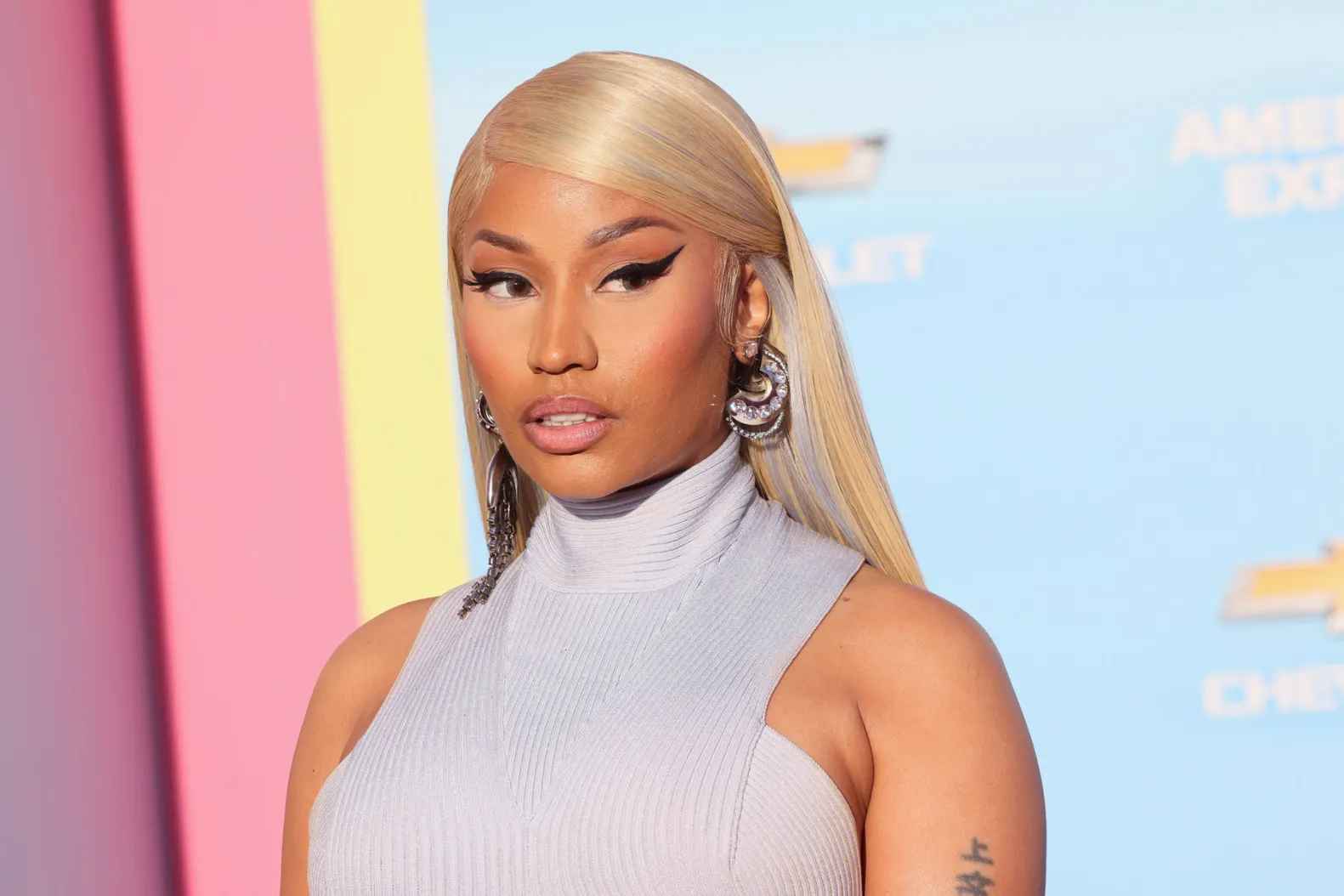
Global rap icon Nicki Minaj has pulled back the curtain on what she describes as a deeply entrenched system of control within the music industry, one allegedly operated by powerful, unnamed figures who she claims hold the careers of talented artists in the palm of their hands.
Speaking during a recent appearance on “The Bryce Crawford Podcast,” the Trinidad-born superstar did not mince words as she described an industry she says operates far beyond the realm of record deals and streaming numbers.
According to Minaj, behind the glittering façade of fame and fortune lies a shadowy infrastructure of influence, one that rewards conformity and punishes independence.
At the heart of Minaj’s allegations is a troubling assertion: that certain unnamed but influential figures within the music business treat artists not as creative individuals but as commodities, human assets to be leveraged, monetized, and discarded at will.
“They treat musicians like properties,” Minaj reportedly stated, painting a picture of an industry where artistic freedom is not simply curtailed but systematically suppressed.
Those who comply, she suggested, are elevated. Those who dare to defy, however, face a far darker fate rendered, in her words, “almost invisible,” their talents buried beneath an orchestrated campaign of professional sabotage.
The implication is chilling: that some of the most gifted voices in music may never reach their full potential or their rightful audience, not because of a lack of talent, but because of a refusal to bend the knee to those who allegedly pull the strings.
“It was constant spiritual warfare,” she said with unmistakable conviction. “I wish I had known sooner that this music industry was such a spiritual experience because I felt like I brought a knife to a gunfight.”
Minaj was careful to emphasize that her experiences are not uniquely hers. She claimed that the obstacles she has faced mirror those encountered by other talented artists who have similarly refused to operate within the unofficial rulebook of these unnamed power brokers.
This positions her testimony not as a personal grievance, but as an indictment of a systemic culture within the music industry, a culture she suggests has long been hiding in plain sight.
While Minaj declined to name the individuals she was referring to, her words are likely to resonate with many in the entertainment world. She is far from the first major artist to allude to unseen forces at work in the industry.
Over the years, figures ranging from the late Prince, who famously wrote “slave” on his face during a contract dispute with Warner Bros., to Kanye West, Kesha, and countless others have spoken in varying degrees about feeling controlled, manipulated, or suppressed by powerful industry players.
Minaj’s words have reignited a long-simmering debate about power, exploitation, and freedom in an industry built on the creative labor of artists who, all too often, find themselves on the losing end of deals they barely understand.
WHAT YOU SHOULD KNOW
Nicki Minaj’s revelations on The Bryce Crawford Podcast serve as a stark reminder that the music industry is far more than a business; it is, by her account, a carefully controlled ecosystem where unnamed but immensely powerful figures dictate the fate of artists.
Those who comply are rewarded; those who resist are sabotaged into obscurity. Most tellingly, Minaj describes her journey not merely as a career struggle but as a spiritual battle she felt wholly unprepared for.