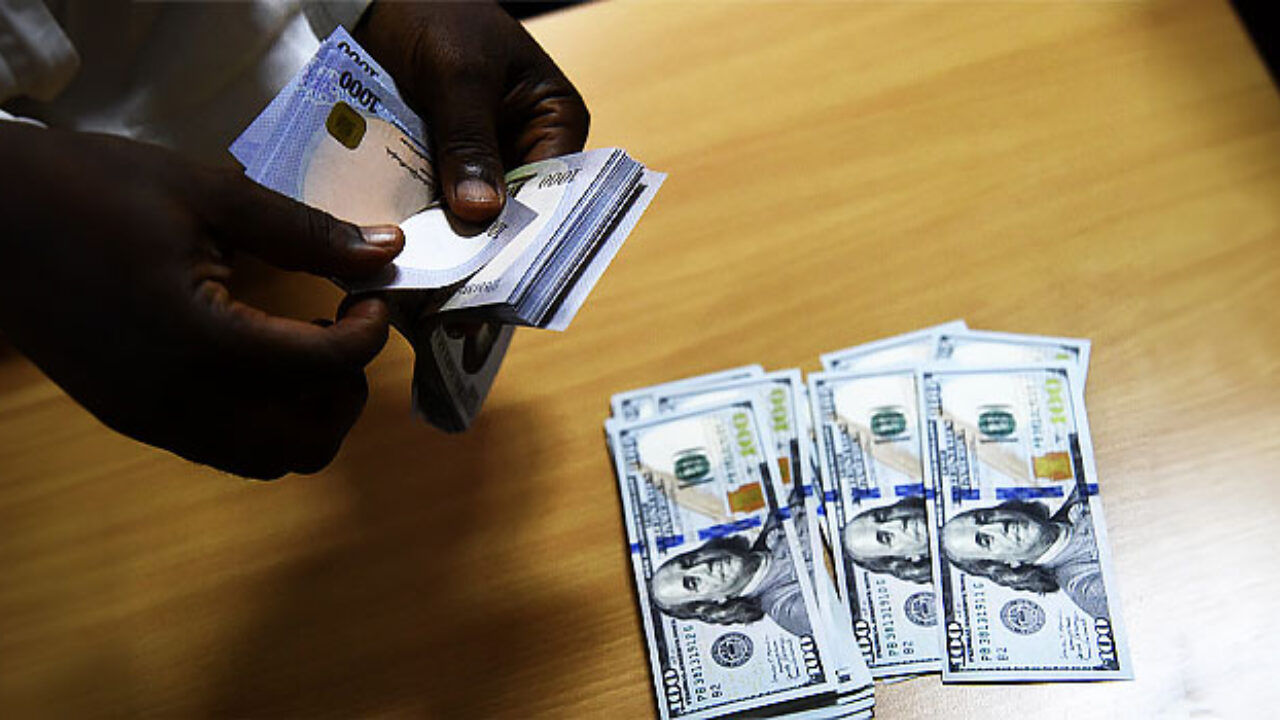
The naira held steady against the dollar on Wednesday at approximately ₦1,363.83 at the official NFEM, supported by ongoing monetary reforms and improved forex liquidity.
The local currency has now held within the ₦1,360–₦1,364 band for several consecutive sessions, a sign of growing confidence in the official foreign exchange window managed by the Central Bank of Nigeria (CBN). The official market has continued to trade within the ₦1,360 range amid sustained foreign exchange reforms and improved dollar liquidity.
In the parallel market, a barometer of public sentiment toward the naira, traders quoted the dollar at ₦1,395-₦1,405 per dollar, depending on location, transaction volume, and prevailing market conditions, with buying rates reported at around ₦1,385 per dollar.
The spread between the official and parallel market rates, once a chasm that swallowed billions in arbitrage profits and drove capital flight, now sits at roughly ₦31 to ₦41, a margin that would have seemed almost inconceivable to traders just two years ago, when the gap regularly exceeded ₦200.
Analysts noted that sustained liquidity in the official window and improved confidence among market participants have helped reduce volatility in recent months. That convergence, economists say, is among the most tangible evidence yet that the CBN’s foreign exchange reforms are taking root.
A closer look at June’s trading data reveals a currency that has been deliberately and methodically anchored. Market data indicated that the official exchange rate had hovered between ₦1,360 and ₦1,375 per dollar in recent trading sessions.
That is a remarkably tight range for a currency that spent much of 2023 and early 2024 lurching between crises, at one point weakening past ₦1,600 to the dollar in the parallel market.
Nigeria’s external reserves stand at $50.81 billion as of June 15, 2026, a figure that gives the CBN considerable firepower to defend the naira should speculative pressures re-emerge, and that has visibly bolstered market confidence.
Currency dealers say market participants continue to watch foreign portfolio inflows, crude oil earnings, and central bank policies, all of which remain key factors influencing the naira’s direction in the coming weeks.
Market observers are careful not to declare victory too soon. Nigeria’s foreign exchange history is littered with false dawns, and the structural vulnerabilities that have long pressured the naira, import dependence, oil revenue volatility, and a persistent current account deficit in non-oil trade have not disappeared overnight.
Analysts expect the naira to continue responding to foreign exchange inflows, monetary policy measures, and market demand dynamics in the coming days.
Still, the mood among traders on Wednesday was one of measured confidence. For ordinary Nigerians, importers watching their landed costs, diaspora members remitting money home, and small business owners pricing their goods at a stable naira, even a modestly stable one, offer breathing room that the turbulence of recent years did not.
As the trading week draws to a close, the naira’s quiet resilience may well prove to be the most consequential economic story in Nigeria right now, not for the drama it carries, but precisely because of the drama it no longer does.
WHAT YOU SHOULD KNOW
Nigeria’s naira is holding its ground. Trading at roughly ₦1,363.83 to the dollar officially and between ₦1,395–₦1,405 in the parallel market, the currency is displaying a stability that has eluded it for years.
The real headline, however, is the shrinking gap between the two markets, now as little as ₦31, a concrete sign that the CBN’s foreign exchange reforms are working. Backed by $50.81 billion in external reserves, the naira’s steadiness in June 2026 is less about luck and more about deliberate policy.