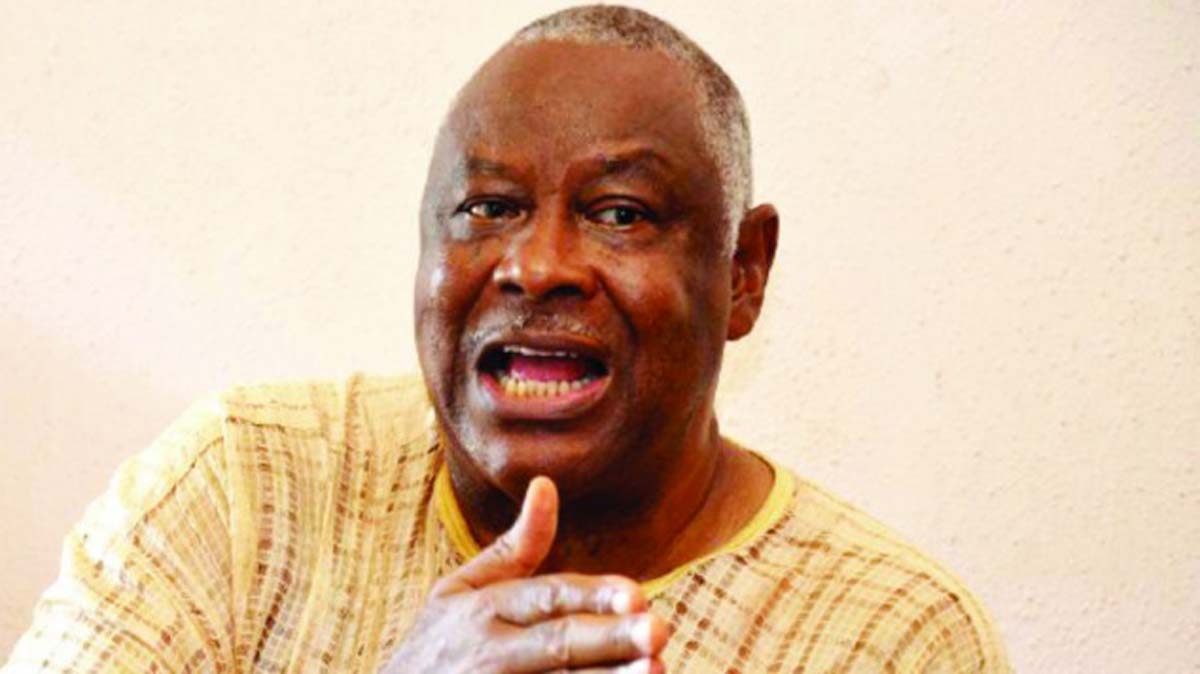
Former NADECO chieftain and June 12 pro-democracy veteran Chief Ralph Obioha has rejected a national honour from President Tinubu, saying he cannot accept state recognition while Nigeria continues to fall short of the democratic values he once fought for.
The announcement, made in a formal statement on Tuesday, has sent ripples through political circles in Abuja and beyond, raising uncomfortable questions about the state of civil liberties, the rule of law, and personal safety under the current administration, particularly at a moment when the presidency had hoped that this year’s Democracy Day celebrations would project an image of national pride and progress.
Obioha thanked President Tinubu and the Federal Government for considering him worthy of the honor, but said accepting the award would contradict the democratic principles that guided his struggle during the military era. It was a measured but unmistakably pointed message: one part gratitude, many parts indictment.
Obioha, who served in the National Assembly between 1979 and 1983, said he joined other pro-democracy activists during the June 12 movement because they believed in a Nigeria built on justice, freedom, the rule of law, and respect for human rights.
To many of his generation, those were not abstract ideals; they were convictions forged under military boots and sustained through exile, harassment, and the very real threat of imprisonment.
Decades on, Obioha finds himself unwilling to allow those convictions to be papered over with a medal.
“To accept this honour at a time when many of the values for which we fought remain insufficiently realized would, in my view, be inconsistent with those convictions,” he said.
It is the kind of statement that forces a nation to look in the mirror.
Central to Obioha’s decision is the prolonged detention of Nnamdi Kanu, leader of the Indigenous People of Biafra (IPOB), whose case has become a flashpoint for debates about justice, ethnic grievance, and the limits of state power in Nigeria.
Obioha argued that President Tinubu, having been part of Nigeria’s democratic struggle, is in a unique position to pursue national reconciliation by addressing the Kanu issue in a manner that promotes justice and constitutional rights. The subtext is difficult to miss: a man who once fought oppression should recognize it when it wears a suit.
“While opinions may differ regarding his methods, rhetoric, or political objectives, the broader issue remains one of justice, due process, and the protection of fundamental freedoms,” Obioha said.
Obioha is not asking for the unconditional endorsement of IPOB‘s separatist agenda. He is asking the Nigerian state and President Tinubu specifically to honour the very constitutional framework it claims to uphold.
He also noted that freedom of expression remains one of the key values of democracy and that criticism of government should not be treated as a threat.
Beyond the Kanu case, Obioha’s statement catalogues a broader crisis that millions of ordinary Nigerians live with every single day.
He raised concerns over insecurity across the country, saying terrorism, banditry, kidnapping, and other violent crimes continue to affect communities, and urged the government to take stronger steps to protect lives and property.
The elder statesman expressed serious concern over the worsening security situation in Nigeria, lamenting the daily killings, kidnappings, and violent crimes across different parts of the country.
These are not abstractions for Nigerians in the North-West, the Middle Belt, or communities in the South-East living under the shadow of both insurgency and the government’s response to it. These are daily realities.
In a political culture where national honours are frequently accepted without question, sometimes by figures whose public conduct invites scrutiny rather than celebration, Obioha’s refusal is itself an act of civic courage.
The president, a man whose own political biography is intertwined with the June 12 struggle, now faces the uncomfortable spectacle of one of that struggle’s veterans using Democracy Day itself to question whether democracy in Nigeria has truly been achieved or merely administered.
Obioha called on President Tinubu to pursue a solution that would promote national reconciliation and respect for constitutional rights, a call the presidency has yet to formally respond to.
What Chief Ralph Obioha has done is more than decline a pin and a certificate. He has held up a mirror to the Nigerian state and asked a question that no decoration can answer: What exactly are we celebrating?
WHAT YOU SHOULD KNOW
Chief Ralph Obioha’s rejection of President Tinubu’s national honour is a powerful act of principle over prestige.
A man who risked everything fighting for democracy under military rule is now refusing to be celebrated by the very democracy he helped birth because he believes it has not yet lived up to its promise.
Two issues sit at the core of his decision: the unresolved detention of Nnamdi Kanu, which he sees as a direct affront to justice and due process, and a security crisis that continues to claim innocent lives daily across Nigeria.