The naira held steady against the US dollar on Thursday, trading within a stable range as traders and analysts expressed cautious optimism following years of currency volatility.
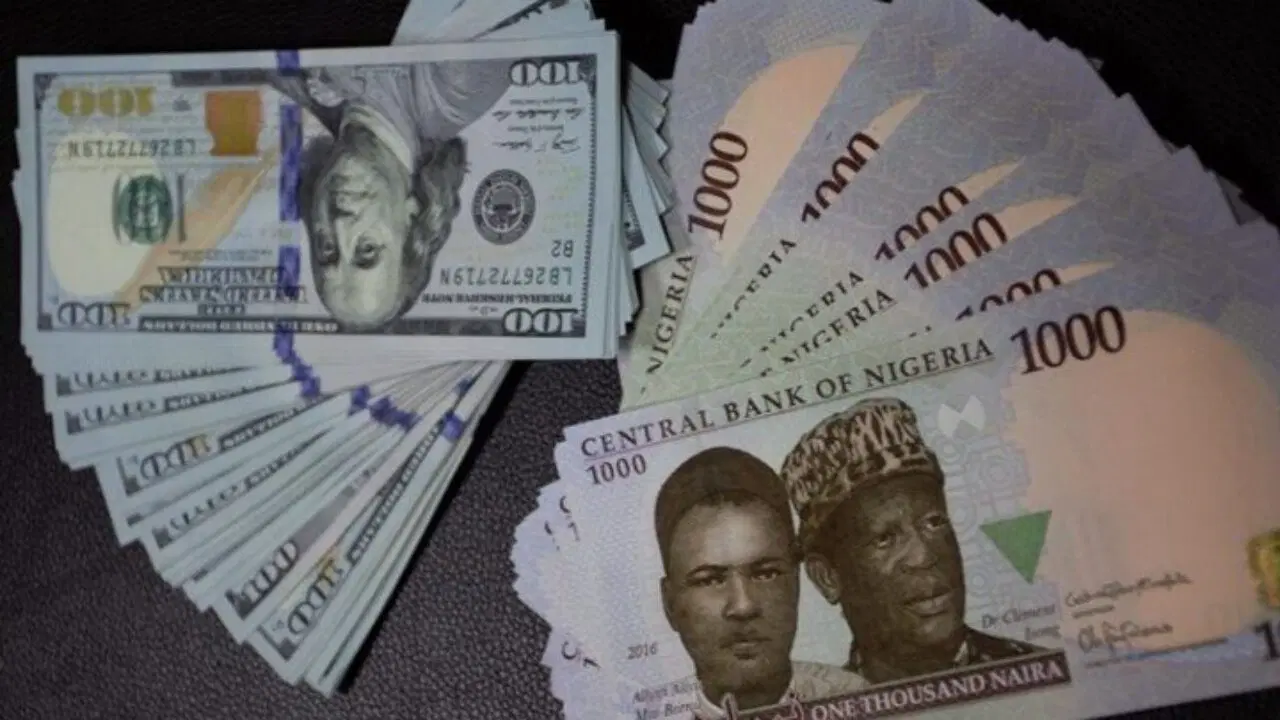
Official data published by the Central Bank of Nigeria (CBN) showed the naira holding firm at approximately ₦1,360 to the dollar at the Nigerian Foreign Exchange Market (NFEM) window, the apex bank’s primary price discovery platform, as market participants kept a close eye on liquidity conditions and the broader demand-supply dynamics that have long defined the country’s complex forex landscape.
Perhaps the most telling signal from Thursday’s trading session was not the headline rate itself, but what was happening in the shadows of the parallel market and how much closer those shadows have crept toward the official daylight.
Bureau de change operators and street-level market trackers reported the dollar changing hands at between ₦1,392 and ₦1,395 on the buy side, with sell rates quoted in the ₦1,400 to ₦1,402 range figures that, while still above the official window, represent a markedly tighter spread than the yawning chasms that once separated both markets during periods of acute forex stress.
For context, Nigeria has historically grappled with a dual exchange rate system that critics argued distorted price signals, encouraged round-tripping, and undermined investor confidence.
At the height of the naira’s turbulence in 2023 and parts of 2024, the gap between official and parallel market rates ran into hundreds of naira per dollar, a divergence that stoked inflation, rattled importers, and sent businesses scrambling for hard currency through unofficial channels.
That the spread today sits at roughly ₦40, give or take, is a development that analysts are reluctant to dismiss as coincidental.
Currency economists and market watchers attribute the improved alignment to a confluence of policy interventions that have gradually recalibrated the market’s architecture.
The CBN’s sustained push for greater transparency at the NFEM, tighter oversight of bureau de change operators, and deliberate efforts to boost foreign exchange inflows have all been cited as contributing factors.
“What you are seeing is the market beginning to price in confidence,” one Lagos-based forex analyst, who asked not to be named because he was not authorized to speak publicly, told this reporter. “When the spread narrows and holds, it tells you that supply is improving and that the incentive to bypass the official window is diminishing.”
Increased remittance inflows and improved dollar receipts from crude oil exports, buoyed in part by higher output from the Dangote Petroleum Refinery, have impacted domestic fuel dynamics, and a more predictable monetary policy stance has also been flagged as supporting the naira’s relative steadiness.
Traders, however, were quick to temper any triumphalism. The Nigerian forex market has confounded optimism before, and seasoned participants know that exchange rate stability is only as durable as the conditions underpinning it.
Demand pressures remain real. Manufacturers seeking to import raw materials, energy companies repatriating profits, and individuals sourcing dollars for education, healthcare, and personal travel continue to exert upward pressure on rates. Any sudden shift in oil prices, capital flow reversals, or policy missteps could rapidly unwind the gains achieved.
“Stability today does not mean the job is done,” said another market operator reached by telephone. “We need consistent supply, and we need confidence that what the CBN says today will still be true next week.”
For traders and businesses seeking to plan transactions, Thursday’s exchange rate summary paints the following picture:
- Official NFEM rate: approximately ₦1,360 per US dollar
- Parallel market buy rate: approximately ₦1,392–₦1,395 per US dollar
- Parallel market sell rate: approximately ₦1,400–₦1,402 per US dollar
It bears noting, as it always does in Nigeria’s decentralized forex ecosystem, that rates vary across locations, dealers, and transaction volumes. Businesses and individuals are advised to verify prevailing rates with their respective financial institutions or licensed operators before executing transactions.
As Africa’s largest economy navigates its ongoing macroeconomic recalibration, the naira’s performance on a single Thursday in June is, in isolation, a modest data point.
But in the context of where the currency has been and how hard the road back to stability has proven, Thursday’s quiet trading session carries a weight that numbers alone cannot fully capture.
WHAT YOU SHOULD KNOW
The naira traded at approximately ₦1,360 per dollar at the official NFEM window on Thursday, June 18, 2026, while the parallel market quoted rates between ₦1,392 and ₦1,402, a notably narrow spread that signals genuine progress in Nigeria’s forex reform efforts.
For the first time in years, both markets are moving closer together, driven by improved dollar inflows, tighter CBN oversight, and greater market transparency.
The shrinking gap between the official and black market rates is the clearest evidence yet that Nigeria’s foreign exchange reforms are beginning to deliver measurable, real-world results.