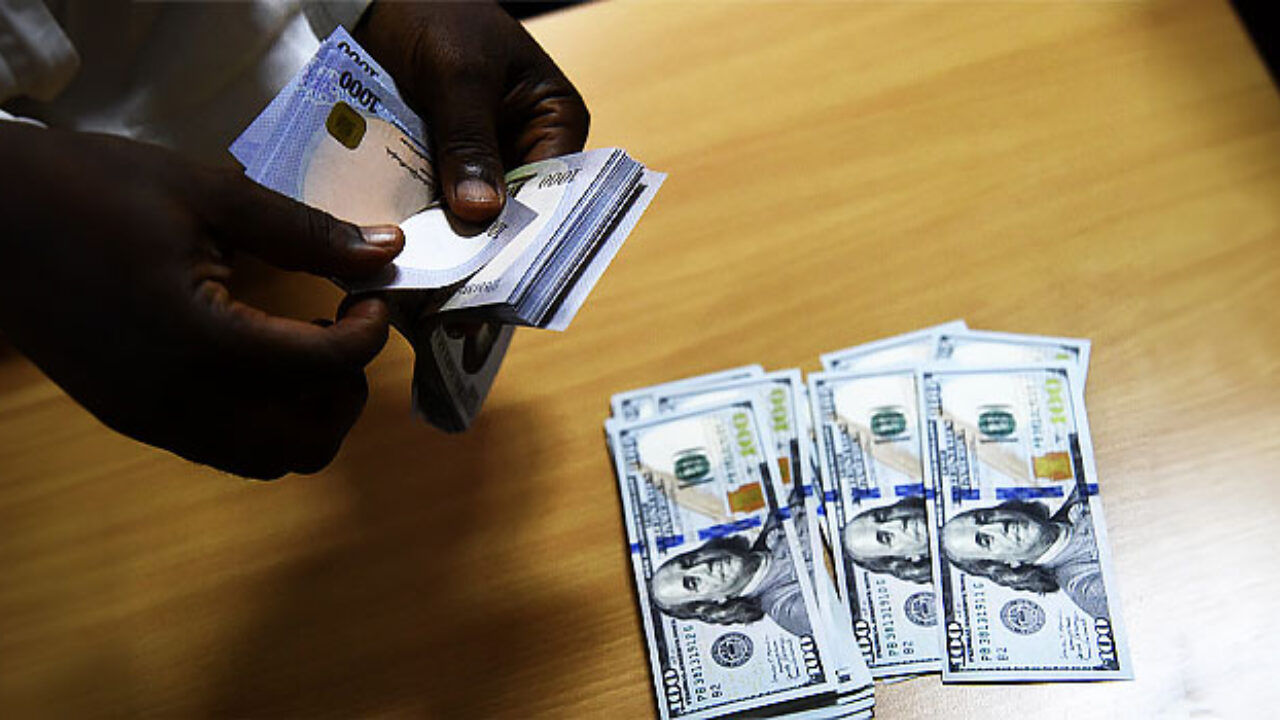
The Nigerian naira kicked off the new trading week on a steady note, holding its ground against the US dollar across both the official and parallel markets, as traders closely watched liquidity and demand signals for clues on the currency’s next move.
Data from the Central Bank of Nigeria’s (CBN) exchange rate portal showed the naira settling at approximately ₦1,363.83 to the dollar at the official Nigerian Foreign Exchange Market (NFEM) window, a figure that, while not dramatic, tells a story of incremental steadying that currency watchers have been cautiously optimistic about in recent weeks.
For a currency that endured one of its most turbulent stretches in modern memory over the past two years, battered by dollar scarcity, speculative pressure, and the weight of a long-abandoned multiple-exchange-rate regime, trading within the ₦1,360 band represents something of a calm.
The official market has now recorded several consecutive sessions within this narrow corridor, a pattern analysts describe as consistent with a market beginning to find its footing following the CBN’s sweeping foreign exchange reforms.
Those reforms, which unified Nigeria’s previously fragmented exchange rate windows, have been credited with improving price discovery and drawing dollar inflows back into formal channels.
“What we’re seeing is the market adjusting to a more transparent pricing mechanism,” one Lagos-based currency analyst told this reporter. “When the unified system works as intended, you get this kind of relative stability, not a fixed rate but an honest one.”
In the parallel market, the informal currency exchange network that has for decades served as an alternative dollar outlet for Nigerians unable to access official windows, the greenback was trading at around ₦1,395 per dollar, according to data from bureau de change operators and market-tracking platforms.
That places the gap between the official and street rates at roughly ₦31 per dollar, a premium that, while still meaningful, has tightened considerably from the triple-digit spreads that characterized the market during periods of acute dollar scarcity and policy uncertainty.
Earlier this year, parallel market rates were recorded between ₦1,400 and ₦1,405 per dollar, suggesting even the informal market is gradually converging toward the official benchmark, a development the CBN has long cited as a key objective of its reform program.
To put the real-world impact of this gap in perspective: a traveler or importer exchanging $100 today would receive approximately ₦136,383 through official channels or about ₦139,500 on the street.
That ₦3,117 difference per hundred dollars, multiplied across millions of daily transactions, underscores why the parallel market endures as a commercial reality despite regulatory pressure.
Monetary authorities have not been passive spectators. The Central Bank has maintained an active posture in the foreign exchange market, and analysts broadly credit its sustained intervention and improved transparency mechanisms for the relative calm now on display.
The CBN has clarified that the NFEM rate, currently the country’s official exchange rate benchmark, is computed as a volume-weighted average of transactions within the window, rather than an administratively fixed figure. This methodology, officials argue, ensures the rate reflects genuine market conditions rather than policy preferences.
Analysts point to improved foreign exchange supply driven in part by diaspora remittances, oil-related inflows, and portfolio investment returning to Nigerian assets as a stabilizing force. Reduced speculation, they add, has followed from greater confidence that the rules of the game will not shift overnight.
“The CBN’s credibility in maintaining this framework matters enormously,” noted a fixed-income strategist at a tier-one Nigerian bank. “Once the market believes the central bank is committed to the unified system and will not reverse course, a lot of the panic-buying of dollars subsides.”
Despite the encouraging signals, market participants are far from complacent. Foreign exchange inflows remain susceptible to oil price volatility, global risk sentiment, and the pace of domestic economic reforms, all of which could rapidly alter the demand-supply balance that currently underpins naira stability.
Importers, manufacturers, and financial institutions are expected to closely monitor CBN policy communications, government fiscal data, and international capital flows in the days ahead, with any significant shift in these variables likely to be priced quickly into the exchange rate.
For now, however, the naira enters the week not with fanfare but with something arguably more valuable to a currency that has known too much turbulence: a measure of predictability.
WHAT YOU SHOULD KNOW
The Nigerian naira is showing encouraging signs of stability, trading at ₦1,363.83 to the dollar officially and ₦1,395 on the parallel market, a gap that continues to narrow.
The driving force behind this calm is clear: the CBN’s unified foreign exchange reforms are working. Improved transparency, sustained liquidity, and credible monetary policy are gradually restoring market confidence and squeezing out the speculative pressures that once sent the naira into freefall.
While risks remain, the naira’s ability to hold within a narrow trading band signals that Nigeria’s forex market may finally be turning a corner, and that is the headline worth watching.