One of the wealthiest men on earth walked into the halls of American democratic accountability on Wednesday morning, and for once, Bill Gates had no product to launch, no disease to eradicate, and no pledge to announce. He had questions to answer.
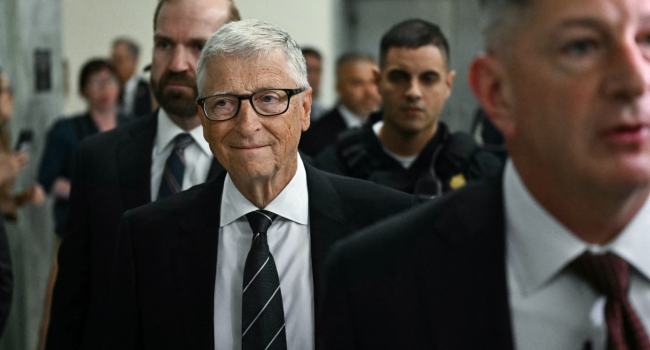
The Microsoft co-founder arrived on Capitol Hill around 8:45 a.m., flanked by police officers, security, and legal counsel, before reporting to a House Oversight and Government Reform Committee room where a bipartisan panel of lawmakers sat ready to grill him about one of the most enduring scandals in recent American history: his relationship with the late convicted sex offender Jeffrey Epstein.
It was a moment years in the making. Gates, whose name has become synonymous with global philanthropy and technological innovation, now finds himself inextricably linked to a man whose name has come to symbolize something far darker: the alleged sexual exploitation of underage girls by the powerful and the privileged.
The billionaire philanthropist smiled at reporters and gave a brief statement, then did not answer questions. “I’m glad to be here voluntarily to testify to help with the committee’s work,” Gates told reporters. “I hope my testimony is helpful to the important work of the committee to find justice for the victims.”
It was a carefully calibrated, controlled, composed, and conspicuously brief entrance. The man who has given hundreds of billions to global health initiatives offered little more than a handful of sentences before disappearing behind closed doors, where the real reckoning would begin.
In his opening statement, posted online, Gates acknowledged: “I should never have met with Epstein in the first place.” It was a rare and pointed admission from a figure who has spent years carefully managing the public fallout of an association he has called one of the biggest mistakes of his life.
The House Oversight and Government Reform Committee has spent months building its case, summoning some of the most recognizable names in American public life.
The committee previously heard testimony about Epstein from retail billionaire Les Wexner, Commerce Secretary Howard Lutnick, former President Bill Clinton, and former Secretary of State Hillary Clinton, among others. Several of Epstein’s former assistants have also appeared before the panel.
Gates’ testimony came a day after the committee questioned Epstein’s former longtime executive assistant, Lesley Groff, a sequence that suggested investigators were methodically building context before sitting across from one of Epstein’s most prominent and controversial associates.
Rep. James Comer, the Kentucky Republican who chairs the committee, told reporters Tuesday that “anything’s on the table” in terms of questions for Gates, adding: “He seems like he’s, according to his attorneys, willing to testify, and he hasn’t fought it. And I appreciate that.”
Democrats, for their part, made no secret of their intentions, saying they planned to probe what Gates knew about Epstein’s crimes and the true nature of their relationship, questions that Gates’s camp insists have straightforward, exculpatory answers.
The Department of Justice released three million pages of Epstein’s communications detailing disturbing allegations, including July 2013 emails in which Epstein claimed Gates had extramarital affairs resulting in a sexually transmitted infection and that Gates had sought to secretly give antibiotics to his then-wife, Melinda, without her knowledge.
Gates has forcefully denied those claims, calling the email fabricated. But the damage to his reputation was already done. In February, he apologized to Gates Foundation staff for his ties to Epstein, and confirmed their relationship lasted from 2011 through 2014.
His charity organization, the Gates Foundation, commissioned an external investigation into its ties to Epstein in March, an unusual step that signaled just how seriously the institution was taking the reputational threat.
When asked about the relationship previously, Gates told The Wall Street Journal in January 2025: “I thought it would help me with global health, philanthropy. In fact, it failed to do that, and it was just a huge mistake.”
Gates did not walk into this interview unprepared. US media reported that he retained the services of former Justice Department lawyer John Moran and received preparation from Jake Greenberg, a former top investigator for the very committee now questioning him.
The tech titan retained the counsel of Jake Greenberg, a former top aide to Oversight Committee Chairman James Comer, a hire that ethics experts noted raised eyebrows but did not breach any formal rules.
It is a move that speaks volumes about the stakes involved. This was not a man testifying about a philanthropic initiative. This was a man preparing for the most consequential interview of his public life.
Epstein’s story has always been about more than one man. It is about a network sprawling, opaque, and populated by some of the most powerful figures of the last three decades. Gates is only the latest name to sit before this committee and attempt to draw a clear line between association and complicity.
Gates has repeatedly denied any connection to Epstein’s wrongdoing, saying, “I did nothing illicit. I saw nothing illicit.” A spokesperson reiterated in a statement that the billionaire “never witnessed or participated in any of Epstein’s illegal conduct.”
And to be clear, appearing in Epstein’s files is not, in itself, evidence of a crime. Many prominent individuals whose names surfaced in those documents have never been charged with wrongdoing.
But in the court of public opinion, the association carries weight. And in the hearing rooms of Capitol Hill, it carries questions that, with a transcript of his testimony expected to be released in the coming days, the American public will soon be able to read for themselves.
For now, the doors are closed. Bill Gates is inside. And the world is waiting.
WHAT YOU SHOULD KNOW
Bill Gates appeared before the House Oversight Committee on June 10, 2026, for a closed-door interview about his relationship with convicted sex offender Jeffrey Epstein.
While Gates voluntarily cooperated, expressed remorse for the association, and flatly denied witnessing or participating in any of Epstein’s illegal conduct, the hearing underscores one uncomfortable truth: when powerful men choose their associations carelessly, no amount of wealth, philanthropy, or legal preparation can fully shield them from public accountability.
The committee’s transcript, set for release in the coming days, may yet determine whether Gates walks away with his legacy intact or further damaged.