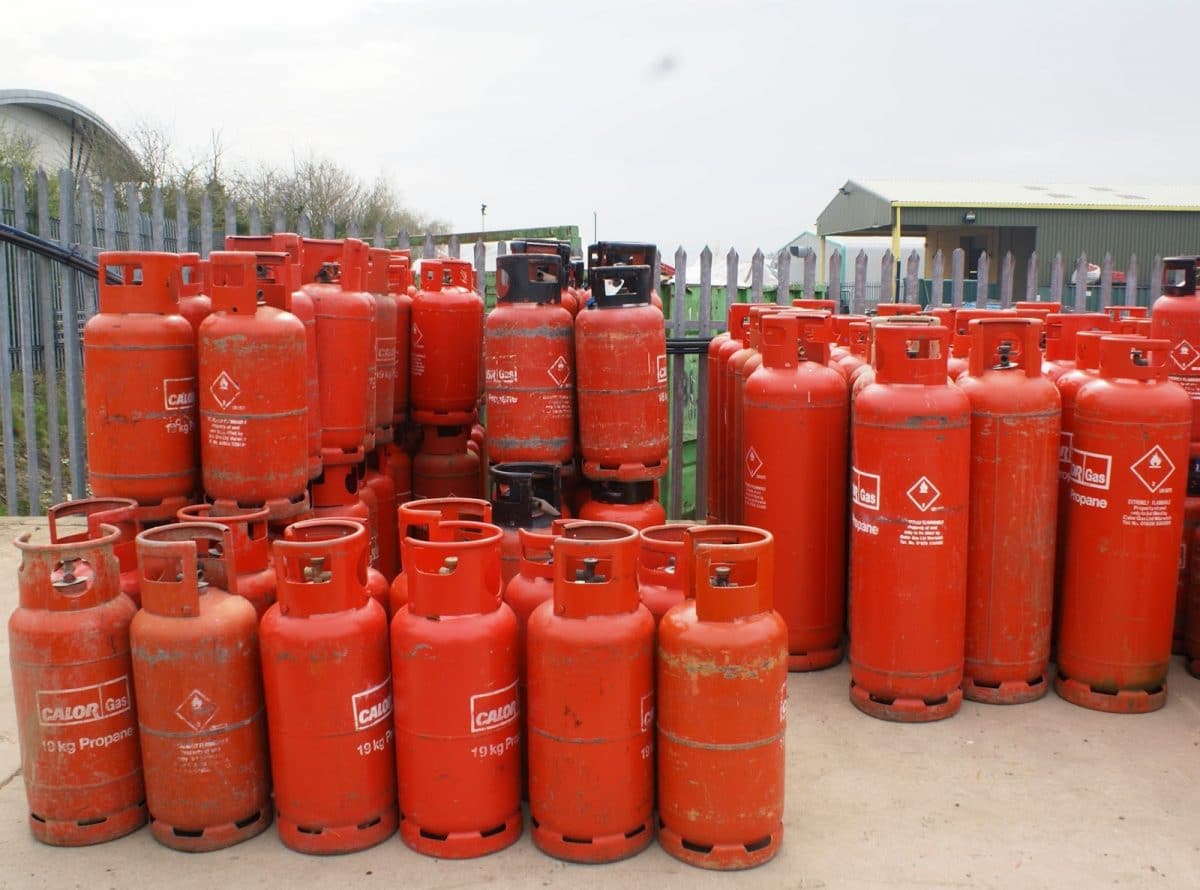
Cooking gas now sells for as high as ₦2,000 per kilogramme in several parts of the country, a steep increase from levels below ₦1,000 per kilogramme recorded in many locations just months earlier.
In some cities, the price has climbed even further, with retailers quoting as much as ₦2,400 per kg. The cumulative effect on household budgets has been devastating.
The average cost of refilling a 12.5kg cylinder climbed from ₦14,261.57 in July 2024 to ₦20,609.48 in July 2025, according to the National Bureau of Statistics, and prices have not relented since.
The scenes playing out across Nigerian neighborhoods are both telling and troubling. Mrs. Mayo Akinpelu, a food vendor in Gwarimpa, Abuja, said she stopped using cooking gas after repeated price increases made it too expensive for her business. She is far from alone.
In Enugu State, Mrs. Sylvia Chukwu has abandoned gas refills entirely in favor of a charcoal stove, which she describes as more affordable, especially for a large household. Her neighbor, Mrs. Chinelo Onyema, now uses firewood for labor-intensive meals like beans, okpa, and moimoi, reserving her dwindling gas supply only for rice and breakfast.
These are not isolated cases. Across the country, similar scenes play out daily. Refilling a gas cylinder has become a struggle; many families now ration their supply, cook once a day, or revert to firewood and charcoal despite the health hazards.
In Abuja’s Federal Capital Territory, residents also reported increased reliance on charcoal stoves, with one resident noting that refilling a 6kg cylinder now costs around ₦7,800, which she considers unsustainable.
Meanwhile, traders dealing in traditional fuels are witnessing a windfall. In several communities, especially rural and low-income urban areas, charcoal sellers and firewood traders are already witnessing increased demand from households looking for more affordable cooking options.
The Nigerian Association of Liquefied Petroleum Gas Marketers (NALPGAM) has warned that marketers are grappling with soaring depot prices, supply constraints, logistics challenges, and rising operational costs, with marketers currently paying between ₦25.2 million and ₦26.2 million for 20 metric tonnes of LPG, depending on location.
On the supply side, disruptions at key production facilities have played a significant role. The sharp increase in price was caused in part by an industrial action by PENGASSAN at the Dangote refinery, which temporarily halted LPG loading, as well as ongoing maintenance activities at the Nigeria LNG Train 4 facility, which reduced the volume of gas available in the domestic market.
Observers also link the rising cost of LPG to geopolitical tensions in the Middle East affecting oil production and shipping, as well as the depreciation of the naira and limited domestic supply infrastructure gaps that have increased reliance on imports, pushing prices higher.
Total LPG supply ranged between 4,200 and 5,200 tonnes daily in recent months, peaking in December 2025 before easing to 4,500 tonnes by April 2026, yet prices have remained elevated.
Marketers attribute the continued rise to supply chain disruptions, uneven distribution networks, and localized scarcity, which continue to affect product availability in neighborhood retail points.
Beyond the economic pain, public health and environmental authorities are sounding a note of alarm over the mass return to biomass fuels. The surge has forced many households and street food vendors to switch to alternative fuels such as charcoal and firewood, raising new concerns among health and environmental authorities over indoor pollution and deforestation.
Indoor smoke from charcoal and firewood is a known cause of respiratory illness, particularly affecting women and children who spend the most time in kitchens. The World Health Organization has long classified household air pollution from solid fuel combustion as a major global health risk.
Nigeria’s Energy Transition Plan, launched in 2021 and updated in 2022, seeks to achieve net-zero carbon emissions by 2060, with gas serving as the nation’s bridge fuel, and targets the adoption of clean cooking energy by 30 million households by 2030. However, with prices spiraling and households reverting to firewood and charcoal, those targets are under serious threat.
The Nigerian government has not been entirely silent. The Minister of State for Petroleum Resources (Gas), Ekperikpe Ekpo, ordered a clampdown on marketers hoarding or exploiting consumers following the recent surge in cooking gas prices.
But industry players argue that such measures, while welcome, are insufficient without structural reforms to pricing, distribution infrastructure, and foreign exchange access.
A businessman, Rasheed Adeleke, called for policies that would encourage greater domestic utilization of gas and reduce dependence on imports, warning that sustained high prices could discourage adoption of cooking gas and undermine efforts to promote cleaner energy in the country.
NALPGAM has also warned that persistent increases in cooking gas prices could trigger widespread public dissatisfaction if urgent interventions are not introduced.
For millions of Nigerians who had embraced gas cooking as a marker of progress, cleaner, faster, and safer, the retreat to firewood and charcoal is more than an economic setback. It is a symbol of dashed hopes, of a cost-of-living crisis that continues to erode the modest gains of ordinary families.
Until government, regulators, and industry stakeholders find a coordinated solution, the smoke rising from backyards across Nigeria will serve as a daily reminder of a nation cooking in crisis.
WHAT YOU SHOULD KNOW
Nigeria’s cooking gas crisis is a multi-layered emergency that goes beyond mere price hikes. At its core, the surge from ₦1,000 to as high as ₦2,400 per kilogramme is being driven by supply disruptions, naira depreciation, and infrastructure failures, forcing millions of families to abandon cleaner energy for firewood and charcoal.
The real danger, however, is not just the economic pain felt at the household level but the long-term consequences: worsening public health from indoor pollution, accelerating deforestation, and the potential collapse of Nigeria’s clean energy transition goals.
Without urgent, coordinated government intervention from stabilizing supply chains to shielding consumers from forex-driven price volatility, Nigeria risks trading a cooking gas crisis today for a far deeper environmental and health catastrophe tomorrow.