The Gulf was plunged back into crisis Monday as a drone strike on the UAE’s only nuclear power plant collapsed an already fragile US-Iran ceasefire, sending oil prices surging and reigniting fears of all-out war.
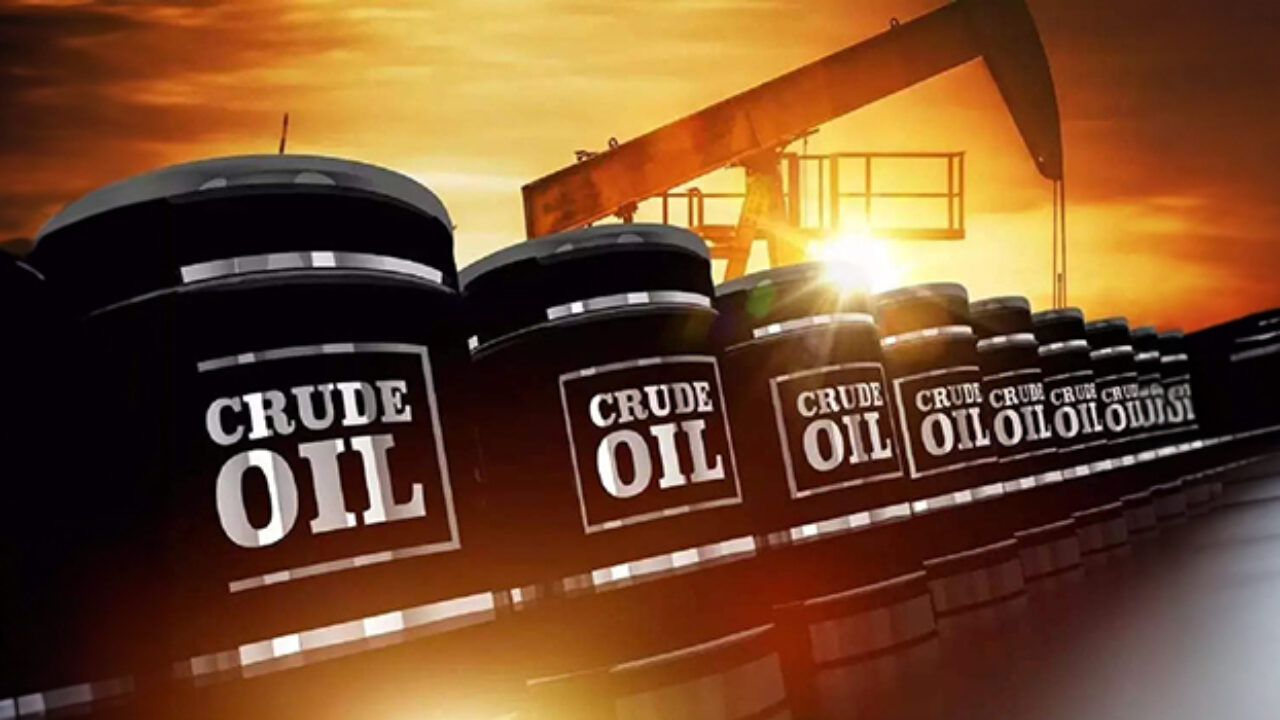
Oil prices extended their gains, with Brent crude climbing $1.36, or 1.24%, to $110.62 a barrel, while U.S. West Texas Intermediate rose $1.84, or 1.75%, to $107.26 a barrel.
Both benchmarks touched their strongest intraday levels since early May, Brent surging to $111.27 a barrel while WTI climbed to $107.75, as the drone strike on the Barakah Nuclear Energy Plant in the UAE exacerbated concerns about supply disruptions in an already deeply unsettled region.
The Monday rally did not emerge from a vacuum. Last week alone, oil prices rose more than 7%, as diplomatic efforts to calm tensions along the Strait of Hormuz stalled amid persistent attacks and seizures of shipping vessels. Now, with a nuclear facility in the crosshairs and a U.S. president weighing military options, traders and analysts are bracing for worse.
The drone strike that sparked a fire on the perimeter of the Barakah Nuclear Energy Plant on Sunday raised new concerns over a potential regional escalation, coming amid a fragile ceasefire between Iran and the United States.
Authorities in Abu Dhabi said the blaze broke out at an electrical generator outside the plant’s inner perimeter in the Al Dhafra region.
The UAE’s defense ministry confirmed that air defenses engaged three drones that entered the country from the western border. Two were successfully intercepted, while the third hit a generator near the nuclear facility.
No injuries were reported, and there was no effect on radiological safety levels, the Abu Dhabi Media Office said, with the Federal Authority for Nuclear Regulation confirming that all units at the plant continue to operate normally.
Sheikh Abdullah bin Zayed, the UAE’s Deputy Prime Minister and Minister of Foreign Affairs, condemned what he called a “treacherous terrorist attack,” stressing in a phone call with IAEA Director General Rafael Grossi that the strike represented a breach of international law and reiterating the UAE’s full right to respond and protect its security and territorial integrity.
Grossi himself did not mince words. The UN atomic watchdog expressed “grave concern” over the strike, with Grossi stating that “military activity that threatens nuclear safety is unacceptable.”
The $20 billion Barakah plant, built with South Korean assistance and the only nuclear power plant in the Arab world, provides a quarter of the UAE’s energy needs. The IAEA confirmed the strike caused a fire in an electrical generator and that one reactor was temporarily being powered by emergency diesel generators.
No group has claimed responsibility. The UAE has recently accused Iran of launching drone and missile attacks as tensions have escalated over the Strait of Hormuz, the vital energy waterway under Iran’s shadow and currently subject to a U.S. naval blockade.
The stakes being played out in the Gulf could scarcely be higher. PVM analyst Tamas Varga framed the crisis in stark terms: one billion barrels of oil are currently trapped behind the Strait of Hormuz, unable to reach global markets.
Last week’s $10 per barrel surge in WTI, he noted, was driven not just by the physical disruption but by “belligerent U.S. and Iranian rhetoric as well as continued attacks on oil producers in the region and on commercial vessels.”
The strategic chokepoint, through which roughly a fifth of the world’s traded oil flows, has become the fulcrum of a conflict that began on February 28, when U.S. and Israeli forces launched strikes on Iran, triggering retaliatory barrages across the Gulf.
A conditional ceasefire agreed on April 8 led to a halt in hostilities for several weeks, but Tehran resumed strikes on the Emirates this month.
With markets already on edge, Washington added to the unease. U.S. President Donald Trump is expected to discuss military options against Iran with his national security advisers on Tuesday, according to a report by Axios citing senior U.S. officials.
Trump also spoke by phone with Israeli Prime Minister Benjamin Netanyahu on Sunday, raising speculation about coordinated next steps.
Last week’s summit between Trump and Chinese President Xi Jinping ended without any signal from Beijing, the world’s largest oil importer, that it would intervene to help resolve the conflict. The diplomatic vacuum has only deepened market fears.
Adding further pressure to global supply, the Trump administration on Saturday allowed a sanctions waiver to lapse that had previously permitted countries, including India, to purchase Russian seaborne oil after a month-long extension.
“Fears of renewed strikes on Iran have worsened supply fears,” said Vandana Hari, founder of oil market analysis provider Vanda Insights. “The United States letting the Russia sanctions waiver lapse didn’t help.”
Saudi Arabia, which intercepted three drones entering from Iraqi airspace over the weekend, issued a stark warning that it would take “the necessary operational measures” to respond to any attempt to violate its sovereignty.
The kingdom’s air defenses have now been tested repeatedly in recent weeks, raising fears that a miscalculation or a strike that breaches the interior of a key facility could trigger a response that dramatically widens the conflict.
With Brent crude approaching $111 per barrel, there are growing fears that fuel costs, inflation, and transportation expenses could become serious headaches once again for energy-importing nations, particularly in Asia and Africa, where fuel subsidies are already stretched thin.
Analysts warn that the oil market’s calculus has fundamentally shifted. So long as a billion barrels remain behind the Strait of Hormuz, peace talks stall, and drones continue to fall near nuclear reactors, the only direction prices seem likely to travel is up.
The June WTI contract expires on Tuesday, and with it, whatever slim hope remained that cooler heads might prevail before markets are forced to price in an even darker scenario.
WHAT YOU SHOULD KNOW
A drone strike on the UAE’s Barakah nuclear plant has pushed oil prices to two-week highs, but the bigger story is how dangerously close the Middle East is to full-scale war.
With one billion barrels of oil trapped behind the Strait of Hormuz, peace talks dead, Saudi Arabia and the UAE under active attack, and President Trump weighing military action against Iran, the world is one miscalculation away from an energy crisis and regional conflict of catastrophic proportions.
Markets are rattled, but the real threat isn’t to oil prices. It is global stability.