
Justice Joyce Abdulmalik of the Federal High Court sitting in Abuja has granted bail to former Kaduna State Governor, Nasir El-Rufai, in the sum of ₦100 million with one surety in like sum.
Delivering the ruling, Justice Abdulmalik imposed a series of stringent conditions the defendant must meet before perfecting the bail.
The court held that the proposed surety must reside in either Maitama or Asokoro districts of Abuja and must deposit the original Certificate of Occupancy of a landed property at the court registry.
The surety is also required to be a federal civil servant not below Grade Level 17 and must provide evidence of salary payments for at least three months, authenticated through a letter from a bank manager operating within the jurisdiction of the court.
Additionally, the surety must depose to an affidavit of means, enter into a formal bail bond, and submit a recent passport photograph to the court registry.
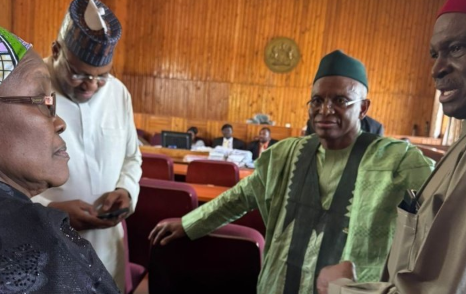
As part of the bail conditions, El-Rufai has been ordered to surrender all valid international passports to the court registry.
The court further directed that a verification letter from the surety’s immediate department be submitted alongside a tax clearance certificate covering the last six months.
Justice Abdulmalik also ordered the former governor to report to the headquarters of the Department of State Services every last Friday of the month by 10 a.m. to sign an attendance register pending the determination of the case.
The judge warned that any failure to comply with the conditions would lead to an automatic revocation of the bail.
In addition, the court directed El-Rufai to submit a letter of attestation from the Chairman of the Kaduna Traditional Council.
The ruling marks a major development in the legal proceedings involving the former governor, whose detention had sparked significant political reactions and public debate in recent weeks.
What You Should Know
The bail conditions imposed on Nasir El-Rufai are notably strict and reflect the court’s attempt to ensure compliance throughout the trial process.
Requirements such as surrendering international passports, monthly DSS reporting, and securing a high-ranking civil servant as surety significantly limit the defendant’s movement and increase accountability. The inclusion of a traditional council attestation is particularly unusual and underscores the court’s emphasis on layered verification.
Politically, the ruling may ease tensions surrounding his detention, but the legal battle remains far from over.
The case is likely to remain a major point of national political and legal attention in the months ahead.