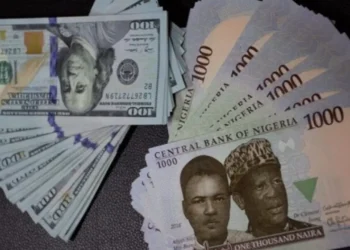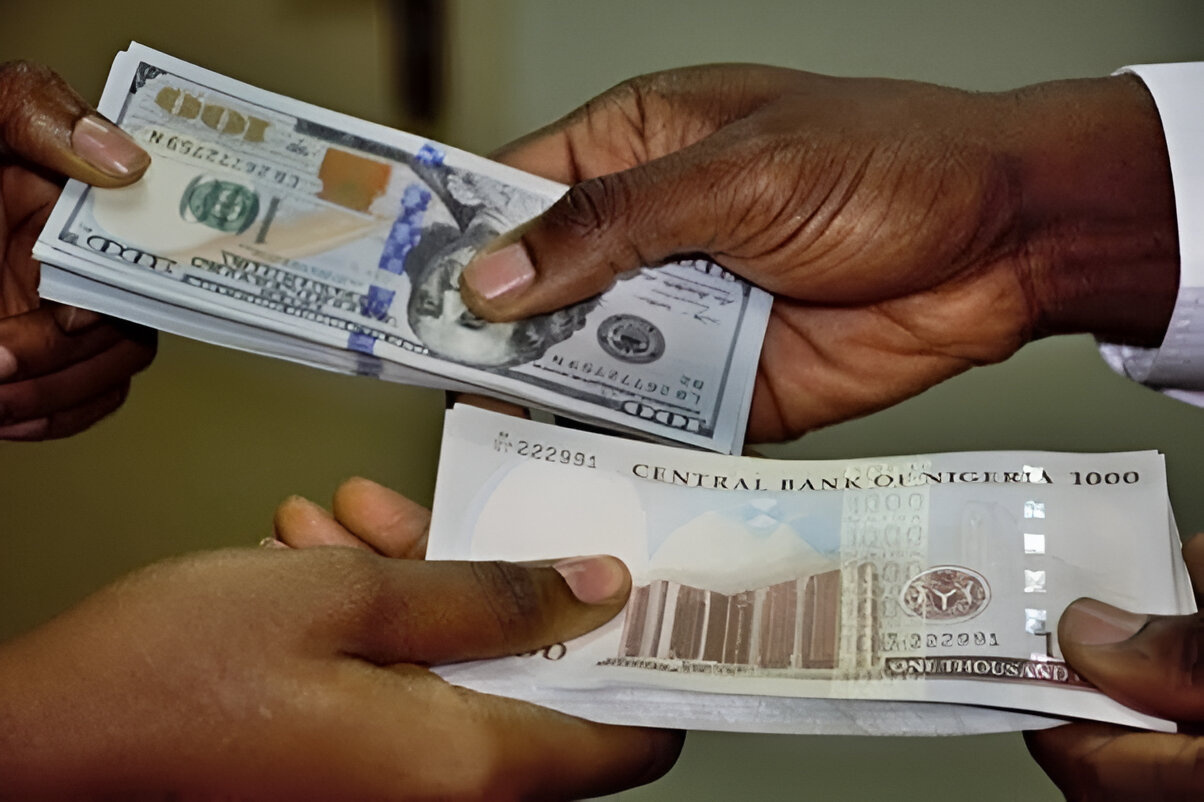
Nigeria’s naira strengthened noticeably against the U.S. dollar on Tuesday, closing at N1,348 to the greenback in the official foreign exchange market, according to fresh data released on the Central Bank of Nigeria’s website.
The modest but symbolically important appreciation comes as the dollar itself retreated to its weakest level in six weeks on global markets, reflecting a broader shift in investor sentiment away from the safe-haven currency.
The latest rate marks a daily improvement for the naira at the Nigerian Foreign Exchange Market (NFEM), where the central bank publishes daily reference rates. While precise intraday figures can fluctuate, the official close at N1,348 signals continued resilience after weeks of relative stability in the managed float regime.
Market participants noted that the local currency moved in tandem with international developments rather than solely on domestic intervention, a dynamic that has become more pronounced since the CBN’s ongoing reforms to unify and deepen the forex windows.
Global factors played a clear supporting role. The U.S. dollar index fell toward its lowest point since late February amid easing geopolitical tensions, particularly fresh hopes for diplomatic talks between the United States and Iran that could stabilise oil flows through the Strait of Hormuz.
With reduced demand for the dollar as a refuge asset, emerging-market currencies—including the naira—found breathing room. In Nigeria’s case, the alignment amplified the impact of steady foreign inflows, higher oil receipts, and the central bank’s efforts to rebuild external reserves.
For ordinary Nigerians, a stronger naira at the official window offers a measure of relief. Importers of raw materials, pharmaceuticals, and finished goods stand to face lower naira costs when sourcing dollars through authorised channels.
Remittance-dependent households, who receive billions of dollars annually from the diaspora, could also see marginally better conversion rates, though parallel-market premiums still persist in some segments.
Economists caution that the gain remains fragile. Nigeria’s external reserves, while improved, must continue to absorb demand pressures from fuel imports and debt servicing.
The CBN has repeatedly emphasised its commitment to a market-driven regime, including recent moves to reopen the official window to bureau de change operators—an initiative credited with earlier rallies earlier in the month.
Yet analysts warn that any reversal in global dollar sentiment, or renewed domestic supply shocks, could quickly test the naira’s newfound footing.
Tuesday’s movement nevertheless carries psychological weight. It is the latest sign that the naira is no longer in perpetual free-fall, a narrative that dominated much of the past two years before the current stabilisation phase took hold.
For President Bola Tinubu’s administration, which has staked its economic credibility on bold forex and fuel-subsidy reforms, every sustained gain in the local currency is a quiet political victory.
Whether this appreciation proves durable will depend on the coming days. With the dollar’s global weakness still tied to fast-moving Middle East diplomacy and Nigeria’s own reserve position under close watch, traders and households alike will be scanning the CBN portal for the next update.
For now, at N1,348 to the dollar, the naira has delivered a modest but welcome headline in an economy long accustomed to more turbulent forex news.
WHAT YOU SHOULD KNOW
The naira strengthened to N1,348 per US dollar in the official market on Tuesday, driven primarily by a broader weakness in the US dollar, which fell to a six-week low amid easing global geopolitical tensions.
This modest appreciation offers some relief to importers and households, but its sustainability remains fragile and dependent on continued foreign inflows, stable oil receipts, and the CBN’s ongoing forex reforms.
The naira’s gain is more a reflection of external dollar softness than pure domestic strength.