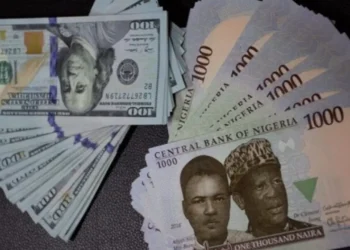
Nigeria’s cash liquidity cycle showed tentative signs of returning to normal patterns in February 2026, as the volume of physical currency held outside the banking system eased slightly.
According to the latest money and credit statistics released by the Central Bank of Nigeria (CBN), currency outside banks moderated by a modest 0.058 percent to ₦5.20 trillion in February, down from the higher levels seen in the preceding months.
This marginal decline points to a gradual return of excess cash into the formal banking system as households and businesses wind down festive and year-start expenditures.
The data also revealed a more noticeable contraction in the overall money supply. Narrow money (M2) — which tracks the most liquid forms of money available for spending — fell to ₦123.14 trillion in February from ₦123.35 trillion in January, a decline of roughly ₦210 billion. Broad money (M3), which includes additional deposit categories and foreign currency holdings, similarly dipped to approximately ₦123.15 trillion.
Meanwhile, total currency in circulation (the sum of cash inside and outside banks) held remarkably steady at ₦5.73 trillion, underscoring that the system-wide stock of physical naira notes and coins remained broadly unchanged even as a small portion migrated back into bank deposits.
Analysts interpret this pattern as evidence of normalizing liquidity conditions following the seasonal surge in cash demand that typically accompanies December spending, salary payments, and early-year economic activity.
In previous months, such as December 2025 into January 2026, currency outside banks had stood higher (around ₦5.21–5.41 trillion in January reports), reflecting Nigerians’ preference for holding physical cash amid ongoing economic uncertainties, limited digital payment penetration in some sectors, and lingering memories of past cash shortages.
The slight moderation in February suggests that as the spending rush subsides, more cash is flowing back into bank accounts. This can support lending activities and ease pressure on banks’ liquidity positions.
However, the fact that the bulk of currency in circulation — still over 90 percent in recent prior data — remains outside the banking system highlights the enduring cash-intensive nature of Nigeria’s economy.
This development occurs against the backdrop of the CBN’s continued efforts to manage system liquidity. In recent months, the apex bank has aggressively mopped up excess funds through open market operations while maintaining a tight monetary policy stance, including high Cash Reserve Ratio (CRR) requirements.
In February, the Monetary Policy Committee (MPC) had opted for a modest 50 basis point cut in the benchmark interest rate to 26.5 percent, signaling a cautious pivot even as it kept other tightening tools intact.
The modest decline in money supply and the stabilization of currency in circulation could help contain inflationary pressures, which have been a persistent challenge. At the same time, the slight uptick in credit to the private sector reported in the same dataset (rising to ₦75.62 trillion) offers a glimmer of hope for businesses seeking financing, though lending growth remains subdued relative to the size of the economy.
For ordinary Nigerians and market participants, these figures translate into a mixed signal: easing cash hoarding may improve banking system stability and digital transaction flows, but the overall liquidity contraction could translate into tighter conditions for borrowing in the short term.
Economists will be watching March and April data closely to see whether this normalization persists or if fresh seasonal or election-related spending pressures re-emerge later in 2026.
As Nigeria continues its journey toward greater financial inclusion and a less cash-reliant economy, the CBN’s monthly monetary statistics remain a critical barometer of how effectively policy is balancing stability, growth, and the gradual shift away from physical cash.
For now, February’s numbers suggest a welcome, if modest, step toward steadier liquidity conditions.
WHAT YOU SHOULD KNOW
Nigeria’s cash liquidity cycle is gradually normalizing. In February 2026, currency held outside banks eased slightly to ₦5.20 trillion, signaling reduced demand for physical cash after the year-end spending surge, while total currency in circulation remained stable at ₦5.73 trillion and overall money supply contracted to ₦123.14 trillion.