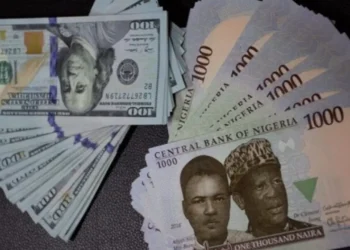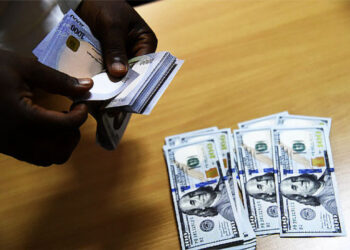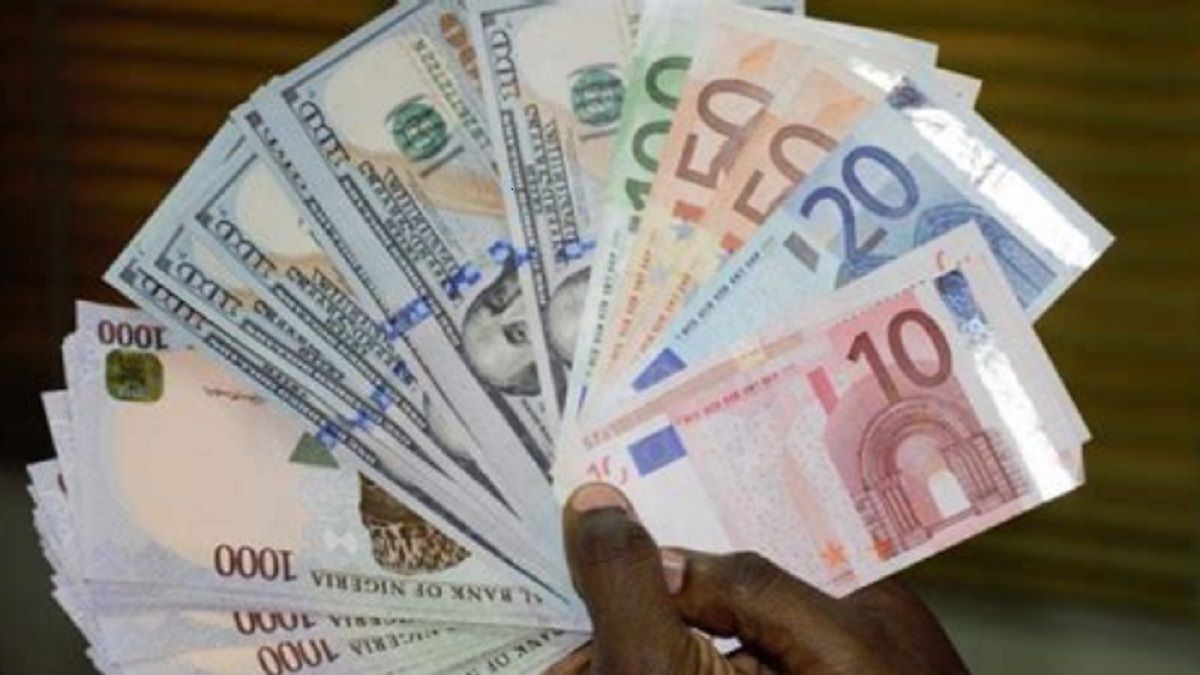
The Nigerian naira demonstrated remarkable resilience and selective strength against the euro over the past week, closing at ₦1,591.50 per euro after climbing from a weekly low of ₦1,599, according to the latest data released by the Central Bank of Nigeria.
The local currency even notched a quarterly high of ₦1,586 on April 2 before a modest pullback, marking what analysts describe as a structural shift from outright “free-fall” to a disciplined “descending channel” — a technical pattern in which the naira is gradually gaining ground as the euro’s value in naira terms declines.
Currency strategists have upgraded the naira’s near-term outlook against the single European currency from neutral to marginally bullish. Long-term valuation models now flag the naira as undervalued, raising hopes that President Bola Tinubu’s ongoing fiscal and structural reforms — if sustained — could deliver further gradual appreciation through the second quarter. Yet cautionary notes abound.
With a presidential election cycle looming, analysts warn that ballooning government expenditure, a widening fiscal deficit, and any slippage in crude-oil output could quickly rekindle pressure on the currency.
The naira’s firmer footing is occurring against a backdrop of profound geopolitical shifts that are redrawing global energy supply lines — shifts that are simultaneously benefiting Nigeria and complicating life for European policymakers.
Disruptions in traditional Middle Eastern supply routes, triggered by heightened U.S.-Iran tensions, have forced Europe to look southward. Roughly 40 percent of the continent’s jet fuel has historically transited the Strait of Hormuz, a chokepoint now subject to security restrictions and volatility.
Benchmark prices in northwest Europe have nearly doubled from pre-conflict levels. Into that breach has stepped Nigeria. Industry sources and Financial Times reporting confirm that a recent shipment of aviation fuel from the Dangote Petroleum Refinery to the United Kingdom represents a milestone in the reconfiguration of European supply chains. Once largely dependent on Gulf refiners, European airlines and governments are increasingly turning to West African capacity — a development that underscores Nigeria’s rapid emergence as a strategic alternative supplier.
This energy pivot is being reinforced by deepening financial ties between the European Union and Nigeria. The European Investment Bank (EIB) has mobilised €555 million in fresh loans to support small and medium-sized enterprises across agri-food processing, digital services, and healthcare manufacturing.
Among the headline projects is the Omi-Eko electric waterways transportation initiative in Lagos, which secured €361 million under the “Team Europe” banner from the EU, the EIB, and France.
Additional funding includes €108 million for a nationwide fibre-optic backbone to accelerate digital connectivity, €85 million targeted at agricultural value chains in dairy and cocoa, and €50 million to bolster local pharmaceutical and healthcare production.
These inflows reflect Brussels’ strategic bet on Nigeria as both an energy partner and a growth market — even as the euro itself navigates its own set of headwinds.
On the foreign-exchange front, the euro ended the week fractionally above the $1.15 level. The single currency remains technically bearish, trading below its declining 20-day simple moving average at 1.1550 and well beneath the flattened 100- and 200-day averages clustered around $1.168–$1.170.
The Relative Strength Index hovers in the mid-40s after clawing back from oversold territory, while momentum indicators have turned lower, suggesting sellers retain the upper hand. For the fourth consecutive week the EUR/USD pair has remained range-bound as investors await clearer signals from the Middle East conflict.
Sentiment swung on U.S. President Donald Trump’s public remarks: an initial announcement that Washington would withdraw from Iran “in two or three weeks” briefly lifted the dollar, only for fresh comments at a White House press conference to send it lower by Thursday.
Meanwhile, a Houthi missile strike on Israel early in the week — carried out by the Iran-backed Yemeni militant group — reinforced the region’s fragility and kept risk appetite subdued.
In Europe itself, the recovery is hitting turbulence. An energy-price shock linked directly to the Middle East conflict has pushed Eurozone inflation back up to 2.5 percent in March 2026, reversing a decline to 1.7 percent in January.
Policymakers in Frankfurt now face the delicate task of balancing growth support with renewed price pressures at a time when external shocks continue to buffet the currency bloc.
For Nigerian authorities and market participants, the message is mixed but cautiously optimistic. A stronger naira against the euro offers welcome relief to importers and helps tame imported inflation.
Yet the currency’s fate remains intertwined with global oil dynamics, fiscal discipline at home, and the unpredictable trajectory of geopolitical tensions thousands of miles away. As one Lagos-based trader noted privately, “The naira is no longer in free-fall — but it is still walking a tightrope.”
Whether that tightrope leads to sustained appreciation or renewed volatility will depend, in large measure, on how quickly Nigeria can convert its new-found importance in European energy security into broader macroeconomic stability.
WHAT YOU SHOULD KNOW
The Nigerian naira posted modest gains against the euro last week, closing at ₦1,591.50/€ and shifting from a free-fall into a descending channel, with analysts upgrading its outlook to marginally bullish.
The standout development is Nigeria’s rapid emergence as a critical alternative supplier of aviation fuel to Europe, driven by disruptions in Middle Eastern supply routes amid US-Iran tensions and Houthi attacks.
Shipments from the Dangote Refinery to the UK signal a major shift in global energy chains, while fresh European Investment Bank funding (€555 million) underscores deepening economic ties.
However, risks remain: rising government spending, widening deficits, and potential oil output drops in this pre-election year could reverse gains. Sustained fiscal reforms hold the key to further naira appreciation in Q2.
Geopolitical turmoil in the Middle East is turning Nigeria into Europe’s strategic energy partner — a window of opportunity for the naira that hinges on disciplined economic management at home.