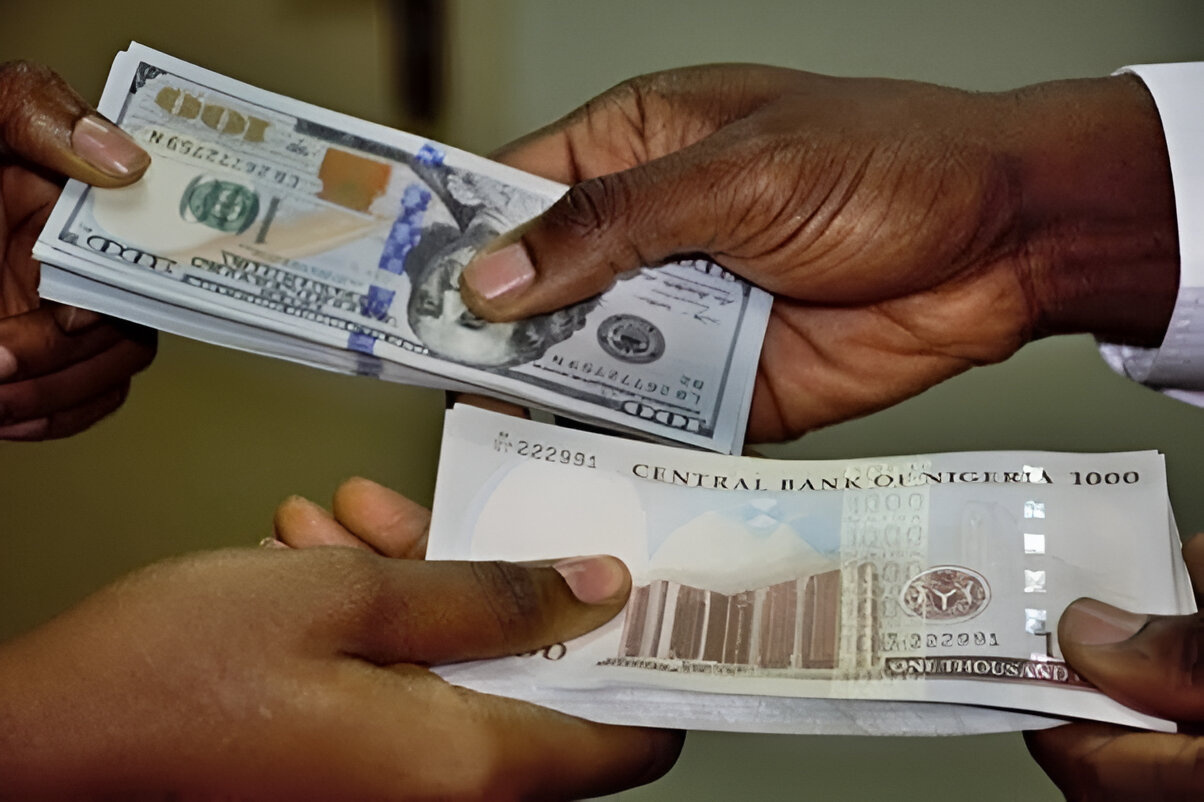
The Nigerian naira faced renewed pressure in the opening hours of Tuesday’s trading session, retreating by 2.48% as corporate demand for the greenback surged.
Data from the Nigerian Foreign Exchange Market (NFEM) revealed a rocky start to the week, signaling that the currency’s recent path to stability still faces significant headwinds.
The session opened with the dollar quoted at an average of ₦1,388.38, a sharp departure from the ₦1,353.90 peg seen at the close of the previous week. Traders on the floor reported early intraday volatility that pushed rates as high as ₦1,395.00 before the market saw a slight moderation.
This shift occurs amidst the rollout of the Central Bank of Nigeria’s (CBN) Electronic Foreign Exchange Matching System (EFEMS), designed to enhance transparency. However, transparency alone has not been enough to curb the “end-of-quarter fever” currently gripping the market.
Market analysts attribute this sudden spike in demand to two primary factors:
- Corporate Requirements: Local firms are currently scrambling for FX to settle end-of-quarter obligations and offshore dividends.
- Autonomous Inflow Dip: A temporary lull in non-governmental foreign capital has left the market more reliant on the apex bank’s interventions.
The naira’s struggle is mirrored by a cooling of Nigeria’s external reserves. After hitting a staggering 13-year high of $50.45 billion in February 2026, the cushion has moderated to $49.78 billion as of mid-March.
While Bonny Light continues to trade at a premium—sitting comfortably above the $100 per barrel mark—the expected windfall remains elusive. The CBN continues to grapple with:
Production Constraints: Technical issues in the Niger Delta are preventing Nigeria from meeting its full OPEC+ quota.
Crude-Backed Obligations: Pre-existing debt commitments that divert oil revenue before it hits the national coffers.
Beyond domestic shores, the naira is being buffeted by “contagion” from abroad. Heightened geopolitical tensions in the Middle East have triggered a flight to safety, with global investors pulling capital back to “safe haven” assets like the U.S. dollar.
This sustained outflow of capital from emerging markets has left the NFEM vulnerable to the current price swings.
As the session progresses, all eyes remain on the CBN to see if further liquidity injections are on the horizon to stabilize the ₦1,400 psychological floor.
WHAT YOU SHOULD KNOW
The Naira is currently caught in a “liquidity squeeze.” Despite high global oil prices and healthy national reserves, internal production constraints and debt obligations are preventing that wealth from reaching the local market.
Combined with a seasonal spike in corporate demand and global geopolitical tension, the currency remains vulnerable to volatility until these structural bottlenecks are cleared.