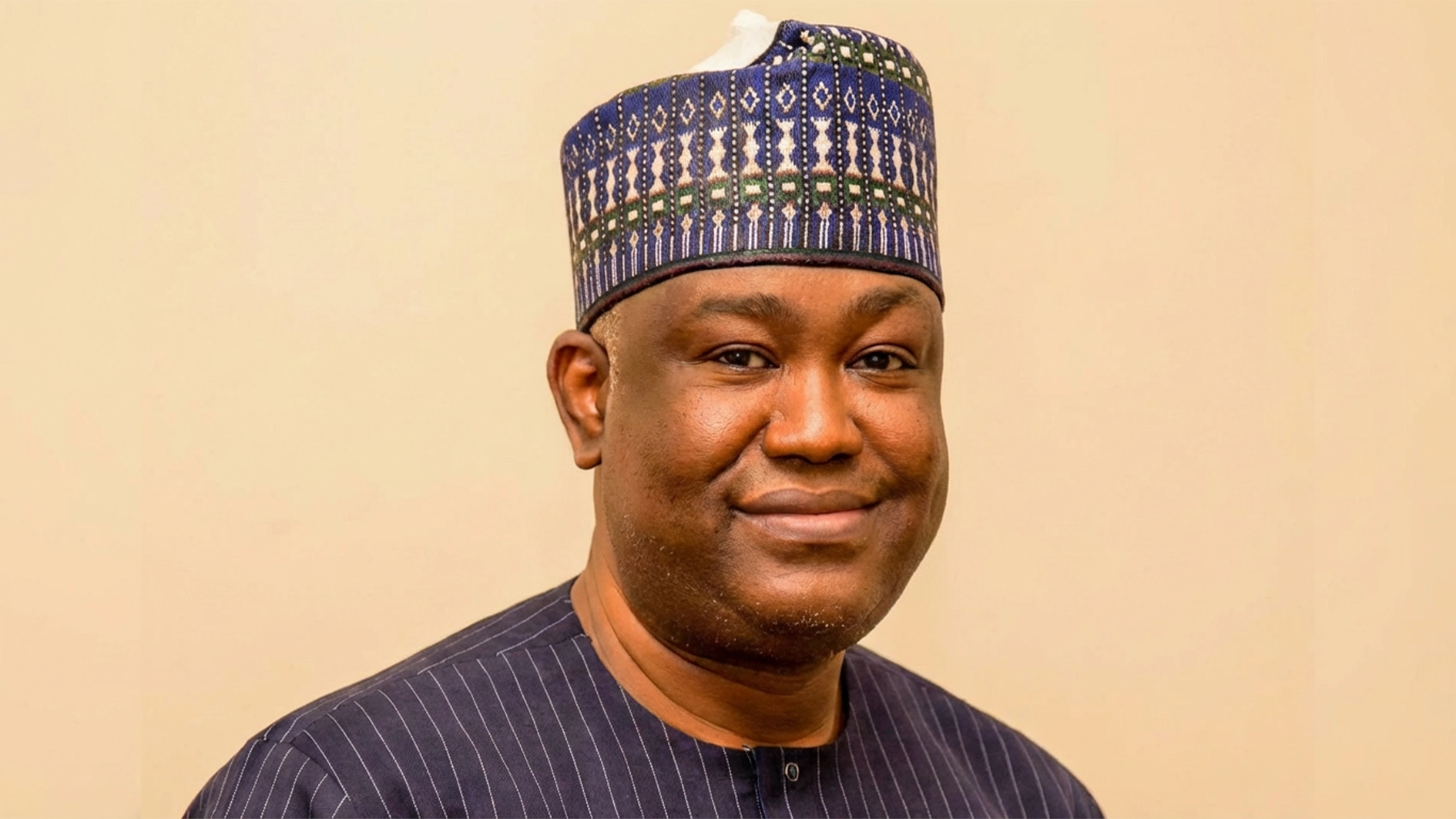
Former presidential candidate Gbenga Olawepo-Hashim has renewed his attack on INEC’s 2027 election timetable, calling it illegal, impractical, and dangerously insensitive to Nigeria’s political and religious realities.
Olawepo-Hashim, who has emerged as one of the most vocal critics of INEC‘s current planning approach, warned in fresh remarks that the commission’s timetable, if left uncorrected, risks destabilizing party structures, deepening internal political conflicts, and ultimately undermining public confidence in Nigeria’s democratic process at one of its most critical junctures.
At the heart of Olawepo-Hashim’s grievances is what he argues is a blatant disregard for existing statutory provisions. Citing Section 29(1) of the Electoral Act, he pointed out that political parties are legally required to submit nominations no later than 120 days before a general election, a timeline that, by his calculation, effectively gives parties until mid-September to conclude their nomination processes.
“Why adopt a chaotic timetable circumventing the provisions of the Act?” he queried, his frustration barely concealed.
In his view, the Electoral Act already provides a sufficiently generous window for orderly, democratic internal processes, rendering INEC’s compressed scheduling not just unnecessary, but legally questionable.
Legal analysts are likely to weigh in on the matter in the coming weeks as pressure mounts on the commission to justify its framework.
Beyond the legal argument, Olawepo-Hashim painted a troubling picture of the ground-level reality facing political parties scrambling to meet INEC’s tight deadlines.
According to him, the current calendar does not afford parties adequate time to conduct credible internal primaries or observe the democratic processes essential to building cohesive structures ahead of a general election.
The consequences, he argued, are already visible. Growing intra-party conflicts are spreading across the political landscape, tensions he attributed directly to the logistical impossibility of compressing complex democratic exercises into an unrealistically narrow timeframe.
“Party primaries themselves often generate political tension and security concerns,” he noted, insisting that such activities require not just planning, but adequate spacing between them and other high-stakes national events.
For a country where the integrity of internal party democracy has long been a fault line in electoral disputes, his warning carries significant weight.
Perhaps the most politically sensitive dimension of Olawepo-Hashim’s criticism concerns INEC’s decision to schedule politically intensive activities, including party primaries—around major Islamic religious observances, specifically Hajj and Ileya, also known as Eid al-Adha.
In a country where religion intersects deeply with politics, security, and civic life, the former presidential candidate described this scheduling overlap as not merely insensitive but potentially explosive.
“Combining election primaries with periods like Hajj and Ileya, which already carry security and mobility challenges, is unreasonable,” he stated bluntly.
His concerns are not unfounded. The Hajj period involves the mass movement of thousands of Nigerian pilgrims, straining logistics across multiple states. Ileya, one of the most widely observed Islamic celebrations in the country, brings its own demands on security infrastructure and public mobility.
Layering politically charged primary events that historically attract tensions, crowd mobilization, and occasional violence—on top of these periods, Olawepo-Hashim argued, is a recipe for avoidable crisis.
“Compressing religious and political schedules unnecessarily increases national risk,” he maintained, warning that such an approach could trigger disruptions with nationwide consequences.
What adds a particularly pointed dimension to Olawepo-Hashim’s public campaign is his disclosure that he had already attempted to resolve the matter through official channels to no avail.
He revealed that he had written an open letter to President Bola Ahmed Tinubu, urging the president to intervene and ensure that INEC operates strictly within the bounds of the Electoral Act. The appeal, however, has met with silence. No response, he confirmed, has been received from the Presidency.
The lack of engagement from Aso Rock raises uncomfortable questions about the extent to which the executive is willing or prepared to exercise its moral authority over the electoral process ahead of 2027, a year when President Tinubu himself will be seeking re-election.
Critics may argue that the presidency’s silence on the matter is, in itself, a form of tacit endorsement of the status quo, a charge the administration will need to address if it hopes to be seen as a neutral guarantor of a credible electoral environment.
Olawepo-Hashim’s broadside against INEC arrives at a particularly sensitive moment in Nigeria’s democratic evolution. With the 2027 elections already generating significant political maneuvering, the integrity and credibility of the electoral commission’s processes will be under intense scrutiny from citizens, civil society groups, international observers, and political actors alike.
His warning that failure to review the timetable could erode public confidence in the electoral process resonates beyond party politics. Nigeria’s democracy has repeatedly been tested by contested elections, disputed primaries, and institutional mistrust.
A scheduling framework that is perceived as legally dubious, logistically reckless, and religiously insensitive risks adding fresh grievances to an already volatile mix.
INEC had not issued a formal response to Olawepo-Hashim’s criticisms. The commission will, however, be expected to address these concerns publicly, particularly the legal arguments anchored in the Electoral Act, if it is to maintain its credibility as an impartial arbiter of Nigeria’s democratic process.
WHAT YOU SHOULD KNOW
Former presidential candidate Gbenga Olawepo-Hashim has raised a legitimate and urgent alarm that deserves serious national attention.
At its core, his argument is simple: INEC’s 2027 election timetable violates the Electoral Act, squeezes political parties into an unworkable timeline, and recklessly overlaps with major Islamic religious periods, a combination that could spark instability across the country.
His appeal to President Tinubu for intervention has gone unanswered, and that silence is as troubling as the problem itself.
If INEC fails to urgently review and realign its scheduling framework with both the law and Nigeria’s social realities, the credibility of the entire 2027 electoral process stands at risk.