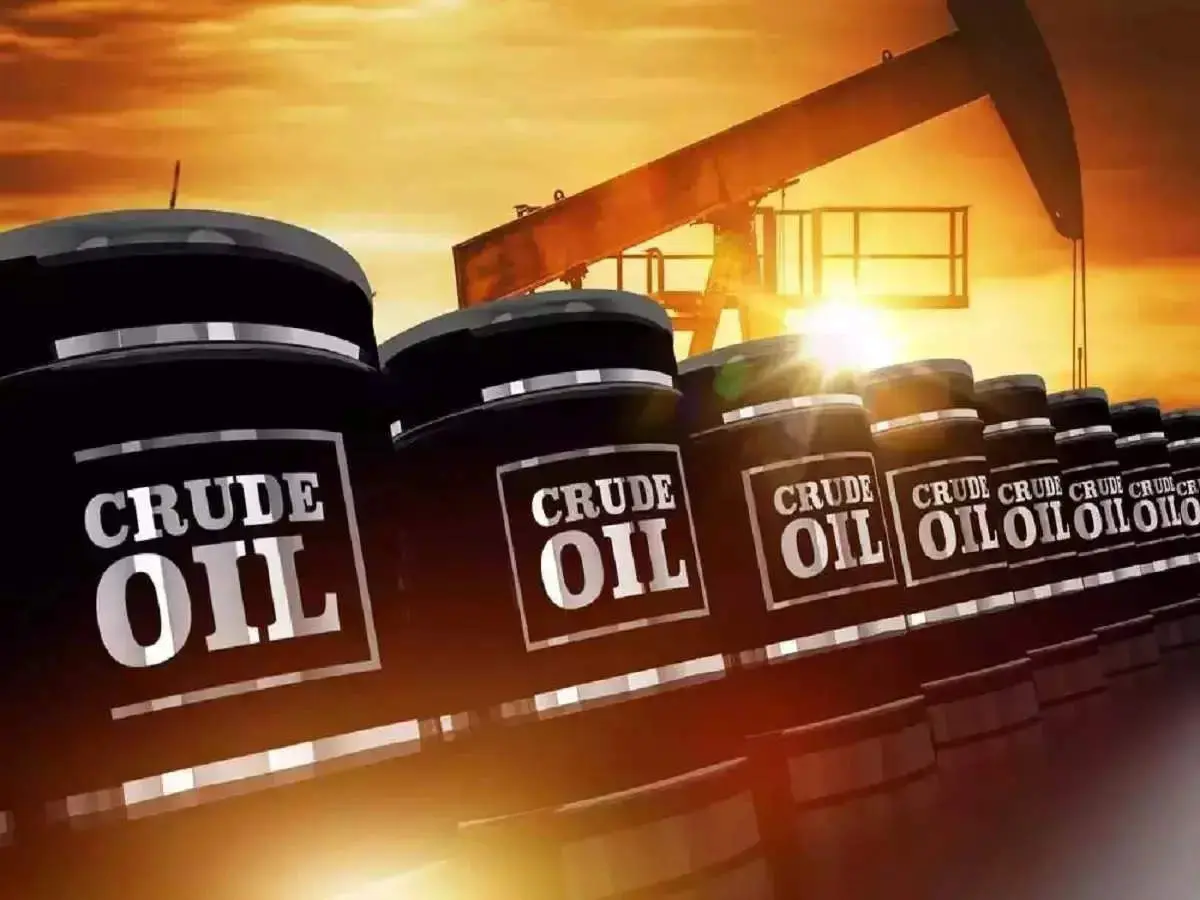
Global oil prices skyrocketed on Monday amid fears of prolonged military conflict, sending shockwaves through global markets.
The surge in crude futures, coupled with a strengthening U.S. dollar and sharp declines in equities, has raised alarms about derailing the fragile post-pandemic economic recovery and potentially sparking a fresh wave of inflation worldwide.
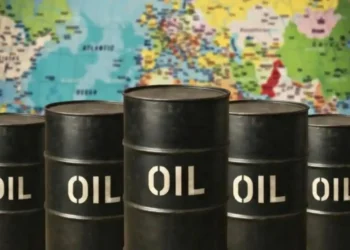
The benchmark Brent crude contract leaped approximately 10% to settle at $79.90 per barrel, after briefly piercing the $82.00 mark in early trading—its highest intraday level in months.
Similarly, U.S. West Texas Intermediate crude climbed 8.2% to $72.64 per barrel. The rally was fueled by intensifying hostilities, with Israel launching fresh airstrikes on Tehran and broadening its offensive to target Iran-backed Hezbollah forces in Lebanon.
U.S. President Donald Trump, in a stern address from the White House, indicated that the joint U.S.-Israeli operations against Iranian targets could extend for several weeks, underscoring Washington’s unwavering support for its ally amid rising regional instability.
In retaliation, Iranian state media reported the launch of a new barrage of missiles from central Iran aimed at “enemy locations,” heightening the risk of a broader conflagration.
The conflict, which has roots in longstanding geopolitical rivalries, including Iran’s nuclear ambitions and its support for proxy militias across the region, now threatens to engulf key energy chokepoints. All attention has turned to the Strait of Hormuz, a narrow waterway that handles about a fifth of global seaborne oil trade and 20% of liquefied natural gas shipments.
Although the strait remains open for now, vessel-tracking data from marine intelligence platforms revealed a backlog of tankers idling on both sides, as operators grapple with heightened attack risks and soaring insurance premiums that could render voyages uneconomical.
“This is a powder keg for global energy markets,” said Michael Langham, an emerging markets economist at Aberdeen Investments, in an interview with this reporter. “At least in the short term, the disruption to global energy supply is substantial, and this clearly adds upside risks to the oil price.”
Langham cautioned, however, that the Trump administration appears keen to avoid a full-blown global oil shock, especially with U.S. midterm elections looming in November. “A prolonged spike would risk reigniting inflationary pressures globally while also acting as a tax on business and consumers that could dampen demand,” he added.
The OPEC+ alliance, comprising major oil producers including Saudi Arabia and Russia, attempted to mitigate the fallout by agreeing to a modest production increase of 206,000 barrels per day for April during a weekend meeting.
Yet, much of this additional output originates from Middle Eastern fields, raising questions about its safe delivery amid the ongoing turmoil. Analysts warn that any blockade or sustained attacks on shipping lanes could exacerbate supply shortages, pushing prices even higher and straining economies still recovering from recent global disruptions.
Financial markets bore the brunt of the uncertainty. European stocks led the sell-off, with the pan-European STOXX 600 index tumbling 1.7% as investors fled riskier assets. This followed a 1.8% drop in Asia-Pacific shares excluding Japan, while U.S. S&P 500 futures pointed to a 1.5% lower open on Wall Street.
Banking stocks were hit hardest, plunging 3.6% in Europe amid concerns over slowed economic growth and potential loan defaults in energy-dependent sectors. Airlines, highly sensitive to fuel costs, skidded 5% lower, reflecting fears of squeezed margins from elevated jet fuel prices.
Technology shares also suffered, as portfolio managers rotated out of high-growth, high-valuation names in favor of defensive plays. Conversely, energy stocks emerged as bright spots, surging 4% in Europe to a record high.
Heavyweights like BP and Shell each gained nearly 6%, buoyed by the windfall from higher crude prices. European defense firms also advanced 1.3%, capitalizing on expectations of increased military spending in the region.
The fallout extended to the Middle East itself, where the United Arab Emirates and Kuwait shuttered their stock exchanges temporarily, citing “exceptional circumstances” tied to the conflict. In a rare outlier, Chinese blue-chip stocks edged up 0.4%, though Beijing’s heavy reliance on Middle Eastern oil imports—which constitute a significant portion of its seaborne crude needs—could expose it to future vulnerabilities if the crisis drags on.
Safe-haven assets provided some refuge for jittery investors. Gold prices vaulted 2.6% to $5,413 per ounce, underscoring its role as a hedge against geopolitical risks and currency volatility. The U.S. dollar index, meanwhile, jumped as capital flowed into the world’s reserve currency, pressuring emerging market currencies and adding to the economic strain in oil-importing nations.
Economists are now reassessing growth forecasts, with some warning that a sustained oil price above $80 per barrel could shave up to 0.5% off global GDP growth this year. For consumers, higher energy costs translate to pricier gasoline, heating bills, and goods transported by truck or ship—a bitter pill at a time when inflation has only recently begun to cool from multi-decade highs.
As the situation unfolds, diplomats from the United Nations and European Union have called for an immediate ceasefire, but with both sides digging in, the prospects for de-escalation appear dim. President Trump, facing domestic political pressures, has vowed to protect U.S. interests in the region, including safeguarding oil flows critical to American energy security.
This reporter will continue monitoring developments from the ground and financial hubs as the world braces for what could be a defining moment in global stability. Markets remain on edge, with traders pricing in further volatility ahead.
WHAT YOU SHOULD KNOW
Escalating military conflict between Israel, the United States, and Iran is driving a sharp and sustained rise in global oil prices, threatening to reignite inflation and slow the world economic recovery.
Brent crude jumped ~10% to $79.90 (briefly over $82), with the Strait of Hormuz—a critical chokepoint for 20% of world oil and LNG—under severe strain as tankers hesitate to transit. Markets are pricing in weeks of disruption, not days.