The World Bank has thrown its weight behind President Bola Tinubu’s economic reform agenda, approving a fresh $1.25 billion financing package for Nigeria aimed at deepening private-sector investment and accelerating job creation across Africa’s most populous nation.
The financing, delivered through the Nigeria Actions for Investment and Jobs Acceleration (NAIJA) Development Policy Financing operation, was approved by the Bank’s Board of Executive Directors on Wednesday.
It arrives as the centerpiece of a newly endorsed Country Partnership Framework (CPF), a six-year roadmap that will govern the World Bank Group’s engagement with Nigeria from 2026 to 2032.
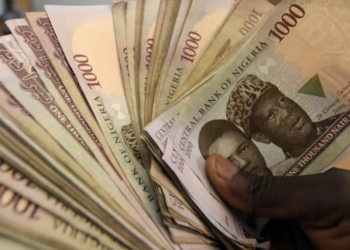
In naira terms, the loan is equivalent to roughly N2.1 trillion at an exchange rate of N1,400 to the dollar. The money was approved despite mounting public concern over Nigeria’s rising external debt burden, with some Nigerians questioning transparency around how previous World Bank facilities have been spent.
The bank, for its part, maintained that the new facility is structured to finance structural reforms rather than recurrent government spending.
Unlike a straightforward infrastructure loan, the NAIJA facility is a Development Policy Financing (DPF) instrument, meaning disbursement is tied to the government implementing specific policy actions rather than funding a discrete project.
The World Bank said the money would back reforms spanning capital markets, digital economy regulation, power sector expansion, trade liberalization under ECOWAS and the African Continental Free Trade Area, agricultural input systems, and domestic revenue mobilization.
Officials framed the loan as validation of Nigeria’s macroeconomic overhaul since 2023, which has included the removal of a costly fuel subsidy and the unification of multiple exchange rates. The World Bank noted these measures had contributed to stronger growth, higher government revenue, and improved investor confidence.
The World Bank said the strategy aims to extend electricity access to roughly 32 million Nigerians, deliver broadband connectivity to 58 million people, improve health and nutrition services for 40 million citizens, and support close to 9.5 million farmers through better access to agricultural inputs and productivity gains.
World Bank Country Director for Nigeria, Mathew Verghis, cast the framework as a pivot point from stabilizing the economy to translating that stability into tangible improvements in Nigerians’ daily lives.
“Our new Country Partnership Framework provides the strategy for how the World Bank Group will support Nigeria over the coming years, with a strong focus on helping to create more and better jobs, particularly by enabling private sector-led growth,” he said.
He was candid, however, that macroeconomic stabilization alone would not be enough. “Translating improved macroeconomic conditions into better living standards will require addressing the structural constraints to spur private sector investment and job creation,” Verghis said.
A recurring theme in the bank’s statement was the intent to crowd in private capital rather than rely solely on public spending. The World Bank Group indicated that its private-sector arms, the International Finance Corporation and the Multilateral Investment Guarantee Agency, would play key roles in mobilizing private capital under the new partnership.
Separately, an official identified as Mountfield said the World Bank Group Guarantee Platform, managed by MIGA under the new framework, would expand support for priority sectors including financial services and infrastructure to help draw in investment.
The approval extends a pattern of large World Bank support for the Tinubu administration’s reform drive. This facility ranks as the second-largest single World Bank loan secured under President Tinubu, trailing only the $1.5 billion Reforms for Economic Stabilization to Enable Transformation Development Policy Financing approved in June 2024.
The NAIJA financing and the accompanying 2026–2032 Country Partnership Framework signal that the World Bank views Nigeria’s recent fiscal and monetary reforms as durable enough to build on while also acknowledging that stabilization, on its own, has not yet translated into broad-based improvements in employment or living standards.
Whether the reforms tied to this facility, from capital market liberalization to agricultural input systems, can be implemented at the pace the Bank envisions will likely determine how much of that $1.25 billion translates into the jobs and investment the program promises.
WHAT YOU SHOULD KNOW
The World Bank’s $1.25 billion NAIJA financing isn’t free money; it’s a reform-linked loan tied to Nigeria implementing specific policy changes in capital markets, power, trade, and agriculture.
The real story isn’t the dollar figure; it’s that the bank is betting on Nigeria’s continued reform follow-through to unlock private investment and jobs. As Country Director Mathew Verghis put it, macroeconomic stability alone won’t improve lives; execution of structural reforms will.