President Donald Trump signed two new executive orders Thursday targeting birthright citizenship and “birth tourism,” his second attempt to limit automatic citizenship, coming weeks after the Supreme Court struck down his broader first try.
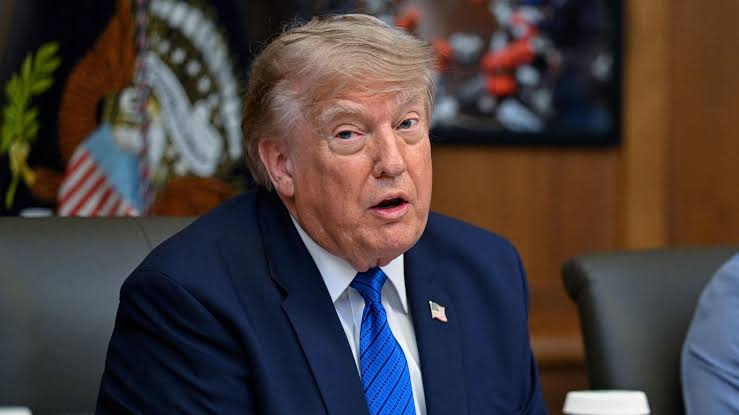
Trump signed the orders in the Oval Office, flanked by deputy chief of staff Stephen Miller, the architect of the administration’s immigration agenda, and Commerce Secretary Howard Lutnick. Trump described the new push as a response to what he called a “very unfortunate decision” from the Supreme Court earlier this year.
The first order targets so-called “alien enemies,” members of foreign terrorist organizations, and categories of people who lobby or act on behalf of foreign governments, making children born in the U.S. to individuals in those groups ineligible for birthright citizenship.
The order may also expand the existing exception for children of foreign diplomats, who are already excluded from birthright citizenship under current practice.
The second order focuses on commercial birth tourism, the practice in which pregnant foreign nationals travel to the U.S. in the final weeks of pregnancy so their children are born on American soil and automatically become citizens.
It delegates authority to the Secretaries of State and Homeland Security to halt the practice by tightening visa restrictions on visitors suspected of traveling for that purpose. U.S. law already technically bars issuing a visa for the primary purpose of giving birth in the U.S. to obtain citizenship for a child, so it remains unclear how much the new order changes in practice.
Officials also suggested the administration is eyeing whether birthright citizenship could eventually be denied to children born in U.S. territories, though that appears to be a longer-term consideration rather than an immediate change. Currently, people born in territories like Puerto Rico are deemed citizens under federal law.
On his first day back in office in January 2025, Trump signed a much broader executive order attempting to end birthright citizenship for children born to parents who were in the country illegally or on temporary visas.
The order was immediately challenged in court by opponents who argued it violated the 14th Amendment, which grants citizenship to nearly all people born on U.S. soil, and it was blocked by several lower courts before it could take effect.
In June, the Supreme Court struck down that order in a 6-3 vote, upholding a broad interpretation of birthright citizenship. The ruling, in Trump v. Barbara, held that the Constitution extends citizenship to children born to parents in the U.S. for whom “no extraterritorial fiction applies.”
CNN described Thursday’s orders as a “seemingly more limited attempt” compared with last year’s, narrowing the recognized exceptions rather than trying to eliminate birthright citizenship broadly.
Solicitor General John Sauer, who argued the earlier case before the justices, pointed to congressional findings on the issue. “The congressional report that we cite in our brief talks about certain hotspots, like Russian elites coming to Miami through these birth tourism companies,” Sauer said.
A Senate Homeland Security Committee report has raised concerns that birth tourism could pose “national security and election integrity threats” given that many of the expectant mothers involved come from China and Russia.
Estimates of how many children have resulted from birth tourism range from the low thousands to the tens of thousands annually. Trump himself has railed against the practice on social media, writing in March that birthright citizenship “is not about rich people from China, and the rest of the World, who want their children … FOR PAY” to become American citizens.
Asked what gives him confidence the new orders will survive constitutional scrutiny, Trump deferred to White House counsel Will Scharf but said simply, “I think it will.”
Civil liberties groups signaled they are ready to fight the orders in court just as they did the first time. “The Supreme Court already decided this issue: Birthright citizenship is guaranteed by the Constitution. No additional executive order can change the meaning of the Constitution.
Any executive order that tries to rewrite birthright citizenship will meet the same fate as the last one,” said Cody Wofsy, deputy director of the ACLU’s Immigrants’ Rights Project.
The birth tourism question had already surfaced during Supreme Court oral arguments in the earlier case. Chief Justice John Roberts told Sauer, “You do agree that that has no impact on the legal analysis before us,” to which Sauer responded that such tourism illustrates the negative effects of the prevailing interpretation of the Citizenship Clause.
With litigation all but certain, Thursday’s orders are likely to open a new chapter in the long-running legal battle over the scope of the 14th Amendment, one that may ultimately return to the Supreme Court that already ruled against the administration once this year.
WHAT YOU SHOULD KNOW
Trump has signed two narrower executive orders on birthright citizenship and birth tourism, just weeks after the Supreme Court struck down his broader 2025 attempt to end automatic citizenship for children of non-citizens.
The Supreme Court already ruled on this in Trump v. Barbara, affirming that the 14th Amendment guarantees citizenship to nearly all children born on U.S. soil.
These new orders are a targeted workaround, not a reversal of that ruling, and legal challenges are all but certain, meaning this fight is likely headed back to the courts.