Iran and Oman appear to be closing in on an agreement that could reshape maritime traffic through one of the world’s most contested waterways, even as fresh attacks on oil tankers underscored just how far the Strait of Hormuz remains from returning to normal.
Foreign ministry spokesman Esmaeil Baqaei told reporters in Tehran on Wednesday that negotiators from both countries have settled on the geographic coordinates for a new shipping corridor through the strait.
A joint statement laying out the substance of the agreement is now in its final drafting stage, according to Baqaei. Iranian officials have been careful to frame the talks as strictly bilateral.
State media outlet Fars has reiterated that Iran is negotiating solely with Oman, describing the target as a “middle corridor” designed to protect Iranian interests while addressing Omani concerns.
The emerging arrangement, however, looks unlikely to satisfy Washington. Saeed Ajorlu, a member of Iran’s negotiating team, told state broadcaster IRIB this week that Tehran is aiming for temporary arrangements lasting one to three months in which Iran retains the dominant hand over security, demining and maritime services in the strait, a posture almost certain to draw objections from the US and its Gulf allies.
Baqaei was blunt in ruling out any sense that a deal with Oman equates to a safe strait. He said the conditions that have made Hormuz dangerous, chiefly the American naval blockade and other hostile measures against Iran, remain firmly in place, and that easing them is a precondition Washington has yet to meet.
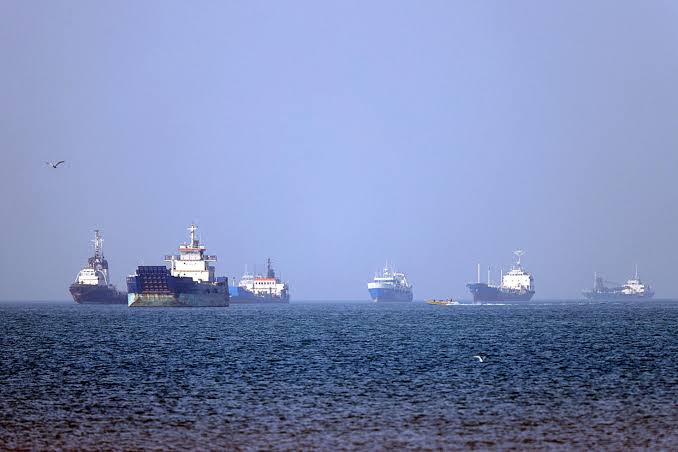
The diplomatic movement came against a backdrop of continuing violence at sea. UKMTO, Britain’s maritime security watchdog, reported that the captain of an oil tanker heard two explosions while transiting the strait roughly nine nautical miles southeast of Kumzar, Oman, though the crew and vessel were reported safe.
Farther afield, Yemen’s Houthi movement claimed fresh strikes on Saudi shipping, saying missiles struck the tankers Wafa, off Yanbu in the northern Red Sea, and Daisy, in the Gulf of Aden.
Houthi military spokesman Yahya Saree said the group has now turned away 29 tankers since announcing its blockade of Saudi Arabia last month, with the two latest strikes marking the eighth and ninth tankers hit in that campaign.
The slow pace of diplomacy has visibly tested patience in Washington. Vice President JD Vance, in an interview broadcast Wednesday on Fox News, acknowledged that talks with Tehran would remain difficult given the fractures within Iran’s own leadership, and cautioned that progress would be messy and slow.
President Trump, for his part, has continued to publicly predict an imminent breakthrough while simultaneously threatening to strike Iran hard if none materializes, a pattern that has repeated itself for weeks.
Trump said Tuesday that an agreement could come “tomorrow or the next day,” pointing to what he described as Iranian outreach for talks, even as Tehran’s foreign ministry has denied any negotiations are underway with the United States.
The strait’s importance to energy markets is difficult to overstate. At its narrowest point, Hormuz is just 34 kilometres wide, yet its shipping lanes typically carry around 20 million barrels of oil a day, roughly a fifth of global seaborne oil trade moving primarily out of Saudi Arabia, the UAE, Iraq and Qatar.
Since fighting broke out in February, that flow has been severely disrupted, driving repeated spikes in global oil prices and adding pressure on the Trump administration to find a resolution.
The toll from months of disruption has been steep: a tugboat sunk, at least seventeen merchant vessels damaged, several abandoned, two ships captured, and a dozen seafarers killed or missing, along with casualties at a Bahraini port.
Wednesday’s announcement is not the first sign of movement on Hormuz, and history suggests caution is warranted. Back in April, U.S. officials including then-Secretary of War Pete Hegseth declared the strait set to reopen under a ceasefire framework tied to a two-week bombing pause, contingent on Iran guaranteeing safe passage. That framework, like earlier attempts, did not hold.
A ceasefire reached in June collapsed within weeks amid disputes over shipping routes, and fighting resumed in July.
For now, the coordinates may be agreed, but the shooting has not stopped, and Tehran’s own officials are the first to say that a bilateral understanding with Muscat is not the same thing as reopening the strait to the world.
WHAT YOU SHOULD KNOW
Iran and Oman may have agreed on coordinates for a new Hormuz shipping route, but this is a technical arrangement between two neighbors, not a reopening of the strait.
Iran says the waterway stays unsafe as long as the US naval blockade and hostilities continue, and Washington has given no indication it will lift them. Meanwhile, tankers are still being struck in the Gulf and Red Sea.
The takeaway is simple: don’t mistake a bilateral technical fix for an end to the crisis; the underlying US-Iran standoff is what actually determines whether Hormuz reopens.