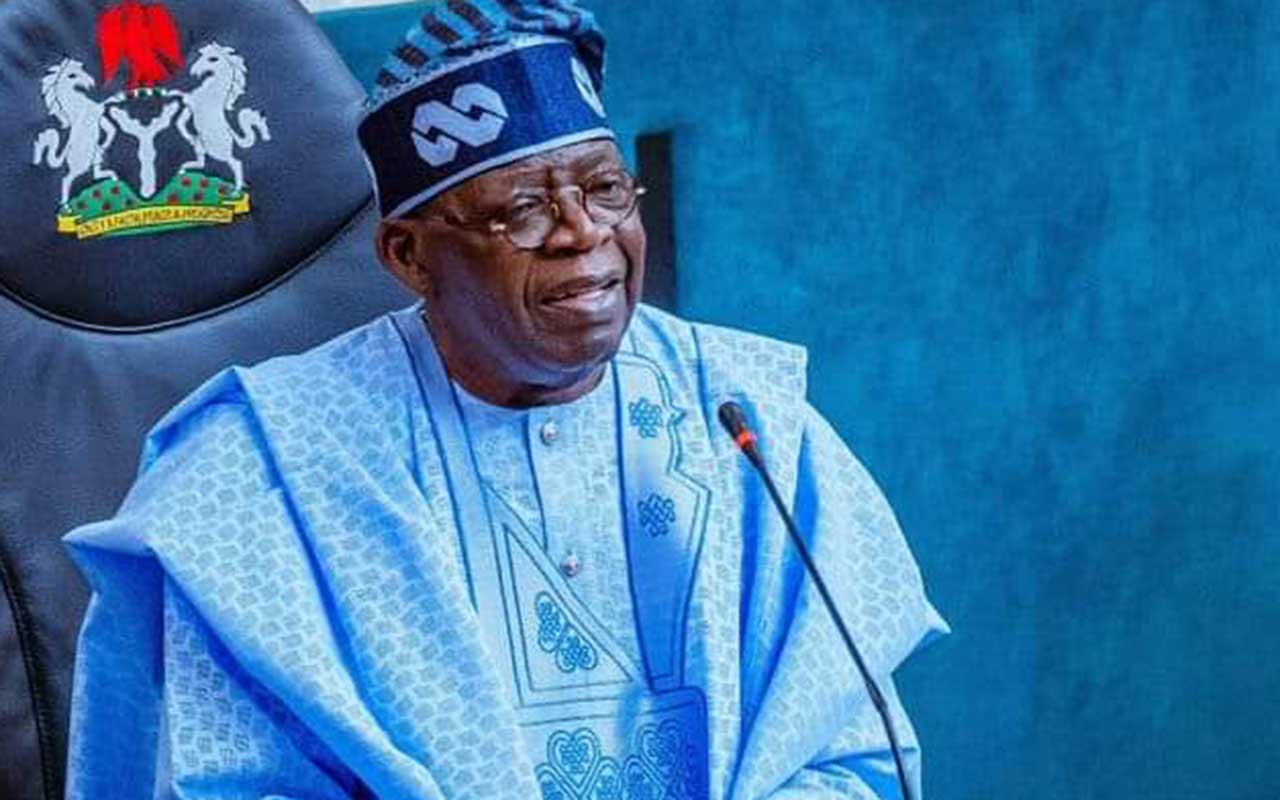
President Bola Tinubu has directed the Economic and Financial Crimes Commission (EFCC) to return to court and vacate the order freezing Osun State Government accounts, in a dramatic reversal that comes just days before the state’s closely watched governorship election.
The directive, contained in a statement released Thursday by presidential spokesperson Bayo Onanuga, marks a rare instance of the President publicly overruling an anti-graft agency’s enforcement action and doing so within 24 hours of the Commission defending the freeze as lawful and necessary.
The EFCC had, in a letter dated August 5, 2026, directed First Bank to place a post-no-debit restriction on the Osun State Government’s Statutory Allocation account, pending the conclusion of an ongoing investigation.
The Commission cited Sections 38(1) and (2) of the EFCC Act, 2004, and Section 24 of the Money Laundering Prevention and Prohibition Act as its legal basis.
In a follow-up statement, the agency explained that the freeze was tied to alleged fraudulent handling of N11 billion in ecological and intervention funds, and insisted the measure would not have been necessary but for what it called suspicious movement of funds out of the state’s accounts beginning August 2, 2026.
The move triggered swift and heated backlash. Osun State Governor Ademola Adeleke publicly challenged the EFCC to justify the action, describing it as an abuse of the rule of law and demanding that EFCC Chairman Ola Olukoyede explain the basis for freezing the state’s accounts.
The governor went further, invoking a broader grievance against the federal government, arguing that the administration’s approach to political contests as “warfare” posed a serious threat to democratic engagement, even while insisting that legitimate conflict still carries limits.
Opposition figures piled in quickly. The African Democratic Congress (ADC), through its national publicity secretary Bolaji Abdullahi, branded the freeze “political terrorism” and accused the federal government of weaponising state institutions against the people of Osun.
Former Vice President Atiku Abubakar also weighed in, framing the freeze as part of a recurring pattern of coercive federal action against opposition-controlled states, pointing to the prolonged withholding of Osun’s local government allocations as an earlier example.
He called on the EFCC to reverse course, warning that law enforcement institutions must never become tools for instilling fear or securing political advantage.
The EFCC, for its part, stood by the legality of its action even as criticism mounted. The Commission’s Director of Public Affairs, Wilson Uwujaren, told Arise Television that the freeze did not require a prior court order, pushing back against claims to the contrary from the state government and the Nigerian Bar Association.
He maintained that the agency acted after detecting suspicious account activity over the preceding week and that the goal was simply to preserve the funds pending investigation.
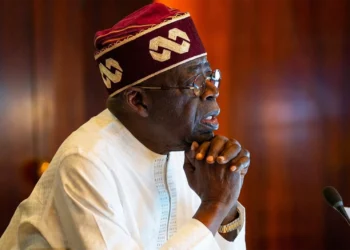
It was against this backdrop that President Tinubu, in a statement issued by the State House on Thursday, moved to defuse the controversy, explicitly citing the state’s proximity to its governorship election as his motivation.
Osun State is only days away from the August 15 governorship poll, a timeline the president referenced directly in explaining his intervention.
Tinubu was careful to frame his objection not as a challenge to the EFCC’s legal authority but as a concern about optics and timing. “It has come to my notice that the Economic and Financial Crimes Commission (EFCC) obtained a court order on August 5, 2026, freezing the accounts of the Osun State Government,” he said, adding: “I must state that I feel deeply embarrassed not by the EFCC’s exercise of its mandate backed by a court order, but by the timing of the agency’s action.”
The president went on to explain the source of his discomfort in more personal terms, noting that federal actions, regardless of his own involvement, inevitably reflect on his office.
He explained that he felt embarrassed “because every action taken by an institution of state,” especially at the federal level, tends to be attributed to him personally as President.
Tinubu also struck a note of caution about the precedent such actions could set for electoral credibility. He warned that nothing should be done to create the impression that the EFCC or any other federal agency was being used to interfere with the outcome of the Osun election, stressing that no action should undermine public confidence in the democratic process.
Acting on that concern, the President directed the EFCC to “immediately proceed to the court to vacate the order and discontinue whatever action it has instituted against the Osun State Government in this regard.”
Notably, Tinubu’s statement stopped short of a wholesale rebuke of the EFCC’s independence. He indicated he had not yet been fully briefed on the facts underlying the Commission’s decision to seek the court order, even as he expressed little doubt that the timing was “inauspicious” enough to warrant his intervention.
The President has consistently maintained, since taking office, that anti-corruption and law enforcement agencies should operate independently and professionally, without political interference a position his latest directive seeks to reconcile with the optics of federal power bearing down on an opposition-held state days before an election.
Whether the EFCC’s underlying investigation into the alleged N11 billion fund diversion continues in another form remains to be seen.
For now, the immediate crisis over the frozen accounts appears headed for resolution even as questions linger about the Commission’s independence, the timing of its actions, and the broader political temperature surrounding Osun’s governorship race.
WHAT YOU SHOULD KNOW
President Tinubu’s order to reverse the EFCC’s freeze on Osun State’s accounts underscores one central tension: the timing of anti-corruption enforcement matters as much as its legality.
While the EFCC insists its N11 billion fraud probe is legitimate and lawfully backed, freezing a state’s accounts just days before its governorship election inevitably raises questions about political interference a perception risk serious enough that the President himself chose to intervene rather than let it stand, even while defending the agency’s right to act independently in principle.