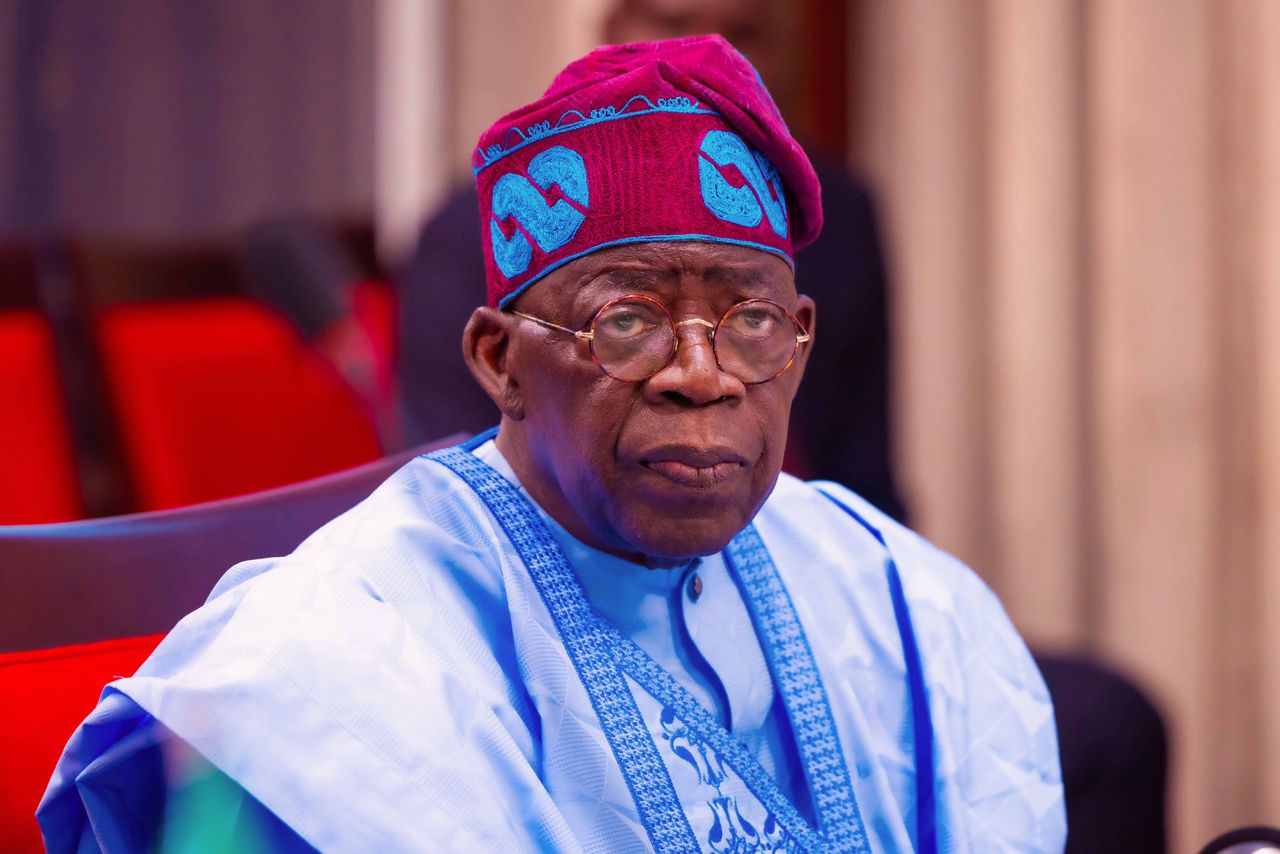
President Bola Tinubu has formally transmitted a constitution alteration bill to the Senate to establish state police across Nigeria, a move that could reshape law enforcement in Africa’s most populous nation.
Senate President Godswill Akpabio disclosed the development during Tuesday’s plenary session in Abuja, announcing that the upper chamber would consider the constitutional amendment bill on Wednesday.
In a further sign of coordinated legislative momentum, Akpabio also revealed that state governments had committed to reviewing the bill on the same day upon receipt, signaling an unusual degree of alignment between the executive, legislature, and the states on a matter that has historically divided opinion across the country’s political landscape.
The bill seeks to amend relevant provisions of the 1999 Constitution to formally authorize individual states to establish and operate their own police forces, a departure from the current arrangement, which vests all policing powers exclusively in the federal government through the Nigeria Police Force.
For years, the centralized policing model has drawn fierce criticism from governors, security experts, and civil society groups who argue that it is ill-suited to the diverse and complex security environments across Nigeria’s 36 states and the Federal Capital Territory.
State governments have long complained of their inability to directly command police assets deployed within their jurisdictions, leaving them dependent on Abuja’s approval even in the most urgent of local emergencies.
President Tinubu, who has made security a central pillar of his administration, first laid the groundwork for this legislative push in February, when he appeared before the National Assembly and urged lawmakers to amend the Constitution to accommodate state police.
He described the reform as not merely desirable but necessary, an indispensable tool in the country’s battle against terrorism, banditry, kidnapping, and other violent crimes that have ravaged communities in the Northwest, Northeast, and increasingly, parts of the South.
The President’s resolve appeared sharpened by the sobering security statistics he cited in his Democracy Day address earlier this month, in which he delivered what observers described as his most candid and combative assessment of the nation’s security situation to date.
Tinubu declared that more than 13,000 terrorists had been neutralized within the past year alone and pointed to a significant reduction in terrorism-related deaths compared to previous years as evidence that the military and security agencies were making measurable progress.
He vowed that terrorists, bandits, and their financiers would face the full weight of the law, and left little ambiguity about his administration’s posture: there would be no mercy shown to enemies of the Nigerian state.
The President acknowledged a wound that continues to fester in the national conscience the continued captivity of schoolchildren abducted in Oyo and Borno states. The acknowledgment was notable for its candor, a recognition that behind the operational statistics lie human tragedies that no neutralisation figure can erase.
With the bill now formally before the Senate, the pace of legislative action appears deliberately accelerated. The Senate is expected to reconvene for an emergency plenary session to debate and potentially pass the bill, a timeline that reflects the political urgency both the executive and legislature have attached to the reform.
Both chambers of the National Assembly have, in recent months, advanced separate constitutional amendment processes aimed at decentralizing policing powers, suggesting that when the bill comes to a vote, it is likely to receive broad support.
The coordination between the Senate and state assemblies, which have indicated readiness to act on the same day, further reduces the risk of the legislative process being stalled at the state ratification stage, which has historically been a bottleneck for constitutional amendments in Nigeria.
If passed and ratified, the establishment of state police would represent the most far-reaching structural reform to Nigeria’s security architecture since the return of democratic governance in 1999.
Proponents argue it would bring policing closer to the communities it serves, enable faster responses to local threats, and reduce the bureaucratic friction that has often hampered federal police deployment.
Critics, however, have long warned of the risks: the potential for state police to be weaponized by politically powerful governors against opponents, the challenge of funding and professionalizing 36 separate police services, and the risk of fragmentation in the national security response to cross-border criminal networks.
Those questions remain live as the Senate prepares to take what could be a historic vote.
What is clear, for now, is that after years of debate, Nigeria appears closer than it has ever been to answering them one way or another.
WHAT YOU SHOULD KNOW
President Tinubu’s transmission of the Constitution Alteration Bill to the Senate marks the closest the country has ever come to establishing state police, a reform that could fundamentally decentralize law enforcement and empower states to tackle insecurity on their own terms.
The Senate is poised to pass the bill at an emergency session, and state assemblies are ready to act in lockstep; the legislative stars appear aligned.