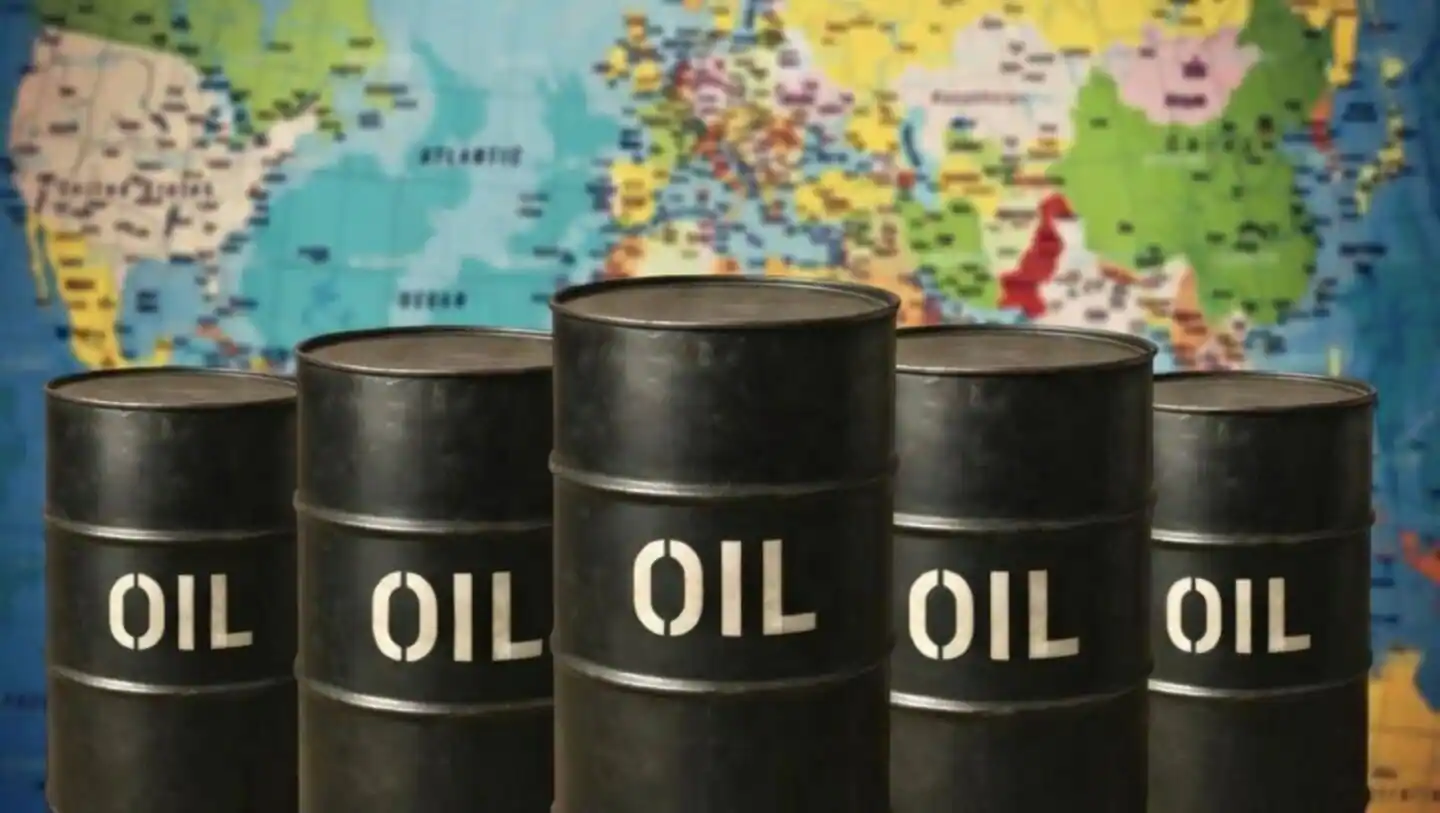
Oil markets fell sharply on Wednesday, with prices dropping to their lowest point since just before the U.S. -Israeli strikes on Iran, a striking reversal from the generational energy crisis the war had triggered only four months ago.
Global oil prices have tumbled roughly 20% from their 2026 peaks as a cascade of diplomatic developments, a fragile ceasefire, a 60-day memorandum of understanding between Washington and Tehran, and the first trickle of tanker traffic through the once-shuttered Strait of Hormuz have conspired to cool a market that, just weeks ago, was gripped by fears of a prolonged energy emergency.
Brent crude futures fell $1.37, or 1.8%, to $75.71 a barrel by early morning trading in London, touching an intraday low of $75.60, its weakest point since February 27, the day before the opening of U.S.-Israeli airstrikes ignited the crisis. U.S. West Texas Intermediate fell a parallel 1.5% to $72.13, briefly touching $72.03, its lowest mark since early March.
The immediate catalyst for Wednesday’s selloff was hard data from the world’s shipping lanes. Ship traffic is increasing, with data and analytics company Kpler confirming 39 ships crossed through the strait on Monday, after about 92 crossings between Friday and Sunday. Before the war, roughly 100 ships a day made the journey.
Three supertankers passed through the strait on Tuesday, according to ship-tracking data, a modest but symbolically significant convoy. Three Saudi Arabia-flagged oil supertankers carrying about 6 million barrels of crude exited the Strait of Hormuz recently, broadcasting their locations after spending weeks in the Gulf with their transponders turned off.
The United Nations shipping agency has confirmed that an evacuation plan is now underway to enable hundreds of vessels that have been bottled up in the Gulf to sail through the strait under the framework of the U.S.-Iran ceasefire deal.
“While there are early encouraging signs of increased tanker activity, the market is pricing in the broader scenario of Iranian oil re-entering the global market and the Strait of Hormuz normalizing,” said Tim Waterer, chief market analyst at KCM Trade.
“If sanctions are eased, Iranian production and exports could ramp up relatively quickly, given the substantial amount stored on tankers; we are likely talking weeks rather than months,” he added.
The prospect of Iranian crude re-entering global markets is no small consideration. Around 10 to 12 million barrels of crude remain choked off from global markets, according to analysts who supply that, if suddenly unleashed, it would represent a significant shock to an already softening price environment.
Analysts say the waiver, part of the broader ceasefire framework signed by Presidents Trump and Pezeshkian at the Lake Lucerne Summit in Geneva last week, is being interpreted by traders as a de facto green light for Iranian barrels to start flowing, even before a formal final agreement is reached.
On Tuesday, Oman and Iran agreed to continue discussions on managing navigation through the strait, a further sign that the diplomatic machinery is grinding forward. U.S. Secretary of State Marco Rubio said any attempt by Iran to levy transit fees as Tehran had controversially done earlier in the crisis would constitute a violation of international law.
On Tuesday, President Trump declared on social media that Iran had agreed to nuclear inspections “long into the future, infinity!!!” Iran’s foreign ministry, however, denied having agreed to inspections by the International Atomic Energy Agency. Tehran flatly rejected the assertion, with officials stating that no such concession had been made in the Switzerland talks.
The IAEA, which is responsible for monitoring Iran’s nuclear program, has been unable to resume inspections in the country since the June 2025 Israeli/U.S. strikes and has not been able to verify the damage to or the extent of Iran’s nuclear program. The agency’s director-general has previously warned that any peace agreement lacking provisions for such inspections would amount to an “illusion of an agreement.”
The uneasy ceasefire has already been tested by Iran, saying it closed the strait again over fighting between Israel and the Iranian-backed militia Hezbollah in Lebanon.
Violence flared anew in southern Lebanon on Tuesday, raising fresh doubts about the durability of the broader diplomatic framework, particularly given Iran’s insistence that a comprehensive Lebanese truce must be part of any final deal.
“Markets are currently assigning too much confidence to a favorable outcome without fully discounting the risks associated with unresolved nuclear issues and inspection disputes,” warned Mark Malek, chief investment officer at Siebert Financial.
The CEO of Mitsui OSK Lines told the Financial Times that many operators could wait weeks before allowing their tankers to resume transit through the strait, stating that what must come in place is “not just a simple agreement between the relevant countries, but it has to be material and translated into the real situations in the Strait of Hormuz.”
The International Association of Independent Tanker Owners (INTERTANKO) called for greater clarity on the practical steps needed to facilitate safe passage. “Without clarity on these issues, ships will be unsure whether to transit the Strait of Hormuz,” said Managing Director Tim Wilkins. “Some ships will, of course, start to move. That will be natural. But ship owners have adopted a very cautious approach.”
Those concerns are not unfounded. The strait is believed to contain an unknown number of Iranian naval mines, necessitating mine-sweeping operations that could take weeks.
Investors remain watchful of how quickly Middle Eastern producers can restore exports and whether the trickle of tanker traffic can swell into the pre-war flow of approximately 100 ships per day, a benchmark that still seems some distance away.
The Strait of Hormuz, through which around 20% of the world’s oil trade passes, and attacks on energy infrastructure in Iran and several Gulf Cooperation Council countries, led to a large disruption in global oil supplies that reverberated from Asian fuel queues to European gas bills.
Now, the question facing markets is not whether peace is possible, but whether the peace being negotiated is real. The gap between Washington’s stated version of events and Tehran’s on nuclear inspections, on sanctions, and on agricultural trade is wide enough to swallow a market rally whole.
For the moment, oil traders are betting on normalization. But as any seasoned hand on the energy desk will tell you, the Strait of Hormuz has a long history of confounding the optimists.
WHAT YOU SHOULD KNOW
Oil prices are falling sharply, down over 1% to four-month lows as markets bet that the Strait of Hormuz is reopening and Iranian crude will soon flood global supply. The optimism is grounded in real progress: tankers are moving, a ceasefire framework is signed, and sanctions relief is in play.
However, the rally toward peace rests on shaky ground. The single most important thing to understand is this: Washington and Tehran cannot agree on what they actually agreed to.
Trump insists Iran accepted permanent nuclear inspections; Iran flatly denies it. That dispute, unresolved and widening, is the thread that, if pulled, could unravel everything.