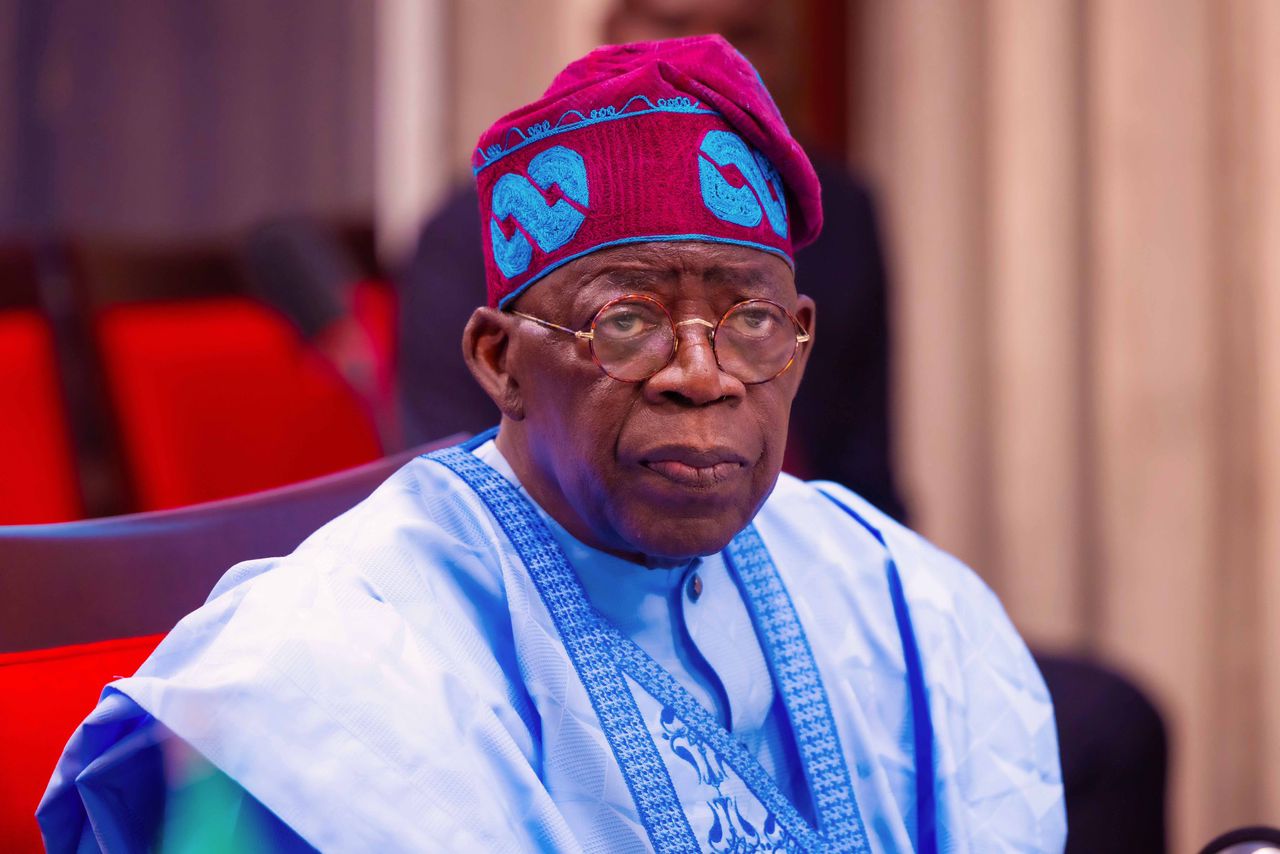
President Bola Ahmed Tinubu on Monday swore in two new ministers at the Presidential Villa in Abuja, completing a long-anticipated cabinet reshuffle aimed at keeping his administration on track in two of Nigeria’s most critical portfolios.
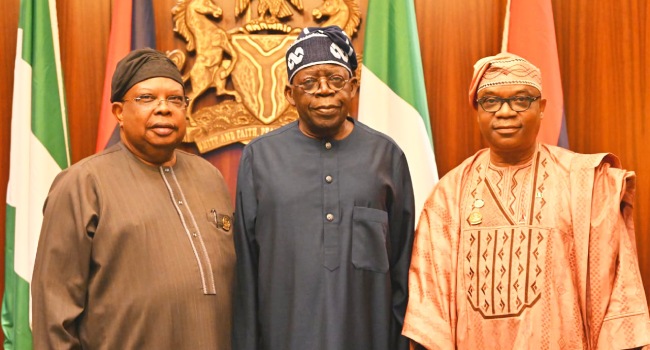
In a brief but symbolically significant ceremony held in the presence of the ministers’ spouses and senior government officials, Mr. Joseph Tegbe was administered the oath of office as minister of power, while Ambassador Sola Enikanolaiye was sworn in as minister of state for Foreign Affairs, both men stepping into roles vacated by predecessors who chose the ballot box over the cabinet table.
The twin appointments bring to a close a period of ministerial uncertainty that began when former Minister of Power, Adebayo Adelabu, and former Minister of Foreign Affairs, Yusuf Tuggar, both tendered their resignations to pursue political ambitions.
Their exits left two of Nigeria’s most critical ministries, one tasked with solving the country’s chronic electricity crisis and the other with managing the nation’s global standing, operating without full ministerial leadership.
President Tinubu moved swiftly to address the vacuum, nominating both Tegbe and Enikanolaiye as replacements. The Senate cleared the two nominees on Wednesday, May 6, 2026, paving the way for Monday’s swearing-in. The speed of their confirmation reflected the urgency that surrounds both dossiers.
Of the two appointments, perhaps none carries a heavier public expectation than that of Joseph Tegbe, who now inherits one of the most challenging briefs in Nigerian governance, fixing an electricity sector that has long been described as a source of national frustration and economic drag.
Born in Ibadan, Oyo State, Tegbe is anything but an unfamiliar face in Nigeria’s policy landscape. With over 35 years of professional experience spanning both the public and private sectors, he arrives at the Ministry of Power with a résumé that reads like a blueprint for exactly the kind of institutional overhaul the sector desperately needs.
A first-class graduate of civil engineering from the prestigious Obafemi Awolowo University, Tegbe went on to acquire a master’s degree in business administration from Switzerland and a further master’s in public administration from the University of Birmingham in the United Kingdom, an academic pedigree that straddles technical rigor and policy sophistication.
His professional career reached its apex as Senior Partner and Head of Advisory Services at KPMG in Africa, where he spearheaded transformational reform initiatives, including the design and implementation of major presidential-level reforms and the articulation of growth strategies for subnational governments across the continent.
Crucially for his new role, Tegbe has worked extensively within Nigeria’s energy and regulatory ecosystem. His portfolio includes engagements with the Nigerian Bulk Electricity Trading agency and the Nigerian Electricity Regulatory Commission, two institutions that sit at the very heart of the country’s power sector governance architecture.
Beyond energy, he has advised heavyweights including Shell, General Electric, Huawei, MTN, the Nigerian Communications Commission, the Nigeria Revenue Service, and the Odu’a Group, among others.
For millions of Nigerians who still endure hours of daily blackouts, the question is not whether Tegbe possesses the intellectual firepower for the job his record suggests he does, but whether political will and structural reform can finally translate into light in homes and power in factories.
Across the cabinet table, Ambassador Sola Enikanolaiye brings a distinctly different but equally impressive profile to the Ministry of Foreign Affairs, where he will serve as Minister of State.
A native of Igbagun in Kogi State, Enikanolaiye is a diplomat in the truest sense, a man who has spent the better part of his adult life representing Nigeria’s interests in the corridors of power across four continents. His appointment as Minister of State is, in many respects, a homecoming to an institution he joined over four decades ago.
Enikanolaiye holds a first-class degree in political science from Ahmadu Bello University, Zaria, where he distinguished himself sufficiently to win the Dean’s Prize as the best student in his faculty.
He later obtained a Master’s Degree in International Law and Diplomacy from the University of Lagos, graduating with Distinction, a qualification that would prove foundational to a long and decorated diplomatic career.
He entered the Ministry of Foreign Affairs in August 1982 and, over the next 35 years, rose steadily through the ranks, eventually attaining the position of director before being appointed permanent secretary of the ministry in 2016, a post he held until his retirement on August 4, 2017.
Along the way, Enikanolaiye served in several of Nigeria’s diplomatic missions, cutting his teeth in Addis Ababa, Ethiopia, before postings to Belgrade in Serbia, Ottawa in Canada, and London in the United Kingdom, each assignment broadening his understanding of multilateral diplomacy and bilateral relations.
His last foreign service posting was as Nigeria’s Head of Mission in New Delhi, India, reflecting the confidence the Nigerian government placed in his abilities at a time when Nigeria-India relations carry growing strategic and economic weight.
His honors are numerous: a Presidential Civil Service Merit Award, a Presidential Distinguished Public Service Career Award, and recognition as a Distinguished Fellow of the National Defense College, among several others.
Until his ministerial appointment, he served as Senior Special Assistant to President Tinubu on Foreign Affairs and International Relations in the Office of the Chief of Staff, meaning he had already been operating within the corridors of Aso Rock, advising the president on global affairs. His elevation to a full ministerial position, therefore, carries the hallmarks of a deliberate and considered choice rather than a political concession.
Taken together, Monday’s swearing-in ceremony tells a story about the Tinubu administration’s evolving priorities. In Tegbe, the president is betting on a reform technician with private-sector credibility to crack open one of Nigeria’s most entrenched structural problems.
In Enikanolaiye, he is relying on institutional memory and diplomatic experience to steady the ship of Nigeria’s foreign policy at a time of considerable global flux.
Whether both men can deliver on the considerable promise their appointments represent remains to be seen. But as they settle into their new offices this week, one thing is clear: the president has chosen experience and expertise over political patronage, and Nigerians will be watching closely.
WHAT YOU SHOULD KNOW
President Tinubu’s swearing-in of Joseph Tegbe as Minister of Power and Sola Enikanolaiye as Minister of State for Foreign Affairs signals a deliberate pivot toward competence-driven governance.
Both appointees bring decades of proven expertise: Tegbe as a seasoned reform strategist with deep roots in Nigeria’s energy sector, and Enikanolaiye as a career diplomat with over 40 years of frontline foreign service experience.