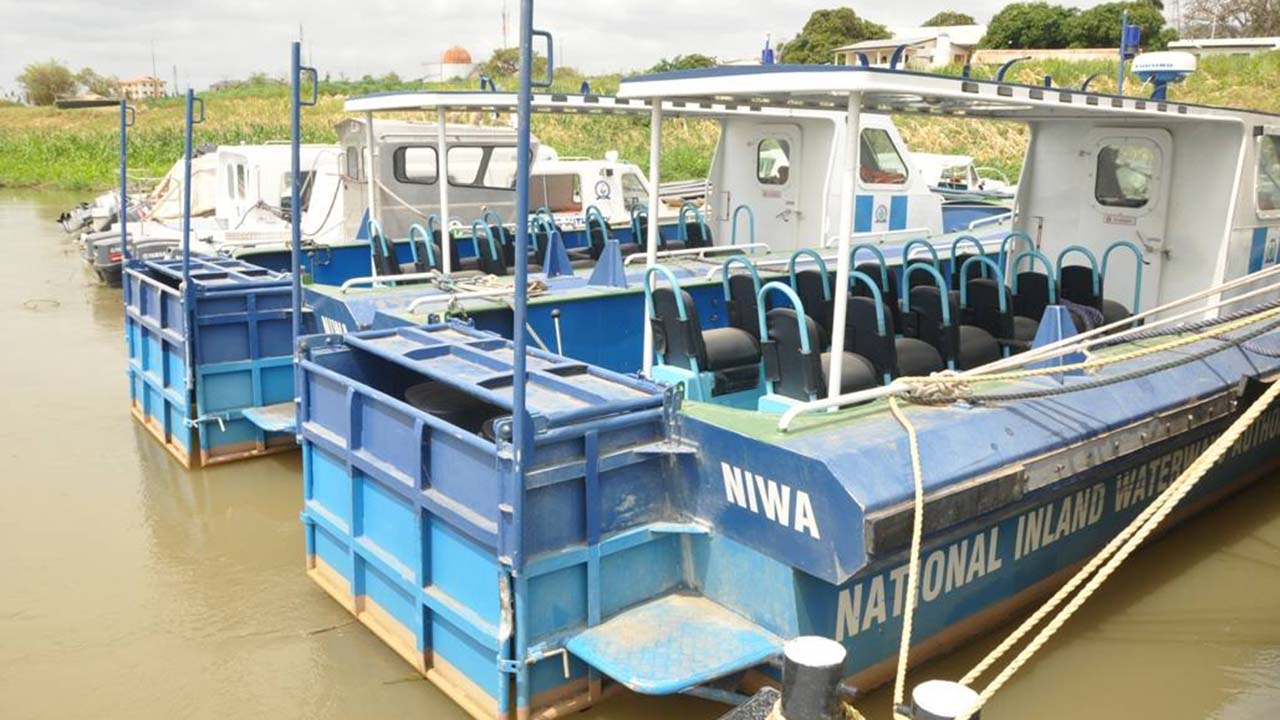
In a significant development that could reshape Nigeria’s emerging blue economy landscape, a powerful consortium of private maritime operators has stepped forward with concrete plans to collaborate with the National Inland Waterways Authority (NIWA).
The aim is to awaken the long-dormant potential of the country’s inland waterways, particularly through marine tourism and waterfront economic activities.
The Allied Concessionaries and Blue Economy Alliance—a coalition of seasoned concessionaires and operators already active in maritime tourism and water transportation—formally presented its vision during a high-level courtesy visit to Mrs. Sarat Braimah, the Lagos Area Manager of NIWA, at the authority’s Lagos office.
Leading the delegation, Mr. Bolaji Olasade, Chairman of the alliance, described the proposed partnership as a strategic move to “unlock the economic potential of Nigeria’s waterfronts.” He pinpointed Lagos as the logical launchpad, citing the city’s vast lagoon system, extensive creeks, and existing coastal infrastructure as ideal foundations for transformative development.
Olasade emphasized that the alliance is no ordinary trade group. “We are a consortium of visible and tested operators, mostly concessionaires, who are willing and ready to collaborate with NIWA to grow and develop inland waterways tourism infrastructure,” he stated. The group’s members bring existing assets, operational expertise, and proven capacity in the sector.
At the heart of their proposal is an integrated model that marries safe, efficient water transport with recreational, hospitality, and leisure offerings. The vision is ambitious: reposition Nigeria’s waterfronts—often overlooked amid the dominance of road and air travel—as competitive tourism destinations capable of drawing domestic and international visitors alike.
The chairman highlighted additional goals, including destination marketing to spotlight underserved littoral communities and the development of resorts along key waterways. Such initiatives, he argued, would not only generate revenue but also foster job creation in coastal and riverside areas long marginalized by underinvestment.
Reinforcing the message, Mrs. Dorcas Aderemi, secretary of the coalition, underscored the necessity of structured public-private partnerships (PPPs). Sustainable expansion in the marine and blue economy, she said, hinges on deliberate alignment between government agencies like NIWA and private capital providers. “We need a clear framework to attract long-term funding and accelerate the utilization of our inland waterways,” Aderemi urged.
The delegation did not shy away from acknowledging challenges. They praised Mrs. Braimah’s administration in Lagos for its strict enforcement of safety protocols and zero-tolerance stance on boat mishaps and security incidents—measures that have steadily improved confidence in water travel.
In response, Braimah welcomed the initiative warmly, describing it as timely and aligned with NIWA’s mandate to promote viable, year-round navigation and economic uses of inland waterways. She confirmed that the alliance’s detailed proposals would be forwarded to NIWA headquarters in Abuja for high-level review and further engagement.
This outreach arrives at a pivotal moment for Nigeria’s blue economy ambitions. With an estimated coastline of over 850 km, vast networks of rivers (including the Niger and Benue), lagoons, and creeks, experts have long valued the country’s untapped marine and inland water resources in the hundreds of billions of dollars.
The creation of the Ministry of Marine and Blue Economy under President Bola Tinubu has already signaled federal priority toward diversification beyond oil, with tourism, fisheries, aquaculture, and transport identified as high-growth pillars.
Yet inland waterways—spanning roughly 10,000 km of navigable channels—remain chronically underutilized, hampered by inadequate infrastructure, dredging shortfalls, and safety concerns. Lagos, where water covers a substantial portion of the landscape, stands out as a prime candidate for revival.
Recent events, from high-profile water-based sporting spectacles to growing calls for waterfront regeneration, have begun highlighting the lagoons’ tourism promise—from scenic boat cruises and eco-resorts to cultural festivals in creekside communities.
If realized, the Allied Concessionaries and Blue Economy Alliance’s partnership with NIWA could mark a turning point: shifting from rhetoric to investment-driven action, creating employment in hospitality and services, opening remote areas to markets, and positioning Nigeria as a serious player in Africa’s marine tourism scene.
WHAT YOU SHOULD KNOW
A powerful consortium of experienced private maritime operators—the Allied Concessionaries and Blue Economy Alliance—has formally approached NIWA to launch large-scale development of marine tourism, waterfront resorts, and integrated water transport across Nigeria’s inland waterways, starting with Lagos.