By E. Chijioke Ogbonna, PhD
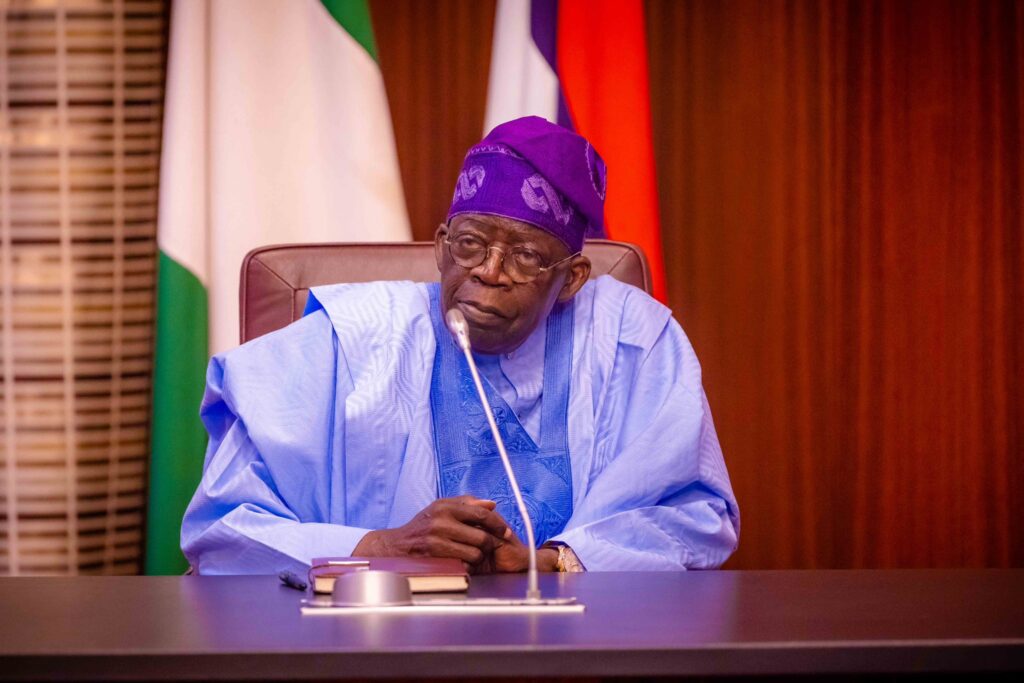
At twilight of the weekend, just like a thief in the Night, President Bola Ahmed Tinubu released the list of 32 nominees for ambassadorial postings. This is a supplementary list. He had sent 3 names earlier. In two separate letters, as reported by State House Press, the President forwarded to the Senate President to “consider and confirm expeditiously 15 nominees as career ambassadors and 17 nominees as non-career ambassadors.
The focal point of this write up is on the non-career ambassadors, since by the exigency of professional career mobility, the career ambassadors are already well equipped for the work at hand. The concern for this is ripe. First, the country is facing a precarious existential pandemic of declining global image. If this was as a result of the already established malpractices of some private citizens who are littered all over the globe, with well registered record of worrisome behavior in their “I must survive” posture, dotting their flight from pervading economic deprivation at home; the worries would have been less, and almost inconsequential. However, the deficits in statecraft, registered in implication of Nigerian leadership as loosing grasp of the worsening insecurity menace is at the core.
First, the increasing relapse in manifold insecurity of heightened dimensions across Nigeria began to gain global concern in recent times. It became signaled that the insecurity in Nigeria has been branded as “Christian genocide” and mainstreamed in the US Foreign Policy. President Trump of the United States of America had in recent time heightened tensions and resonated the ecosystem of international debates on the Nigeria’s security quagmire. In the words on President Donald Trump, “Christianity is facing and existential threat in Nigeria, thousands and thousands of Christians are being killed, radical islamists are responsible for this manslaughter, I am hereby making Nigeria a country of particular concern ….” Among other things, he went further, and instructed Congressman Riley Moore together with Chairman Tom Cole and the House Appropriation Committee to immediately look into the matter and report back to him. The dynamics of the message here to anybody with minimalist understanding of the undercurrents of diplomatic praxis will easily deduct the deep undertone of President Trump’s message and the reference to associated institutions. The congress needs to validate his action, while the Appropriation Committee will, for sure, dot the cost implication of whatever foreign policy decision the US would want to pursue in Nigeria. This is to further underscore the matrix of foreign policy in relation to the grund norm, which is ‘power’. As such President Trumps posture as communicated in his speech and tweet reinforces the three dynamics of state power in the pursuit of foreign policy goals; [a] credibility – how credible has the US been in its foreign policy actions. Are they mere words without actions? [b] capability, how capable is the US in pursing and breathing life to its foreign policy options, and then, [c[ availability, a combination of [a] and [b]. Without being a student of strategic and diplomatic history, even the baban-bola on the street of Biu in Borno state knows where and how the US rates in all these matrices. Agreed, what they might muddle up, just like every other Nigerian, including those with the longest of degrees is the dynamics of US intervention, as well many debates about vested interests.
The debates about the President Trumps posture on the security challenges in Nigeria would have attracted concern, but easily eclipsed in the myriad of unfolding theatrics in the Nigerian political landscape, if he didn’t make further commentary. (Un)fortunately, President Trump did not stop at his earliest comment about Christian genoicide in Nigeria, he further added that, “we stand ready, willing and able to save our great Christian population around the world”, he insists, “this is not going to happen”, the killing of Christians is not going to happen”. He went further and toned the urgency of the need for the US to act by asking the appropriate authorities to act with utmost urgency and feed him with the reports. This speech offered earlier by Trump was further expressed, verbatim, in a later tweet. An emphasis of sort, and one that should ordinarily be taken serious.
As if that was not enough, in another tweet, he added; If the Nigerian Government continues to allow the killing of Christians, the U.S.A will immediately stop all aid and assistance to Nigeria, and may very well go into that now disgraced country, “guns-a-ablazing”, to completely wipe out the Islamic Terrorists who are committing these horrible atrocities. I am hereby instructing our Department of War to prepare for possible action. If we attack, it will be fast, vicious, and sweet, just like the terrorist thugs attack our CHERISHED Christians! WARNING: THE NIGERIAN GOVERNMENT BETTER MOVE FAST!.
This last tweet communicated specifics. First, he spoke of stopping aids, and secondly, he spoke of possible invasion. Of key interest is Trump’s referring to Nigeria as that “now disgraced country”. This is a name that has worried many analysts and has attracted equal-divide debates – for and against, but beyond the label, it communicates Trumps deep disgust of the Nigerian situation. It mirrors his perception with regards to the information about Nigeria at his disposal. Many Nigerians who are also at the losing end of the hardship debris of the economic reforms of the current administration, as well as in direct contact with the increasing security breakdown in Nigeria seem not to have a qualm with the label. To them, it serves Nigeria right. Another significant metaphor in Trump’s last message to Nigeria is about going into Nigeria, “guns-ablazing”. Just like I had alluded to earlier, the US here reminded us about their intention to strike and also the modus. The metaphor directly sounds overzealous, while at the same time hinting on the military capability of the US, which has never been in doubt for many decades, nor has it ever achieved less of its target scope in any outing. Another interesting point in POTUS message is the line, “If we attack, it will be fast, vicious, and sweet, just like the terrorist thugs attack our CHERISHED Christians! First, this re-echoes similar sentiment in the official US quarters before the attack on Iraq in 2003. In a similar message, and in a bid to convince the Americans of the overwhelming importance to attack Iraq under Saddam Hussein, Condolezza Rice, the US Secretary of State had reiterated, about the urgency and uncompromising need for US action, in her words, “we don’t want the smoking gun to be a mushroom cloud”. Similarly, the use of the term, “our CHERISHED Christians”, is laced with empathic framing that is never a mere fancy of words, while the tweet ended with a direct warning. In the diplomatic palace, words are never fancy of grammatical grandstanding, but carefully selected to drive home the best of unambiguous meaning. the US Secretary of War on its own message also added that the United States remains willing to work “by, with and through” Nigeria. These are deep words, and the pattern that played out in the US appraisal of the challenges in Nigeria is never an exemption to the age-long diplomatic feature.
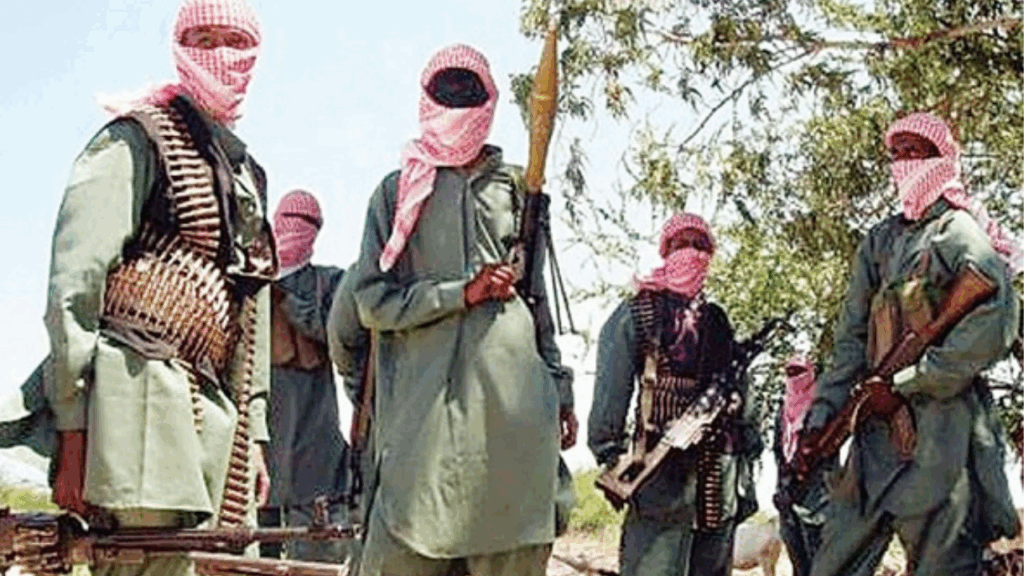
While I have successfully, resonated the current ecology of the Nigerian diplomatic climate, in view of the ongoing security challenges vis-à-vis President Donald Trump’s posture, and by extension the positon of the US, which is not only Nigeria’s ally over time, but the world persisting super-power that has since the historical end of the Cold War arrogated to self the powers of global police and incontestable moral enforcer, with profound military capability to achieve its foreign policy goals. In fact, it used to be a common aphorism in International Relations class, that when America coughs, the world catches cold. Nothing seemed to have changed.
Expectedly, the response to Trumps posture about the claims of Christian genocide in Nigeria was a floodgate of nauseating tantrums, careless speeches, stage-spotlighting of irrelevances, vague presidential counter-debate as well as deeply uncoordinated counter-strategies. Almost everyone that was unqualified to speak about the issue struggled to speak. At once, the colossal deficits in the operational capacity of the government, its actors and allies in manifesting minimalist intelligent grasps of the operating undercurrents of global minimum best practices in diplomatic standards became more than visible. One would have easily dubbed the counter-debates as embarrassing, however, the current administration feels different about the social capital of integrity-laden image in the global space. Ordinarily, very few critical mind are aware of the comprehensive down-climbing of integrity in the public space in Nigeria.
Men of steeped inconsistencies are now the most favored elements in Nigeria’s public space. with higher chances of strategic feature in the current administration. The reasons are not far-fetched; first, the political class seem to have consolidated their perception of the inept of “people-power” in awarding electoral fortune. As such, most of such men are more brazen and shameless in antidemocratic practices that could favor electoral outcome to benefit actors who might ordinarily not be the choice of the general masses. Every policy option in the current space seem to be more interested in public space annexation, rather than governance. As such, actors who are also audacious with irritating and eloquent inconsistencies in verbose posturing of their supports and/or against certain values and persons; and at many points, being loudly avowed to values that they would later brazenly undermine without looking back, are now the good choice for appointment. This is the emerging and domineering logic in the NigerNyesom Wilke in power, and his allies who aided the erosion of their party’s (PDP) fortune in the last election, being rewarded with strategic appointments, including the current ambassadorial list.
In as much as foreign policy has remained an exclusive zone of tact and professional technicalities, Nigerian response evinces the current culture of insulting “political anyhowness” that is dominating the landscape. A myriad of uncoordinated reactionary speeches, threats and counter threats recorded in response to POTUS would have gone unnoticed, if the elements within the circle of the presidency on their own did not partake in this audacious diplomatic misadventure. Daniel Bwala in a news reported by France24 sounded dismissive when he said, “we know that Donald Trump has his own style of communication”, to him, his intent is to “force a sit-down between the two leaders so they can iron out a common front to fight their insecurity”. The climate of the current rain of political anyhowness with only “ballot tightening” imperative is the torrent of the elements that make up the current non-career ambassadorial nominee lists.
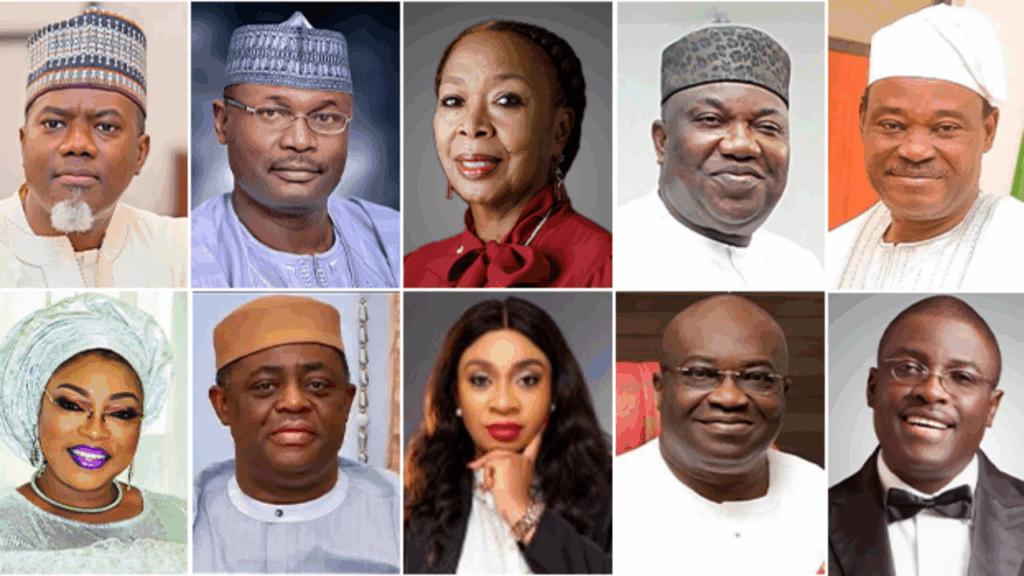
Generally, while the current government seem not to have a thing with competence, being above political patronage, it is surprising that at this point, ambassadorial nominees was also a product of recycling of political actors with nothing to offer. Few names for example are worthy of analysis, as their feature stand to consolidate the current administration’s spoken and unspoken values. One of such names is Professor Mahmood Yakubu, the immediate past INEC Chairman. His feature on the list seem to be a reward for his inept in managing the last election that saw the emergence of President Bola Ahmed Tinubu as President of Nigeria. Let it not be mistaken, the 2023 general election was fraught with legitimacy deficits. It reverberated the erosion of systemic protest participation and vote of no confidence on the entire political class. There was barely 26.72% voter turnout, with 24.9 million persons alone voting. That is a mere 10% of the population. The implication is this, even if President Bola Ahmed TinubuFalz the Badh Guy, even dropped a tease musical track, Mr Yakubu. Ordinarily, in climes where public actors are gauged by their scope and performance in public space, Prof Mahmood is expected to hibernate away from the public scene for a while, to at least feign a sense of responsible shame. Unfortunately, finding his name on the list of nominees for ambassadorial positing leaves one with a lot of questions: Is he being rewarded for superintending over the shame of an election? Could his inept be a capital of some sort to the current administration? Is his appointment a message to the current administration of what to expect should he “deliver”? Just like Farooq Kperogi had stated, there seem to be a mix-up on the list, as the released name identified him with Ekiti state, let us hope, it is not the former INEC chairman that is on that list, but how much more the other unsavory characters in the list?
To actually show that the current administration is intentional with blinded-ballot delusion, the list made an expansive inclusion of 2 members of the G5 Governors of PDP. Dr Victor Okezie Ikpeazu (former Governor of Abia State) as well as Ifeanyi Ugwuanyi (former Governor of Enugu State) also made the list. At best, these are assets in the arsenal of the woeful outing of the PDP in the 2023 Presidential Election. Directly, President Bola Ahmed Tinubu is the beneficiary of PDP’s crippling. Governor Nyesom Wike is the mobilizing force behind the G5 Governors, he had long been rewarded, it is expected that his team are also treated in with similar posture. A testament that still show that the government is very much interested in the consolidation of power through any instruments at all, than governance.
Another, name on the list is Reno Omokri, an audacious but firmly verbose unstable character who feigns intelligence by maintaining a straight face in his consistently half-baked messages coated with ethnic inciting postures and nauseating lack of integrity. Aside being one of the loudest actors trying to perforate such stark issues like PBAT’s educational background and the claim he never went to the University of Chicago, Reno had repeatedly vowed that the current President Bola Ahmed Tinubu is a drug lord. A claim he had repeatedly said he has facts to back it up. He had also initially vowed not to consider ever working with such a character. If you find Reno praising a particular person, ethnic group or issue, it is barely a mischief to attack and/or incite another. In his promotion of made in Nigeria, he mainstreamed ethnic profiling and inter-ethnic banters as his stock in trade. His personal opinions about way too many issues are less than acceptable. He had at some point would query the relevance of some disciplines in his posts, while als
Another person of particular concern on that list is, Mr Femi Fani Kayode – the man with a short fuse, whose excesses stem from domestic abuse, humiliation of journalist and disgusting gusto and carriage. He is consistently eloquent with unsavory alignments. Though, he has been consistent in barking for whoever throws a bone to him.
The list of the ambassadorial nominees is awash with people of loud deficits. The kind of characters that would impugn any serious actor’s posture if publicly identified with. The administration of PBAT has shown that they don’t care. Whatever it could be, the summary of the concerns expressed here is that an ambassador of a country represents the core values of the country, and in every serious clime, are people of character, tact, learning, integrity and known distinct values. Are these the kind of people to represent Nigeria, and at this precarious moment? Are these the best of PBAT? For now, for whatever reasons, the worse has taken the centre stage of leadership. We owe it a duty to express our views and hope that those in power today abdicates the brazen undermine of the capacity of people-power.
What You Should Know
This article highlights Nigeria’s rising diplomatic vulnerability amid global scrutiny, especially following Donald Trump’s recent statements describing the killings in Nigeria as “Christian genocide.”
It examines how the government’s ambassadorial nominations reflect deeper issues of political patronage, weakened credibility and declining governance standards.
At the same time, the government claims it is strengthening intelligence sharing, improving inter-agency coordination and enhancing national security architecture, but public confidence remains low due to the controversial figures chosen to represent Nigeria internationally.