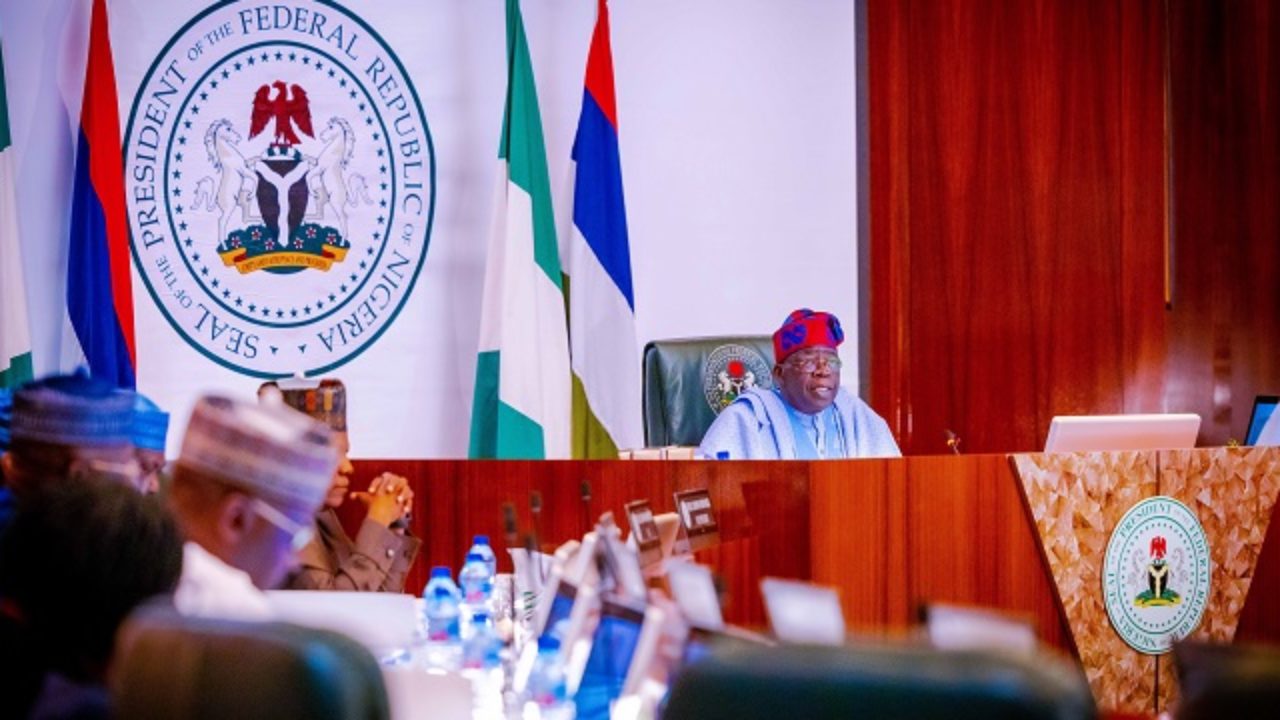
The Presidency has rejected accusations by opposition parties that President Bola Tinubu is attempting to weaken Nigeria’s democracy through the newly enacted Electoral Act 2026, describing the allegations as unfounded and misleading.
In a statement issued on Thursday by the Special Adviser to the President on Information and Strategy, Bayo Onanuga, the Presidency criticised opposition leaders, particularly from the African Democratic Congress (ADC) and the New Nigeria Peoples Party (NNPP), for what it called baseless claims made during a gathering in Abuja.

“Some prominent opposition figures, led by the ADC and NNPP, gathered in Abuja today and made reckless, spurious allegations against President Bola Tinubu and the APC-led Federal Government,” the statement said.
The Presidency accused the opposition, especially the ADC, of making sensational political remarks in a bid to generate headlines and mislead the public. It further alleged that certain opposition figures, in collaboration with some civil society organisations, had mounted what it described as a sustained campaign of misinformation against the National Assembly and the current administration.
The response followed a press briefing in Abuja where ADC and NNPP leaders urged the National Assembly to reopen discussions on the Electoral Act 2026 and amend provisions they consider contentious.
Speaking for the opposition, NNPP National Chairman, Ajuji Ahmed, called on lawmakers to remove sections he described as objectionable from the law, which was passed by the legislature and signed by President Tinubu on February 18.
Under the repealed Electoral Act 2022, political parties were allowed to choose between direct primaries, indirect primaries using delegates, or consensus arrangements to select candidates. However, the new 2026 law limits parties to direct primaries and consensus options, compresses campaign timelines, and mandates that funding for the Independent National Electoral Commission (INEC) be released six months before elections rather than 12 months.
Addressing concerns about the transmission of election results, the Presidency stated that the amended law accommodates real-time electronic transmission while recognising Form EC8A as a fallback where network failures occur.
“In response to the realities of our country, the National Assembly enacted an amendment to the Electoral Act that allows for the real-time transmission of election results and the use of Form EC8A as a backup in the event of network failure,” the statement read.
It dismissed claims that recognising Form EC8A could create room for manipulation, describing such assertions as illogical. “The 2026 Electoral Act does not prohibit real-time transmission; it simply stipulates that if transmission fails, the result recorded on Form EC8A shall be deemed valid,” the Presidency added.
Clarifying further, it explained that the INEC Results Viewing Portal (IReV) serves only as a public viewing platform and not as an official collation centre, maintaining that Form EC8 remains the primary document for validating results.
On the issue of party primaries, the Presidency expressed surprise at the opposition’s resistance to direct primaries.
“We find it perplexing why the opposition is crying over the inclusion of direct primaries and consensus voting, rather than the corrupt delegate system they prefer,” the statement said, adding that aspirants should not fear open participation by party members.
Drawing parallels with the United States, it noted that party members there directly participate in candidate selection under the presidential system adopted by Nigeria.
The Presidency also refuted claims that the National Assembly failed to consult Nigerians before passing the law, insisting that lawmakers engaged stakeholders and experts over a two-year period.

It rejected allegations that the administration is pursuing a one-party state, stating that Nigeria remains a multiparty democracy with more than a dozen registered political parties, including the ADC and NNPP.
The statement described President Tinubu as a long-standing democrat who previously played a key role in the coalition that ended the dominance of the Peoples Democratic Party in 2015.
According to the Presidency, the new Electoral Act strengthens the electoral process and addresses loopholes in the previous law.
“In summary,” the statement concluded, “the opposition is merely crying foul because the rules of the game have been adjusted to prevent manipulation, such as result hacking, which they have allegedly perfected,” urging party leaders to focus on internal reforms instead of levelling accusations.
What You Should Know
The Presidency has dismissed opposition claims that the Electoral Act 2026 undermines democracy.
ADC and NNPP leaders had called for fresh amendments, particularly over direct primaries and result transmission provisions.
The government insists the new law improves transparency, retains real-time result transmission with safeguards, and was passed after broad consultations.