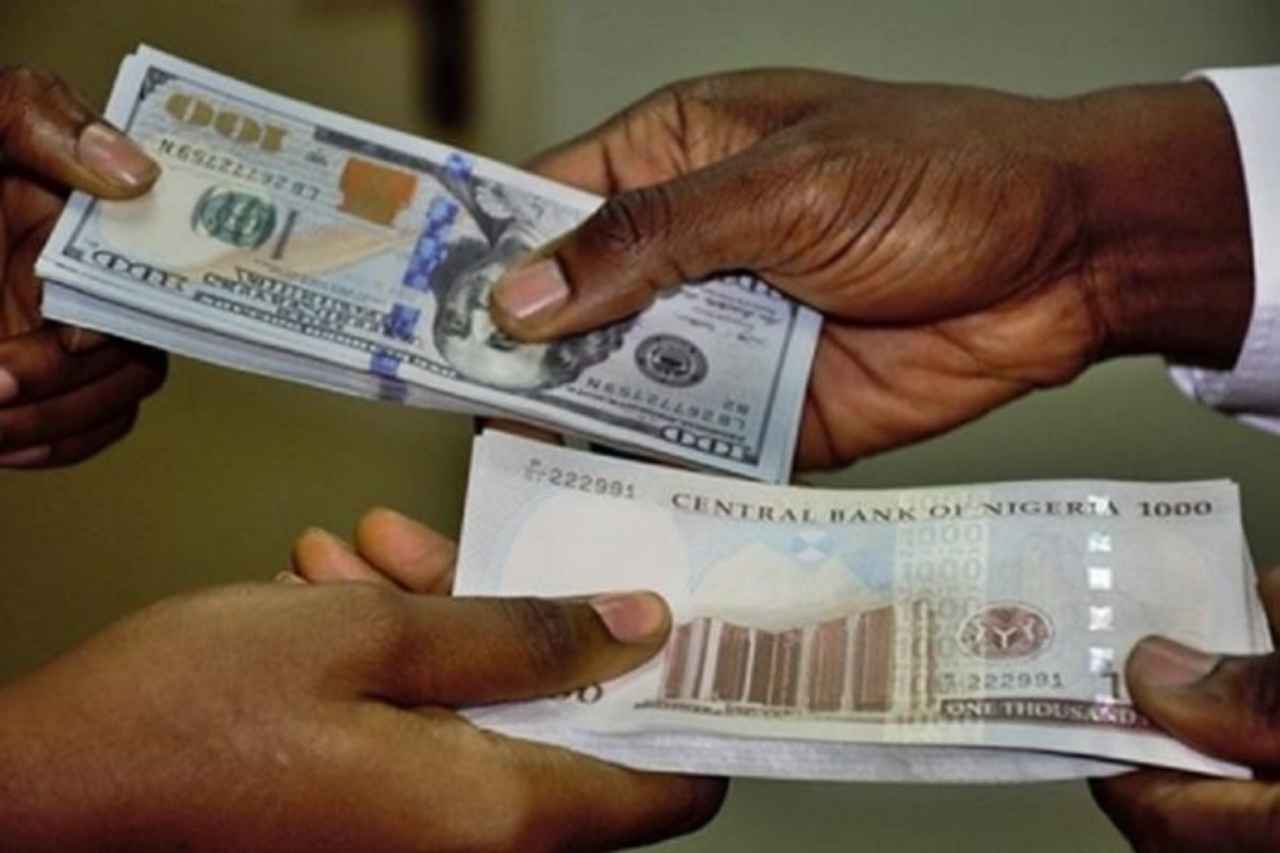
The naira showed no signs of buckling on Monday, changing hands at ₦1,379.64 to the dollar at the official Nigerian Foreign Exchange Market (NFEM).
This level keeps the currency firmly within the tight trading band it has occupied for much of the past three weeks.
Data reviewed from the official foreign exchange market showed the naira exchanging at about ₦1,379.64 per US dollar at the NFEM as of Monday morning, with the official rate remaining broadly in line with recent trading sessions, in what traders described as a familiar pattern of calm despite underlying currency pressures.
That calm, however, does not extend to the parallel market, where the dollar continues to command a healthy premium. On the streets of Lagos and Abuja, the greenback changed hands at an average of ₦1,416 on Monday, a gap of roughly 2.6% over the official rate, and one that traders say has been drifting wider rather than narrower in recent sessions.
Black-market data from the previous trading day had already pegged the average sell rate at ₦1,425, with a buy rate around ₦1,413, underscoring just how fluid and locally variable pricing in the informal segment remains from one dealer and one neighborhood to the next.
The persistence of this dual-rate reality is nothing new to seasoned watchers of Nigeria’s currency market, but it remains the story’s central tension. The official window, anchored by the Central Bank of Nigeria’s volume-weighted average methodology, continues to serve as the benchmark for government and large-scale formal transactions.
The street market, by contrast, operates on a rawer logic: pure supply and demand, filtered through liquidity constraints, dealer margins, and geography.
This divergence, analysts note, is less a sign of an acute crisis than a structural feature of an economy in which formal FX channels still cannot fully meet the appetite for hard currency among ordinary importers, small businesses, and individuals who lack access to bank-window dollars.
Two forces are doing most of the work behind the scenes, according to market watchers. The first is the steady drumbeat of demand from importers and manufacturers who need dollars to settle international payment obligations, an evergreen pressure point for an economy still heavily reliant on imported inputs and finished goods.
The second, and more topical, driver is petroleum. Analysts point to a fresh wave of dollar demand tied to petroleum-related transactions as a specific source of strain on the naira in recent weeks, a reminder that even as Nigeria has worked to boost local refining capacity, the country’s fuel import bill remains a significant lever on FX demand.
Monday’s rate slots neatly into a broader 2026 trend of relative, if imperfect, naira stability. The currency has traded in a fairly contained range for much of the year, a marked departure from the sharper volatility that characterized 2024 and 2025.
Whether that stability holds will likely depend on how effectively the CBN can continue channeling liquidity into the official window and whether petroleum-linked dollar demand eases or intensifies into the third quarter.
For now, though, the message from the market is one of watchful equilibrium: official rates holding firm, parallel rates drifting at their own pace, and the naira’s fate, as ever, hinging on the push and pull between the two.
WHAT YOU SHOULD KNOW
The real story isn’t the official ₦1,379.64/$ rate; it’s the gap between that and the ₦1,416 parallel rate.
That widening spread shows dollar demand, driven largely by petroleum transactions and imports, is outstripping what the formal market can supply, making it the truest gauge of pressure on the naira right now.