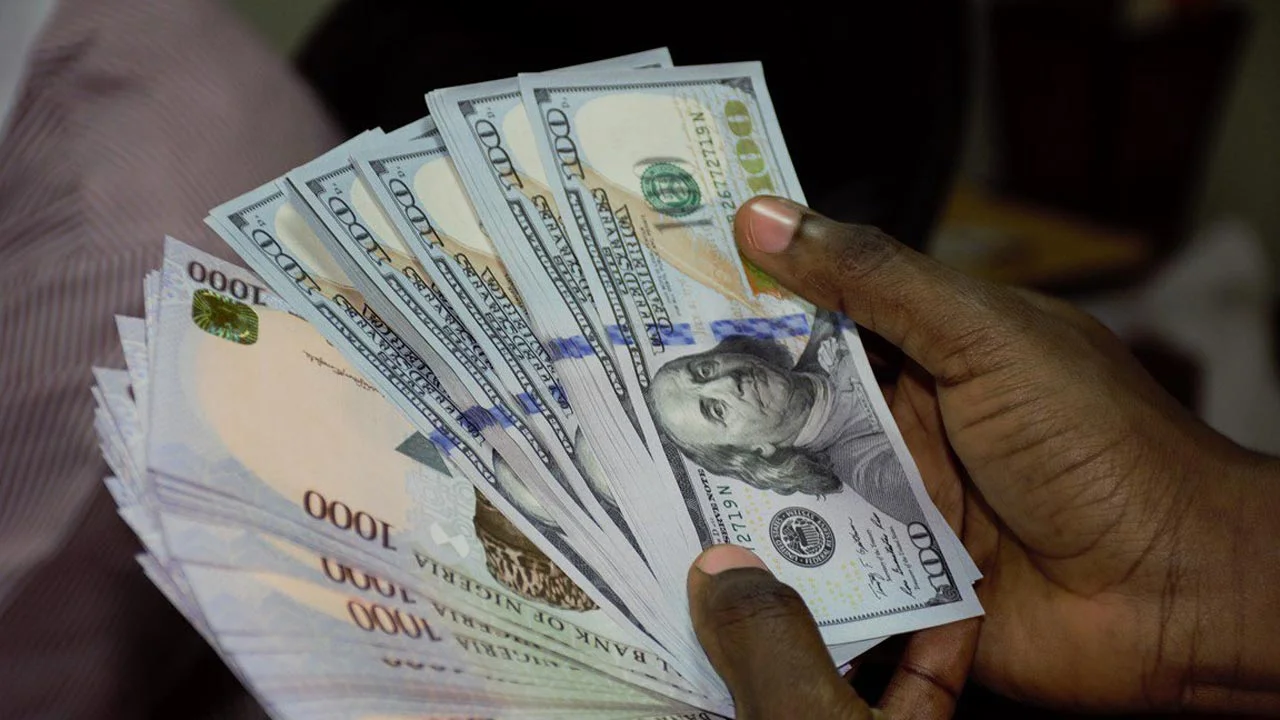
The naira opened the trading week on solid footing, changing hands at N1,357.61 to the US dollar on the official Nigerian Foreign Exchange Market (NFEM), even as the parallel market continued to price the greenback considerably higher at around N1,420, a spread of roughly N62.39 between the two windows.
Central Bank of Nigeria data pegged the official close at N1,357.61/$1, a volume-weighted average drawn from the day’s authorized market transactions.
According to market analytics firm Proshare, the naira advanced 59 basis points at the official window, building on a steady run of appreciation that has now pulled the rate in from N1,365.69/$1 the previous week.
Early Monday quotes from live tracking services placed the dollar even tighter, around N1,358, suggesting the currency was holding its gains rather than giving them back in opening trade.
The parallel market told a quieter story. Street-side dealers kept the dollar pinned at N1,420 for a second straight session, unmoved by the official market’s rally, a sign that retail demand outside CBN-sanctioned channels remains largely insulated from the improvements upstream.
The backdrop to the naira’s steadiness is a war chest of foreign reserves that traders and analysts say has quietly transformed the CBN’s room to maneuver. External reserves climbed to $52.19 billion as of August 12, their highest level in nearly two decades.
That buffer, built up through a mix of stronger dollar inflows and what officials describe as efficiency reforms in the FX market, has given the apex bank more firepower to smooth out volatility and meet demand from banks and authorized dealers without triggering the kind of sharp swings that have periodically rattled the market in past years.
Even so, the roughly N62 gap between the official and parallel rates remains a reminder that Nigeria’s foreign exchange market has not fully unified.
For ordinary Nigerian students paying tuition abroad, small businesses settling import invoices, and families sending remittances, the parallel market often remains the only practical option, and it continues to exact a steeper price than the CBN’s official figures suggest.
Analysts note, however, that today’s spread is comparatively tame next to the wider chasms of Nigeria’s more turbulent FX episodes, when premiums stretched far beyond N100 or more.
With trading still underway, both rates remain sensitive to the usual pressure points: dollar supply from oil receipts and portfolio inflows, demand from importers and manufacturers, any fresh CBN intervention in the interbank market, and broader currents in global currency markets, including dollar strength against a basket of peers.
For now, though, the naira enters the week on its firmest footing in some time, a cautious vote of confidence from a market watching closely to see whether the CBN’s liquidity push can eventually close the gap with the street.
WHAT YOU SHOULD KNOW
The naira is holding steady near N1,357-1,358/$1 officially, its strongest level in weeks, thanks largely to Nigeria’s external reserves hitting a 17-year high of $52.19 billion.
But a roughly N62 gap still separates the official rate from the parallel market’s N1,420, so while the official numbers look reassuring, most everyday Nigerians buying dollars outside CBN channels are still paying a real premium.
Watch the reserves trend, not just the headline rate, as the truer signal of whether this stability holds.