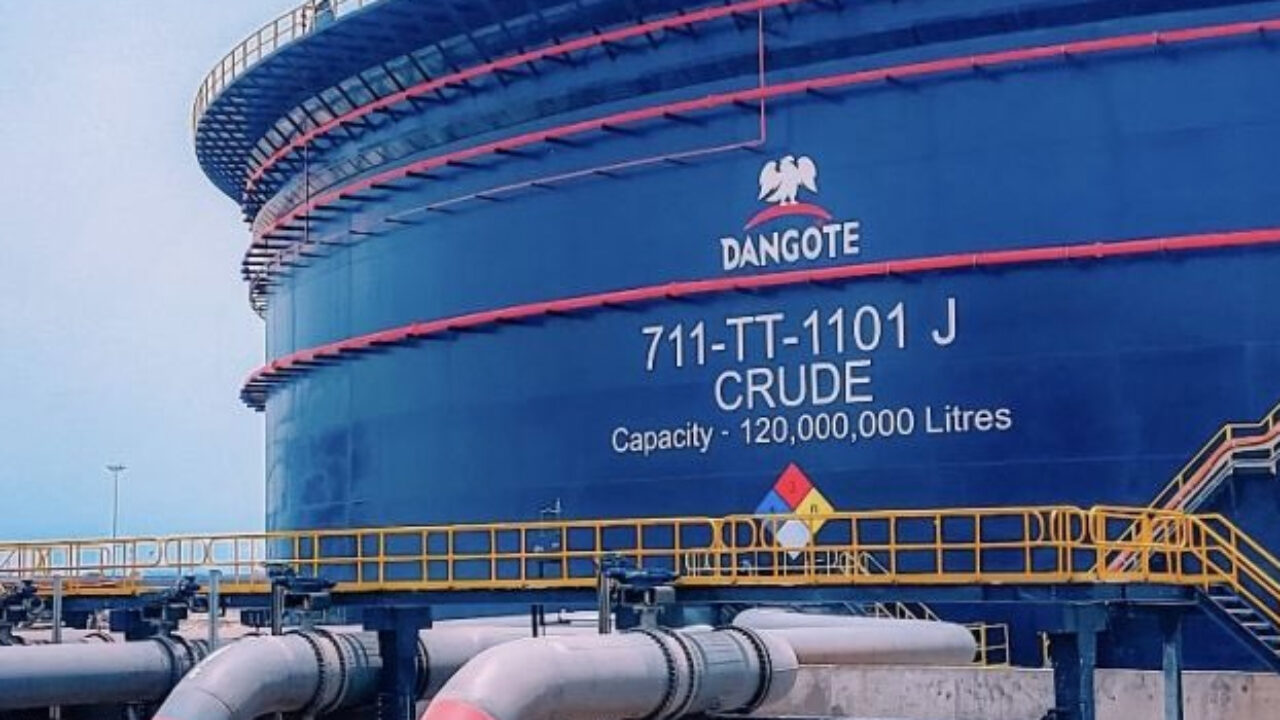
Dangote Petroleum Refinery is putting international stock market ambitions on hold, with the company’s leadership signalling that any overseas listing remains at least three years away as it focuses squarely on bringing Nigerian retail investors into the fold first.
Speaking to Reuters, CEO David Bird framed the company’s planned October initial public offering, which could rank as Africa’s largest, as a deliberately domestic affair. “We really want to drive participation,” Bird said, describing the mandate as being “the people’s IPO.”
The refinery has submitted an application for a $5 billion IPO to Nigeria’s Securities and Exchange Commission, though people familiar with the matter say the final size has yet to be settled.
On the question of going global, Bird was candid about the calculus: the company wants at least three years of proven production and financial performance under its belt before pursuing an overseas listing, a track record it believes will support a stronger valuation when the time comes.
London has reportedly been floated as a potential venue for that eventual move, though Bird declined to be drawn on specifics of size or valuation.
The timing of the domestic push comes as the refinery owned by Africa’s richest man, Aliko Dangote, has found itself an unlikely beneficiary of global energy disruption.
Fallout linked to the Iran war has pushed buyers toward alternative fuel supplies, with the refinery selling jet fuel across Africa and into western Europe as a result. Bird said the plant became Europe’s largest supplier of jet fuel in June and July, a striking milestone for a facility that only reached full capacity this year.
That momentum appears to have translated into investor appetite. Preparations for the IPO remain on schedule, and interest was strong through both pre-marketing and a private placement completed in July.
Africa Finance Corporation, which led a group of strategic investors in that placement, said the deal was 3.7 times oversubscribed, drawing strong demand from African and international institutional investors alike.
The strategy marks something of a narrowing from earlier, more sprawling plans. Only months ago, Dangote had floated a “$40 billion multi-exchange listing” spanning several African bourses Johannesburg, Nairobi, Accra, Addis Ababa, and the BRVM alongside Lagos, as part of the group’s broader “Vision 2030” push toward becoming a $100 billion revenue enterprise.
NGX Group had even convened the heads of five major African exchanges in Lagos in April to discuss mechanics for a single share issuance tradeable across multiple markets simultaneously.
That pan-African dimension has since faded from public messaging, with recent announcements referencing only the Nigerian Exchange listing. Analysts following the process suggest the ambition hasn’t been abandoned outright but rather deprioritised the company appears intent on locking in the domestic listing before entertaining any regional expansion.
Beyond the optics of investor inclusion, the IPO carries real strategic weight. Bird confirmed the company aims to double its refining capacity to 1.4 million barrels per day within three years, a build-out to be funded partly through IPO proceeds and partly through debt financing.
He also argued the refinery’s fundamentals compare favorably to U.S. refining assets, citing its access to local crude supplies, robust domestic demand, and integrated operations as differentiators.
For now, though, the message from Dangote’s leadership is one of sequencing: win over Nigerian retail and institutional investors first, prove the numbers over several years, and only then look abroad a strategy that stands in contrast to the grander multi-market vision floated just months earlier.
WHAT YOU SHOULD KNOW
Dangote Petroleum Refinery is deliberately delaying any foreign stock listing for at least three years, choosing instead to prioritize a Nigeria-first IPO dubbed the “people’s IPO” set for October.
The company wants to build a proven track record of production and financial performance domestically before pursuing international markets like London, believing this patience will secure a stronger valuation down the line.
Backed by strong investor demand (its July private placement was 3.7x oversubscribed) and a timely boost from its growing role in global jet fuel supply, the refinery is betting that going local first, global later is the smarter path to funding its planned expansion to 1.4 million barrels per day.