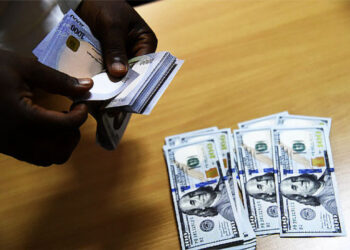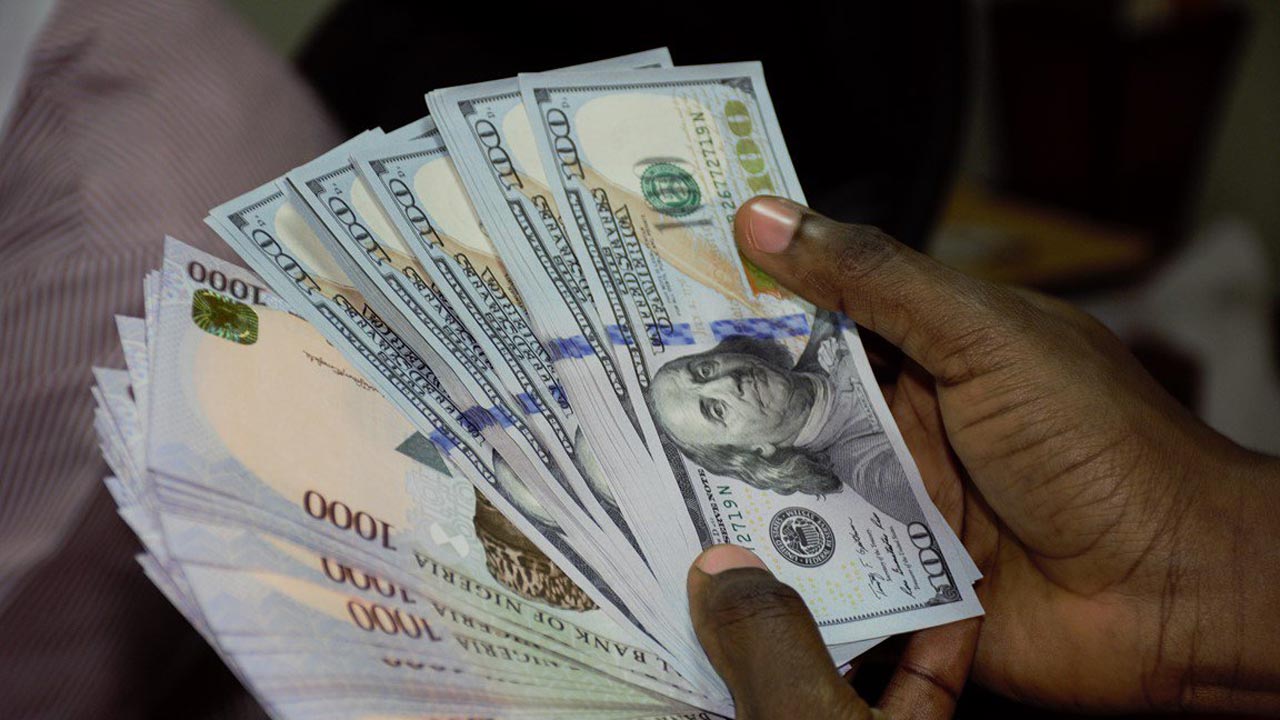
The naira fell further against the dollar on Wednesday as geopolitical tensions, inflation fears, and shifting global sentiment hammered emerging market currencies—Nigeria hit hardest.
According to data released by the Central Bank of Nigeria (CBN), the naira slipped to ₦1,391 to the dollar, worsening from the ₦1,383.50/$ recorded on Tuesday and ₦1,383/$ on Monday—a trajectory that underscores an increasingly fragile currency environment that analysts warn could deepen if global headwinds persist.
The naira’s decline was neither sudden nor isolated. Wednesday’s depreciation is the latest chapter in a months-long story of sustained pressure, rooted in a web of domestic vulnerabilities and external shocks that have repeatedly tested the resolve of Nigeria’s monetary authorities.
Trading data showed the naira oscillating within a range of ₦1,376/$ and ₦1,391.5/$ during Wednesday’s session, settling at a simple average of ₦1,387.22/$—a spread that signals active market anxiety rather than orderly price discovery.
Compounding the currency’s woes, activity in the Nigerian Foreign Exchange Market (NFEM) interbank segment contracted sharply. Turnover fell to $55.7 million, a steep drop from the $83.4 million recorded just a day earlier, while the number of executed deals declined from 88 to 64.
The thinning of market participation is a telling sign when liquidity dries up; the naira becomes even more vulnerable to directional pressure, with fewer counterparties available to absorb volatility.
Perhaps the most quietly alarming data point of the day came from Nigeria’s external reserves, which edged down to $49.57 billion on March 24, 2026, from $49.6 billion the previous day. While the figure may appear marginal in isolation, analysts caution against reading such movements lightly.
Nigeria’s foreign reserves serve as the country’s principal line of defense in supporting the naira during periods of exchange rate stress. The CBN has, in recent months, periodically intervened in the forex market to stabilize the currency—interventions that draw directly from the reserves’ buffer. A sustained drawdown, even at a gradual pace, raises legitimate questions about how long the apex bank can continue to prop up the naira without compromising the country’s broader financial resilience.
“Every dollar that leaves those reserves is a dollar that can no longer be deployed in a crisis,” one Lagos-based currency analyst noted. “The direction of travel matters as much as the absolute level.”
Nigeria’s forex woes unfolded against a backdrop of broad-based dollar strength that swept across international currency markets on Wednesday. The dollar index climbed 0.44% to 99.62, a move driven by a combination of inflationary expectations and elevated geopolitical risk premiums that sent traders rushing toward the greenback as a safe-haven asset.
The euro bore the brunt of the dollar’s advance, sliding 0.39% to $1.1562, while the British pound weakened 0.37% to $1.3362. Further afield, the Japanese yen tumbled to 159.46 per dollar, and the Australian dollar fell 0.63% to $0.6949, a broad retreat that illustrated just how pervasive dollar dominance has become in the current climate.
For Nigeria and other emerging market economies, a stronger dollar is more than a statistical abstraction. It translates directly into more expensive debt servicing for dollar-denominated obligations, higher import costs, and intensified capital outflows—all of which feed back into currency depreciation.
Underlying the dollar’s strength is a stubborn inflation narrative that refuses to fade. U.S. import prices recorded their biggest single monthly increase in nearly four years in February, reinforcing market expectations that the Federal Reserve will maintain — or potentially extend — its monetary tightening cycle.
Every signal of prolonged high interest rates in the United States makes dollar-denominated assets more attractive relative to emerging market alternatives, triggering capital flight from countries like Nigeria.
This dynamic, which monetary economists refer to as the “push factor” in capital flow models, has been a recurring antagonist in Nigeria’s forex story over the past two years. The persistence of U.S. inflation has repeatedly delayed expectations of Fed rate cuts, keeping the carry trade calculus firmly in the dollar’s favor.
Geopolitics has added an unpredictable and dangerous variable to an already complex equation. The ongoing conflict in the Middle East—particularly tensions centered on Iran—has stoked fears of supply disruptions that could send energy prices spiraling and accelerate global inflation.
Paradoxically, crude oil prices fell on Wednesday, declining 1.37% to $103.06 per barrel, even as geopolitical anxieties remained elevated. The dip may reflect short-term profit-taking or a recalibration of risk, but traders remain on edge.
The Strait of Hormuz—through which roughly 20% of the world’s oil supply transits—sits at the heart of the tension. Iranian officials have flagged sovereignty concerns over the waterway amid what appear to be early-stage diplomatic overtures from Washington.
U.S. President Donald Trump signaled progress in diplomatic talks aimed at de-escalating the conflict, but Iranian officials publicly denied that direct negotiations were underway — a contradiction that left markets uncertain and risk sentiment fractured across equities and bond markets.
“The market doesn’t know whether to price in a resolution or an escalation,” said one commodities strategist. “That uncertainty itself becomes a driver of volatility.”
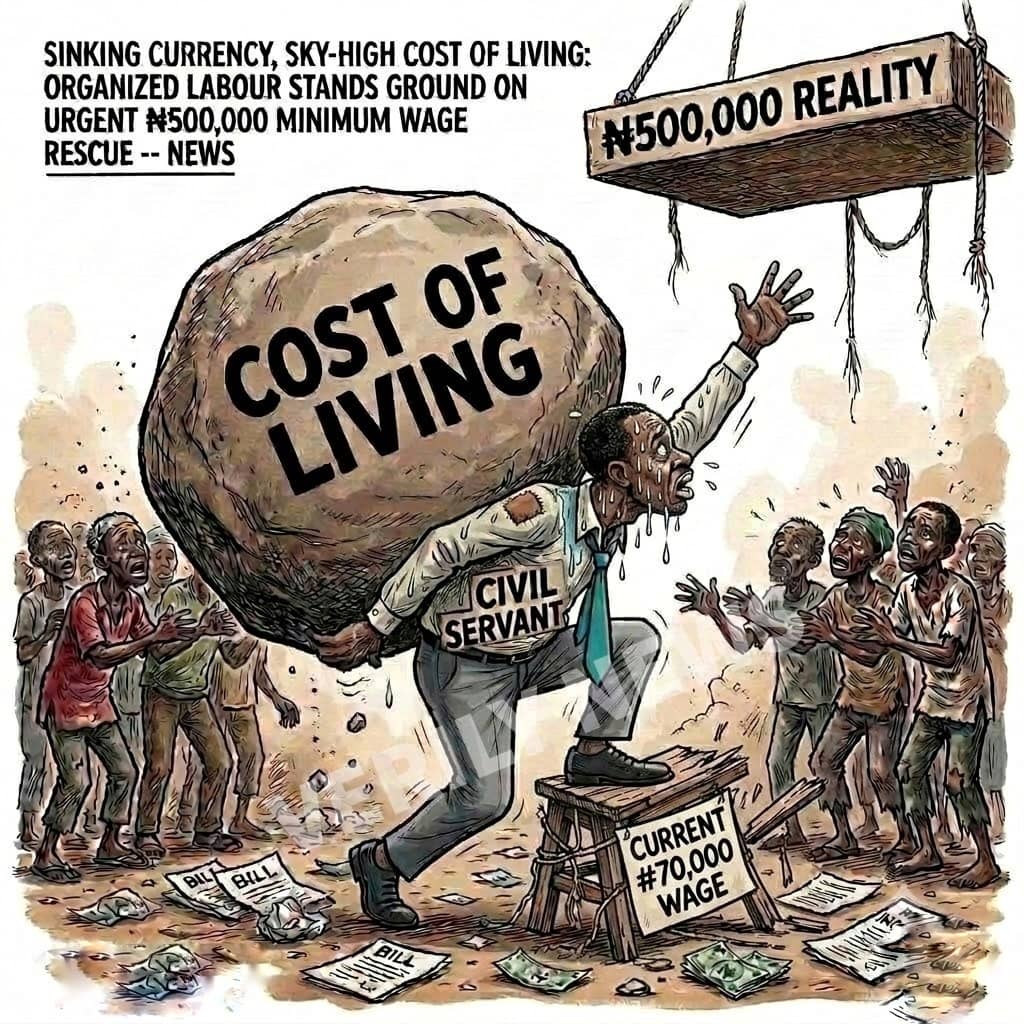
For ordinary Nigerians, the academic language of currency indices and geopolitical risk premiums ultimately translates into one lived reality: the cost of living is going up. A weaker naira means higher prices for imported goods — from fuel to pharmaceuticals to foodstuffs — at a time when household purchasing power remains under severe strain.
The CBN faces a delicate balancing act. Aggressive intervention to defend the naira risks depleting the reserves buffer that serves as the country’s financial shock absorber. Yet inaction risks a disorderly depreciation that could undermine confidence and trigger inflationary pass-through across the economy.
With global conditions unlikely to shift dramatically in the near term—U.S. monetary policy remaining tight, Mideast tensions unresolved, and the dollar retaining its safe-haven appeal—the naira may have little immediate respite on the horizon.
What is clear is that Nigeria’s currency is navigating some of its most treacherous waters in recent memory, buffeted by forces both within and far beyond its borders.
WHAT YOU SHOULD KNOW
The naira is under mounting pressure, sliding to ₦1,391/$ on Wednesday as a perfect storm of global and domestic forces closes in on Nigeria’s currency.
At the heart of it all is a strengthening U.S. dollar—fueled by stubborn American inflation and a Middle East conflict that has rattled global markets and driven investors toward safe-haven assets.
With interbank liquidity shrinking, foreign reserves quietly declining, and no imminent relief in sight from U.S. monetary tightening or geopolitical tensions, the naira’s outlook remains fragile.
Until global headwinds ease and Nigeria’s domestic forex fundamentals improve, Nigerians should brace for continued currency volatility—and the higher cost of living that inevitably follows.