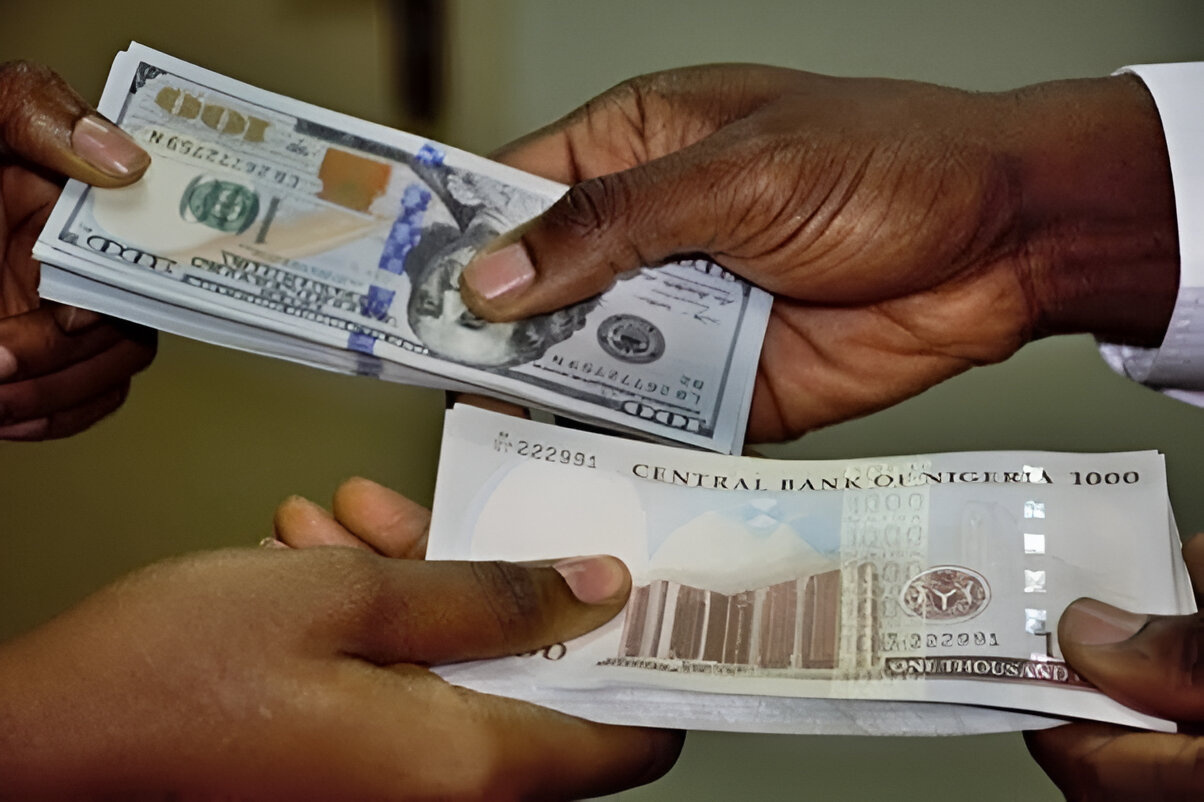
The Nigerian naira extended its recent slide in the official foreign exchange market on Tuesday, March 3, 2026, closing at N1,390 per US dollar.
According to official data published by the Central Bank of Nigeria (CBN) on its website, the local currency depreciated from N1,376/$ the previous day, marking another incremental loss in a depreciation streak that has now persisted for nearly two weeks.
The movement aligns with a broader weakening pattern observable since mid-February, when the naira traded at N1,337/$ on February 17.
Daily official closing rates reveal a consistent downward drift:
- February 17: N1,337/$
- February 18: N1,340/$
- February 19: N1,346/$
- February 20: N1,348/$
- February 23: N1,353.5/$
- February 24: N1,359/$
- February 25: N1,359.5/$
- February 26: N1,361.5/$
- February 27: N1,368.5/$
- March 2: N1,376/$
- March 3: N1,390/$
This trajectory reflects mounting demand for dollars in the official Nigerian Foreign Exchange Market (NFEM), where importers, manufacturers, and other end-users continue to seek foreign currency amid ongoing supply constraints.
Liquidity concerns in the FX market have intensified, with dollar inflows failing to keep pace with outflows required for essential imports, debt servicing, and other obligations.
The widening gap between the official rate and the parallel (black) market—where dollars often trade at a premium—has fueled arbitrage opportunities and speculative pressures. Reports from financial analysts and platforms like Nairametrics highlight how these dynamics, combined with persistent dollar scarcity, have amplified downward momentum on the naira.
Despite the currency’s struggles, CBN Governor Olayemi Cardoso has emphasized improvements in Nigeria’s external reserve position as a key buffer. In recent statements, he noted that net foreign exchange reserves rose to $34.80 billion by the end of 2025, while gross reserves climbed to $50.45 billion as of mid-February 2026.
These figures represent a significant buildup in buffers over recent years, providing the central bank with greater capacity to intervene when needed. However, analysts caution that while reserves offer medium-term support, short-term stability hinges on improved liquidity, consistent capital inflows, and sustained FX supply.
Adding to domestic headwinds is a robust global rally in the US dollar, which has reached multi-month highs amid escalating geopolitical tensions in the Middle East. Fresh military escalations involving US, Israeli, and Iranian forces have heightened risks to global energy supplies—particularly through critical chokepoints like the Strait of Hormuz—driving safe-haven demand for the greenback. The US dollar index held firm around 99.103, its strongest level since late November, while the euro weakened to approximately $1.1604.
The combination of external dollar strength and Nigeria-specific FX pressures has put the naira under renewed strain, with some market participants now eyeing the N1,400/$ psychological level in the near term if current trends persist.
As Nigeria navigates these turbulent waters, attention remains on the CBN’s interventions, potential policy adjustments, and any de-escalation in global hotspots that could ease imported inflationary pressures and support currency stabilization. For now, the naira’s downward bias continues to dominate headlines in the FX space.
WHAT YOU SHOULD KNOW
The naira has weakened sharply to N1,390/$ in the official market as of March 3, 2026 — its lowest level in the current streak—driven primarily by persistent foreign exchange liquidity shortages and heavy dollar demand that continues to outstrip available supply, despite improved external reserves.
Nigeria’s FX market remains under serious pressure from chronic dollar scarcity, not from falling reserves.