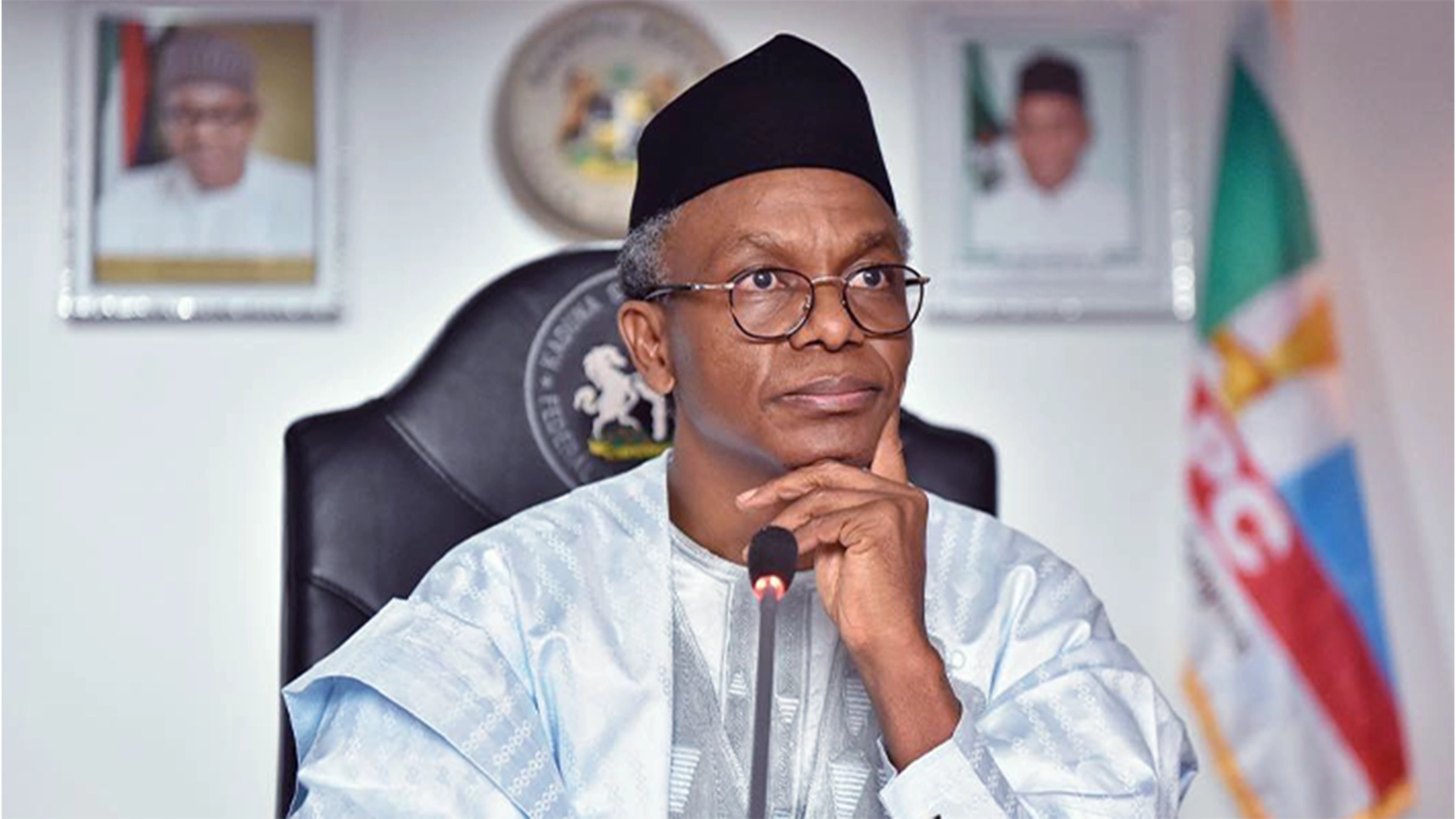
The legal war surrounding the detention of former Kaduna State Governor Nasir Ahmad El-Rufai has opened a fierce new front, this time involving his wife.
Aichatou El-Rufai has fired an N2 billion pre-action notice at the chairman of the Independent Corrupt Practices and Other Related Offences Commission (ICPC), accusing the anti-graft agency of issuing false and damaging statements about her identity, character, and conduct, and threatening to sue if the matter is not resolved.
The development marks the latest escalation in a legal confrontation that has consumed Nigeria’s political and judicial circles since El-Rufai was taken into ICPC custody in February over allegations of financial impropriety during his tenure as governor of Kaduna State between 2015 and 2023.
At the center of Mrs. El-Rufai’s grievance is a press statement published by the ICPC on May 18, 2026, titled “Clarification on the Access Control Protocol at ICPC Headquarters, Abuja.”
The statement was presented by the commission’s Deputy Director and Head of Media and Public Communications, John Okor Odey, during a media briefing at the agency’s Abuja headquarters.
In it, the commission addressed mounting public claims about conditions surrounding the former governor’s detention, dismissing allegations that El-Rufai had been denied access to medical care or food, and insisting that he had been allowed to see doctors of his choice and receive family visits within the agency’s approved access hours.
But Mrs. El-Rufai’s legal team argues that in doing so, the commission crossed a line, attacking her reputation in the process.
The most pointed legal objection concerns the commission’s choice of words when referring to Mrs. El-Rufai in the statement. Rather than addressing her by name or title, the ICPC described her, according to the pre-action notice, as “a woman who identified herself as the wife of a defendant.”
Her lawyers argue that this characterization was not a trivial matter of phrasing; it was a deliberate or reckless imputation that questioned the very legitimacy of her marriage to the former governor, casting doubt on her status in the eyes of the public.
The legal team further contends that the commission’s labelling of her earlier public claims as “false and misleading” language used by the ICPC in rebutting assertions made by the El-Rufai family effectively branded her a liar before the Nigerian public.
They argue that the statement also implied she had violated the commission’s visitation protocols during an attempt to gain access to her husband, portraying her as someone who disregards institutional procedures.
Additionally, the notice aims language in the statement that the lawyers say implied Mrs. El-Rufai had been inconsistent in her claims that her husband was being denied food while in custody, an accusation they say undermined her credibility and integrity.
In total, the legal team argues that the cumulative effect of these statements was to expose Mrs. El-Rufai to public ridicule, contempt, and reputational harm. They are demanding N2 billion in damages and have given the ICPC chairman a window to respond before a formal lawsuit is filed.
The pre-action notice adds Mrs. El-Rufai to a growing list of parties taking legal aim at the commission over its handling of the former governor’s case. El-Rufai himself had earlier filed a N1 billion fundamental rights enforcement suit against the commission following a raid on his residence by ICPC operatives.
He and members of his family also demanded N15.6 billion in damages from the ICPC, its chairman, and other officials over his arrest, detention, and alleged defamatory statements, a demand that followed claims by the agency that wiretapping equipment had been discovered at his residence.
Meanwhile, access to the former governor has become a battleground of its own. On May 16, El-Rufai’s son, Mohammed Bello, alleged that ICPC operatives had denied his father access to medical and family care at the detention facility. The ICPC, through spokesperson Odey, described those claims as “false and misleading,” the very language now at the heart of Mrs. El-Rufai’s lawsuit.
The African Democratic Congress, the party El-Rufai aligned with ahead of the 2027 elections, has also been drawn into the access dispute. A delegation led by Rauf Aregbesola, the party’s national secretary, was turned away from the ICPC facility, with the ADC saying the visit had been communicated formally in advance. The party described the situation as an attempt to intimidate opposition leaders and discourage public scrutiny over El-Rufai’s treatment in detention.
The ICPC, for its part, has maintained that it is acting strictly within its mandate and judicial orders. In a letter dated May 21, the commission explained that El-Rufai is currently standing trial before two courts, the State High Court of Justice and the Federal High Court, both in Kaduna, and that access to the defendant has been restricted by court order to only family members, doctors, and legal counsel.
On April 13, 2026, the ICPC arraigned El-Rufai at the Kaduna High Court on an amended nine-count charge bordering on alleged fraud and abuse of office. Alongside co-defendants Jimi Lawal and Darwish Mohammad, he is also standing trial before the Federal High Court in Kaduna on an 11-count money laundering charge involving five corporate entities.
The Department of State Services has separately filed a three-count charge against him at the Federal High Court in Abuja, centring on allegations of unlawfully intercepting phone communications belonging to the National Security Adviser, Nuhu Ribadu, in violation of the Cybercrimes Act.
Bail has remained out of reach. The court refused bail and ordered El-Rufai to remain in ICPC custody pending the commencement of trial, while directing an accelerated hearing. The defense subsequently filed a fresh bail application, which the ICPC has formally opposed.
What began as a corruption investigation has evolved into a multi-front legal and political battle that now ensnares not just the former governor but also his family, his party, and the reputation of the anti-graft agency itself.
With Mrs. El-Rufai now formally threatening litigation over the commission’s public communications, the ICPC faces the unusual position of defending not only its prosecution case in court but also its own words in the court of public opinion.
Whether her N2 billion claim proceeds to a full lawsuit or serves primarily as leverage may become clear in the days ahead.
What is already clear is that for the El-Rufai family, the battle is no longer only about securing his release. It is about contesting, point by point, every narrative the commission puts forward along the way.
WHAT YOU SHOULD KNOW
The El-Rufai saga has grown far beyond a corruption case. At its core, a former governor sits in ICPC detention facing serious charges of fraud, money laundering, and wiretapping charges that he and his family vigorously contest.
The battle has spilled well outside the courtroom, with his wife now demanding N2 billion over what she calls a deliberate attempt by the commission to publicly humiliate and discredit her through a careless press statement.
Combined with the family’s earlier multi-billion naira damages claims, denied party access, and duelling narratives over food and medical care, this has become as much a war of reputation as a war of law.